809 Projects, Two-Thirds in Drought, and Everyone Called It Progress
The infrastructure boom for AI has a permission structure nobody voted on — and it runs on the same water it's draining.
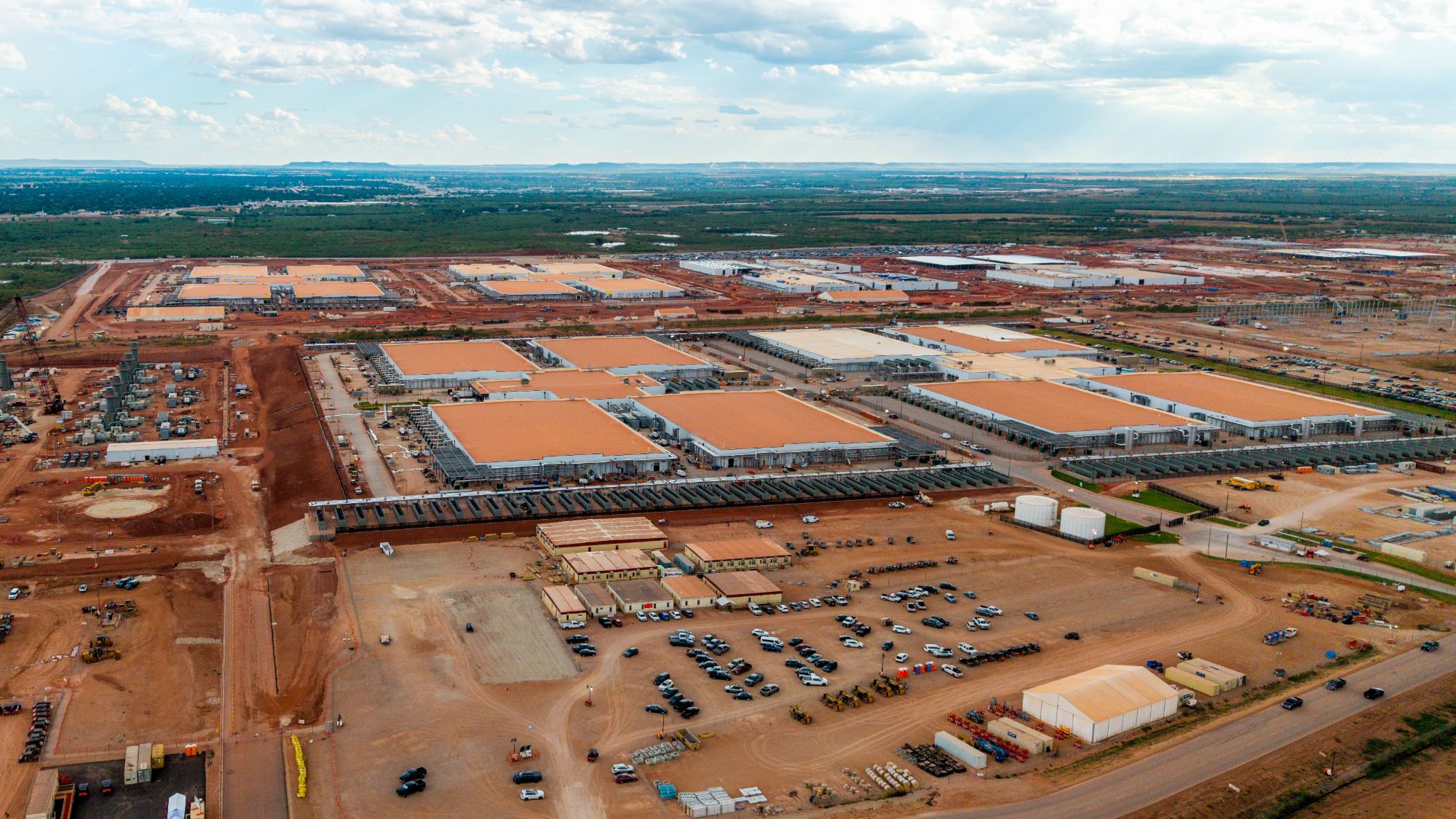
Photo · Latest from Tom's Hardware
The Donation
Somewhere in Texas, a farmer decided to do something good. In 1999, he donated a parcel of land to the city — farmland, offered as a gift, with one condition attached: it would be a public park. Green space. A place for people. The kind of civic gesture that feels almost quaint now, like something from a different era of American life, when a community could reasonably expect that a gift would stay a gift.
It didn't. According to reporting from Tom's Hardware, that land — acquired for ten dollars in 1999 — was sold to a data center developer for ten million dollars. The city is projecting thirty million in tax revenue over the next decade. By the numbers, you can see why they did it. By the numbers, it looks like a win.
But the numbers don't tell you what the farmer thought he was giving away.
The Pattern
Hold that story next to this one: roughly two-thirds of the 809 data centers currently planned across the United States are slated for areas that have experienced drought conditions over the past year. Tom's Hardware reported both of these things, more or less in the same breath, and I keep turning them over together because they belong together. They're not two stories. They're one story about what we've decided infrastructure desperation looks like when we stop calling it a decision.
AI demands compute. Compute demands data centers. Data centers demand power and — critically, massively — water. Cooling systems drink it by the millions of gallons. And so, in the middle of one of the more serious drought cycles the American West and South have seen in a long time, the industry is planting its biggest facilities exactly where the water is already running thin. Not despite the conditions. Alongside them. Sometimes in direct competition with the agriculture and municipalities that have been managing those water tables for generations.
I've watched enough tech cycles to recognize the move. First comes the capability announcement — the model, the benchmark, the breathless demo. Then comes the infrastructure buildout, which is boring and logistical and doesn't get the keynotes. Then, quietly, comes the externality, which is what we call the costs when they land on someone who didn't get a seat at the table. The farmer who donated land for a park didn't get a seat at the table. The communities drawing from drought-stressed aquifers aren't getting one either.
What Desperation Permits
Cities are not villains in this story. That's the uncomfortable part. A municipality looks at ten million dollars and thirty million in projected taxes, looks at its budget, looks at what it can and cannot provide for its residents, and makes a rational calculation. The developer offers a number that rewrites the math on everything else. You can disagree with the outcome and still understand the logic completely.
That's precisely what makes it worth examining. When fiscal desperation becomes the permission structure for environmental sacrifice, no single actor has to be corrupt or even careless. The system produces the outcome anyway. The park becomes a server farm. The drought zone becomes a construction site. And somewhere in a quarterly earnings call, someone notes that capacity is expanding ahead of schedule.
Two-thirds of 809 planned projects. I keep returning to the scale of that fraction. This isn't a handful of poorly-sited facilities or a few opportunistic deals. It is, by the available evidence, the dominant pattern. The industry looked at a map of American water scarcity and apparently found it acceptable — even preferable, given land costs and existing power infrastructure in those regions. The drought isn't a bug in the site-selection process. For certain inputs, it might actually be a feature.
The Thing Nobody Has to Say Out Loud
Here's what I find most clarifying about the Texas story: the condition attached to that donated land was not subtle. Park use only. It was documented. It was the entire point of the gift. And still, decades later, when the numbers changed, the condition became negotiable — and then it became irrelevant.
That's a small parable for something much larger. We have, as a society, attached conditions to a lot of things. Environmental review processes. Water rights frameworks. Public land trusts. Community input requirements. These are the formal structures that are supposed to make large infrastructure decisions legible and contestable. And they are, one by one, running into the same pressure the park deed ran into: a number large enough to make the condition feel theoretical.
The AI buildout is moving faster than the governance around it. That's not a novel observation — it's been true of every major tech wave since broadband. But the stakes attached to physical infrastructure are different from the stakes attached to an app. An app that fails can be deleted. A data center built on a depleted aquifer, in a region that needed that water for something else, leaves a mark that doesn't roll back with the next software update.
I don't know what the farmer in Texas thinks about what happened to his park. The sources don't say, and I won't invent it. But I think about the version of him that made the donation — the one who thought a gift with a condition was a gift with a condition — and I wonder at what point he figured out that conditions, in the end, are only as durable as the will to honor them.
We're building the infrastructure of the next decade right now, in the dirt, in drought zones, on donated land. The decisions are being made. The question is whether anyone involved is calling them decisions at all.
Keep reading tech.

Sam Altman Filed the Paperwork. The Mission Statement Didn't.
OpenAI just told the SEC it wants to go public. It hasn't told anyone what happens to existential caution when the lockup expires.

Seventy Repositories Down, and the Exploit Was the Infrastructure
When Microsoft had to shut down its own GitHub presence to stop credential theft, it wasn't a breach of trust — it was proof the trust was already gone.

Apple Borrowed the Brain and Kept the Logo
At Tim Cook's final WWDC, Apple admitted the thing it never admits — and dressed the confession in a product launch.
From the other desks.
Ford Killed the Sedan, Then Left the Door Unlocked
When a company calls a category decision 'absolutely' right and then floats a reversal, you're not reading a market verdict — you're reading a balance sheet.

Raymond Weil Spent Half a Century Not Doing This
The A.R.T. collection isn't just a new watch — it's a brand finally deciding the integrated-bracelet category belongs to everyone.

Dana White Said 'Super Bowl Numbers.' Someone Should Tell Paramount+.
When a promoter's hype outpaces what any single streamer can deliver, the credibility gap stops being a personality quirk and starts being a structural problem.