The Case Maker Grew Up
Golden Concept spent years making Apple Watch look expensive — now they've built a mechanical watch, and the question isn't whether they can, it's whether they understand what they've stepped into.
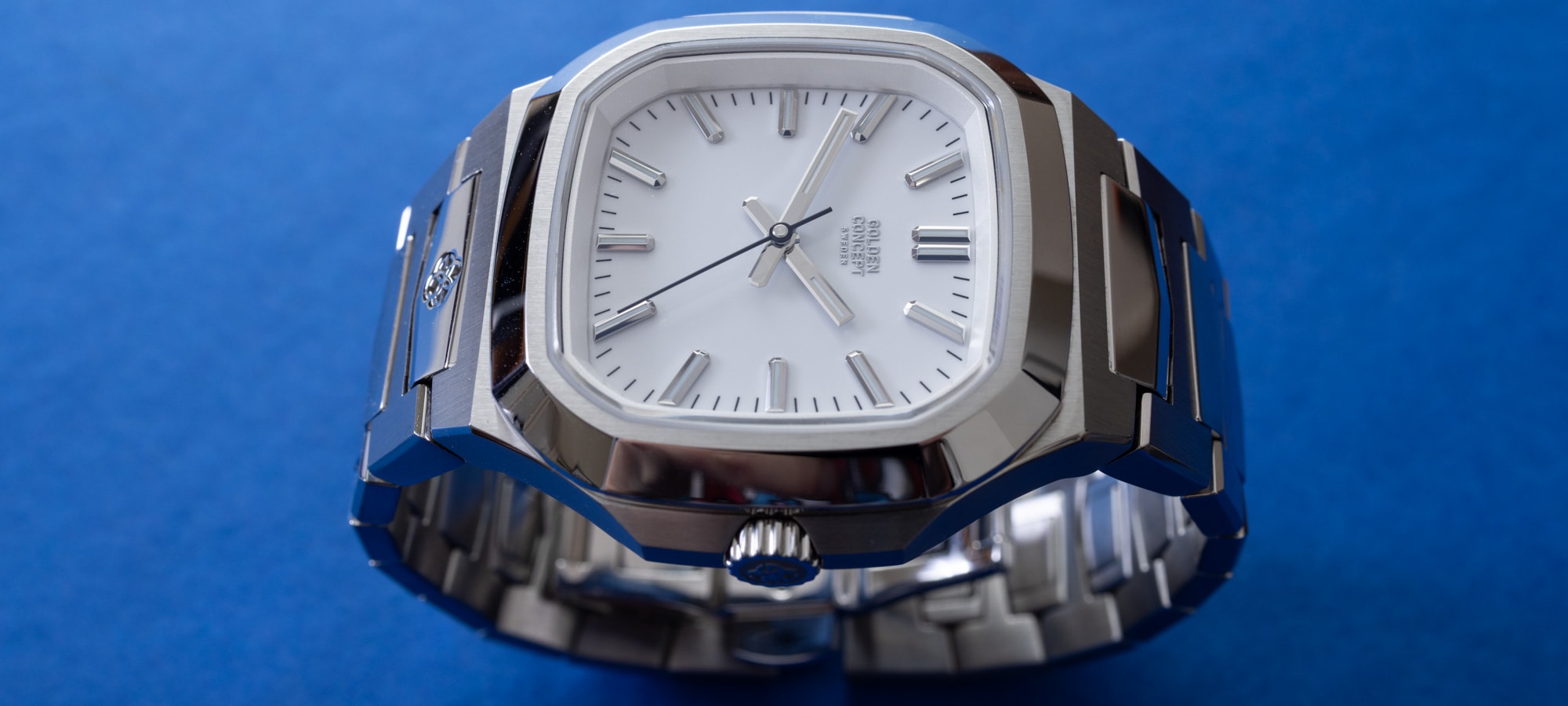
Photo · aBlogtoWatch
The Origin Story Is the Watch
Every object carries the fingerprints of whoever made it. A knife from a blacksmith who spent twenty years making knives feels different from a knife made by someone who spent twenty years making something else. That's not snobbery — it's just how expertise works. It accumulates in one direction, and then you either spend years redirecting it or you find out the hard way that the skills don't transfer.
Golden Concept built their name making cases for Apple Watches. Titanium, carbon, ceramic — the kind of enclosures that turned a $400 piece of consumer tech into something that felt like it belonged on a different wrist entirely. They were good at it. Genuinely good. And that's worth saying plainly before anything else, because what they were doing required real craft, real material knowledge, and a real understanding of what people want when they spend serious money on something that tells time.
But the Apple Watch is a screen. It refreshes. It updates. It depreciates the moment the next model drops. The cases Golden Concept built were beautiful containers for disposable technology — which is a strange thing to be skilled at, and stranger still to use as a launchpad into mechanical watchmaking.
What Changes When the Movement Matters
The Royal Automatic is their first mechanical watch. Not their first watch-adjacent product — their first actual watch, the kind where everything you're paying for is inside the case, not wrapped around someone else's product.
That shift matters more than it might seem.
When you're making a case for an Apple Watch, the movement is Apple's problem. The display is Apple's problem. The functionality is Apple's problem. Your job is geometry, finish, material selection, wrist presence. You're a jeweler working around a given stone. The stone doesn't change — only the setting does.
A mechanical watch doesn't work that way. The movement is the point. The case exists to protect it, frame it, present it — but it cannot rescue it. A stunning case around a mediocre movement is like a beautiful frame around a bad painting. You notice the frame first, and then you notice why.
So the question with the Royal Automatic isn't whether Golden Concept can make a good-looking watch. They almost certainly can. The question is what they chose to put inside it, and whether they thought about that choice the way someone who grew up in watchmaking would.
The Red Flag That Isn't Necessarily a Red Flag
Here's what I've learned about first watches from non-watch companies: the origin story is almost always either a liability or a superpower, and it's rarely obvious which until you've spent some time with the object.
Sometimes a company coming from outside the industry brings a fresh eye. They haven't absorbed the consensus about what a watch is supposed to look like or cost or communicate. They make choices that a traditional maison would never make, and occasionally those choices are exactly right.
Other times, they bring the wrong instincts — the instinct to optimize for visual impact over horological substance, to treat the movement as a spec to be checked rather than a soul to be chosen. You end up with something that photographs beautifully and feels hollow at 3pm on a Tuesday.
Golden Concept has spent years understanding what makes an object feel expensive in the hand. That's real knowledge, and it doesn't disappear because they changed categories. What's unproven is whether they understand what makes a mechanical watch feel true — not just expensive, not just impressive, but honest in the way that the best watches are honest.
The Only Way to Find Out
The Royal Automatic is a first watch. First watches deserve patience. They deserve the kind of attention that asks what this company is capable of becoming, not just what they managed to produce on the first attempt.
Golden Concept earned the right to make this watch by being genuinely good at something adjacent to it. Now the work is different. The material knowledge transfers. The aesthetic instincts transfer. The reputation for finish and presence transfers.
What doesn't transfer is the shortcut. In mechanical watchmaking, there isn't one. You either understand what you're building and why, or the watch tells on you eventually — quietly, on an ordinary afternoon, when nothing is happening and you look down at your wrist and feel nothing back.
That moment is the real review. Everything else is just preamble.