200 MPH Used to Mean Something. Now It Means $67,000.
The 2027 Corvette Stingray just became the cheapest car in the world that can do something its more expensive sibling cannot.
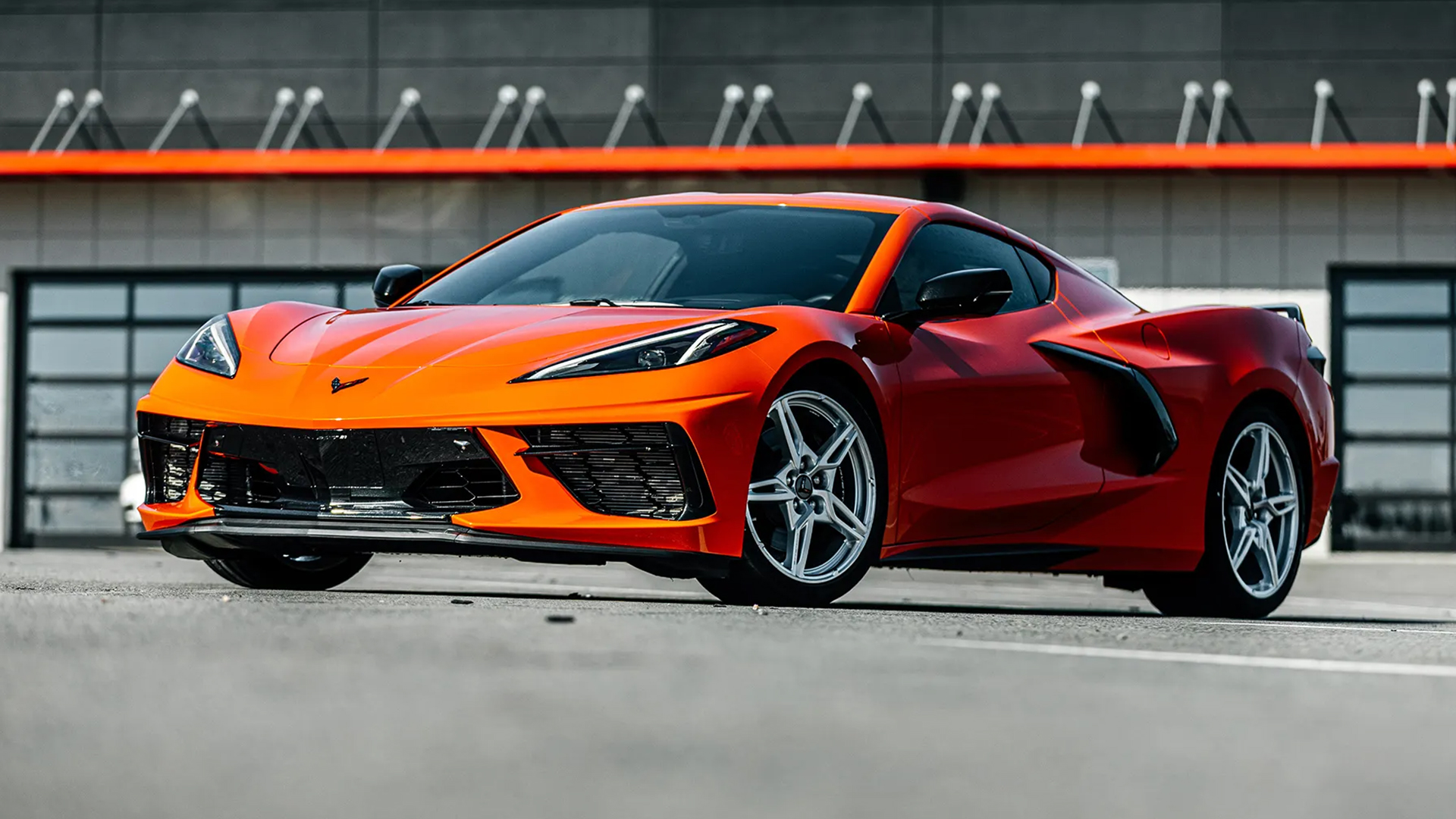
Photo · The Drive
The Floor Just Moved
Picture the number. Two hundred miles per hour. For most of automotive history, that wasn't a spec — it was a boundary. The kind of thing that separated production cars from race cars, rich men from everyone else, ambition from reality. It lived at the top of the brochure, in bold, next to a price that made sure you understood the distance between you and it.
The 2027 Corvette Stingray just moved it to the bottom.
Chevrolet added 40 horsepower to the entry-level C8 for 2027, and that bump is enough to push the base Stingray past 200 mph — a milestone, Motor1 notes, that the Z06 can't actually claim. Read that sentence again slowly. The cheaper car does the thing the more expensive one doesn't. The hierarchy didn't just shift; it inverted at the one data point that used to justify the whole pyramid.
There's something genuinely strange about that. Not wrong, necessarily — but strange in the way that makes you sit with it for a minute.
What the Z06 Is Supposed to Be For
The Z06 exists to be more. More track-focused, more visceral, more everything. And it still is, in most of the ways that matter to someone who actually uses a car the way the Z06 was designed to be used. But top speed has always carried symbolic weight that outpaces its practical value. Nobody is running their Corvette to 200 mph on a Tuesday. The number was a credential. A proof of seriousness. And for 2027, the base car has it and the Z06 doesn't, and that's a credibility problem that no amount of downforce or lap times fully resolves.
The other number worth sitting with is the price. Motor1 is direct about it: they miss when the Corvette cost less than $60,000. The current entry point has moved past that threshold, and $67,000 — or wherever the 2027 sticker lands — is real money. The Drive frames the 40-horsepower addition as the thing that unlocks the milestone, and Motor1 frames the price increase as something Chevrolet has now justified with the performance bump. Both are right. Neither observation cancels the other out.
What they're circling together, without quite landing on it directly, is this: democratizing a number is not the same as democratizing the experience. A base Stingray hitting 200 mph is extraordinary. It is also still a $67,000 car. The milestone moved down the lineup. The price moved up. The gap between those two directions is where the real story lives.
Performance has been on a long march toward accessibility — faster cars at lower price points, technology trickling down, the supercar ceiling rising while the sports car floor catches up. The 2027 Stingray is the logical conclusion of that march applied to one very specific, very symbolic number. And it should feel like a victory. In some ways it is.
But there's something the coverage doesn't quite say: once a milestone belongs to the entry-level trim, it stops being a milestone. It becomes a floor. The benchmark resets. Whatever 200 mph meant yesterday, it means something different the moment the base model can do it. Speed doesn't disappear as a value — it just needs a new number to chase.
The Corvette has always been America's answer to the question of whether you could have the thing without paying European prices for it. That argument is getting harder to make at $67,000, even when the thing in question is two hundred miles per hour.
Chevrolet justified the price with the performance. The performance justified the milestone. The milestone just ran out of ceiling.
Keep reading cars.

800 Horsepower, One Ton of Doubt
Lamborghini built the most powerful SUV it's ever made. It's also slower than what it replaced.

£11,990 Draws a Line Under Every Excuse You Had Left
Dacia just made the cheapest new car in Britain electric — and that's not a footnote, it's a verdict.

Blanc Éternel Hides Its Speed Behind a Gas Cap
Bugatti built a 261-mph roadster and made sure you'd notice the porcelain first.
From the other desks.

Gold Leaf on a Lacquer Dial, and the Weight of What That Costs
Awake's Frosted Leaf Royal Blue asks a question Vietnamese craft has never quite had to answer at this price.

ESPN Named Him. Then Unnamed Him. Nobody's Explaining the Gap.
A retraction without a reckoning is just a deleted link.

Hide My Email Has Been Showing Your Email
Apple's privacy flagship has a hole in it. They've known for over a year.