Air-Cooled, Carbon-Bodied, and Faster Than the Thing Porsche Sells Today
Theon didn't restore a 911. They rebuilt the argument for what a 911 should be.

Photo · Latest Content - Autoweek
Something Has Shifted
There's a version of the air-cooled 911 that lives in amber. You know the one — dusty, reverential, kept behind glass by collectors who treat patina like a religion. The car matters because it was, not because it is. And for years, that was the only story the restomod world seemed willing to tell: we saved something. We preserved it. Come look at what we saved.
Theon Design, based in Oxfordshire, is telling a different story. And it's worth paying attention to, because the implications run deeper than one beautiful car.
The Theon 911 isn't a preservation project. It's an argument. The company takes air-cooled 911 architecture — specifically the 964 generation — and rebuilds it from first principles, using a carbon fiber body and bespoke engineering to arrive somewhere the original chassis was never meant to go. Their latest build produces 421 horsepower. It does this while wearing enough carbon to push the power-to-weight ratio past what a current Porsche GT3 achieves. That's not a heritage claim. That's a performance claim. And the difference between those two sentences is everything.
What 421 Horsepower Actually Means Here
Numbers in the restomod world are usually decorative. They exist to justify the price, to give the press release something to anchor on, to let buyers feel like they chose performance when they mostly chose aesthetics. Theon's 421 horsepower is different because the car it lives in was engineered to carry it — carbon body panels reducing weight, a six-speed manual keeping the driver in the loop, bespoke components throughout rather than off-the-shelf upgrades bolted onto an old shell.
Autoweek's coverage of the latest build and their closer look at Theon's 964 restomod collectively paint a picture of a company that isn't interested in the nostalgia transaction. The details in both pieces — the construction choices, the material discipline, the visual coherence of a car that looks like it needed to look exactly this way — suggest something closer to a racing philosophy than a restoration philosophy. The GT3 comparison isn't marketing noise. When power-to-weight becomes the metric, and the air-cooled car wins that metric, you've stopped competing in the vintage category entirely.
That's the move. And it's a genuinely new one.
The Trade-Off That Stopped Being True
For a long time, buying into air-cooled heritage meant accepting a ceiling. You got the sound, the feel, the lineage — and you gave up the lap time, the safety margin, the competence that modern chassis engineering quietly delivers. The restomod industry spent years papering over that ceiling with beautiful paint and hand-stitched interiors, hoping nobody would push hard enough to find it.
Theon's work suggests the ceiling is gone, or at least much higher than anyone assumed. Heritage and performance, for most of the restomod era, operated like a seesaw — lean into one and you necessarily gave up some of the other. What Theon appears to have done is redesign the mechanism. Carbon construction isn't a cosmetic choice here; it's the structural decision that makes the performance numbers honest rather than aspirational. The manual gearbox isn't a concession to purists; it's the correct interface for a car this linear, this direct.
I keep coming back to what it means when a restomod outperforms the modern version of the thing it's based on. It doesn't just validate the build — it reframes the original car. It says: the architecture was always capable of this. We just had to get the weight and the power into the right relationship.
That's a bold thing to say about a car Porsche hasn't built for decades.
One-Off, But Not Precious
The 964 build that Autoweek photographed is a one-off. Each Theon car is bespoke by nature — the company isn't running a production line. And yet there's nothing precious about the way these cars present themselves. The visual language is clean and purposeful rather than museum-careful. It looks fast standing still, not because of fake aggression but because the proportions are honest about what the car does.
That distinction matters to me. There's a version of beautiful that wants to be looked at and nothing else. And there's a version of beautiful that comes from everything being in its right place because it had to be. Theon's 911 reads as the second kind. The carbon body isn't there because carbon signals seriousness. It's there because the weight math demanded it.
The restomod world has been waiting for permission to stop choosing between feeling and function. Theon didn't wait for permission. They just built the car, ran the numbers, and let the GT3 comparison land where it lands.
Some trade-offs, it turns out, were always optional.
Keep reading cars.

800 Horsepower, One Ton of Doubt
Lamborghini built the most powerful SUV it's ever made. It's also slower than what it replaced.

£11,990 Draws a Line Under Every Excuse You Had Left
Dacia just made the cheapest new car in Britain electric — and that's not a footnote, it's a verdict.
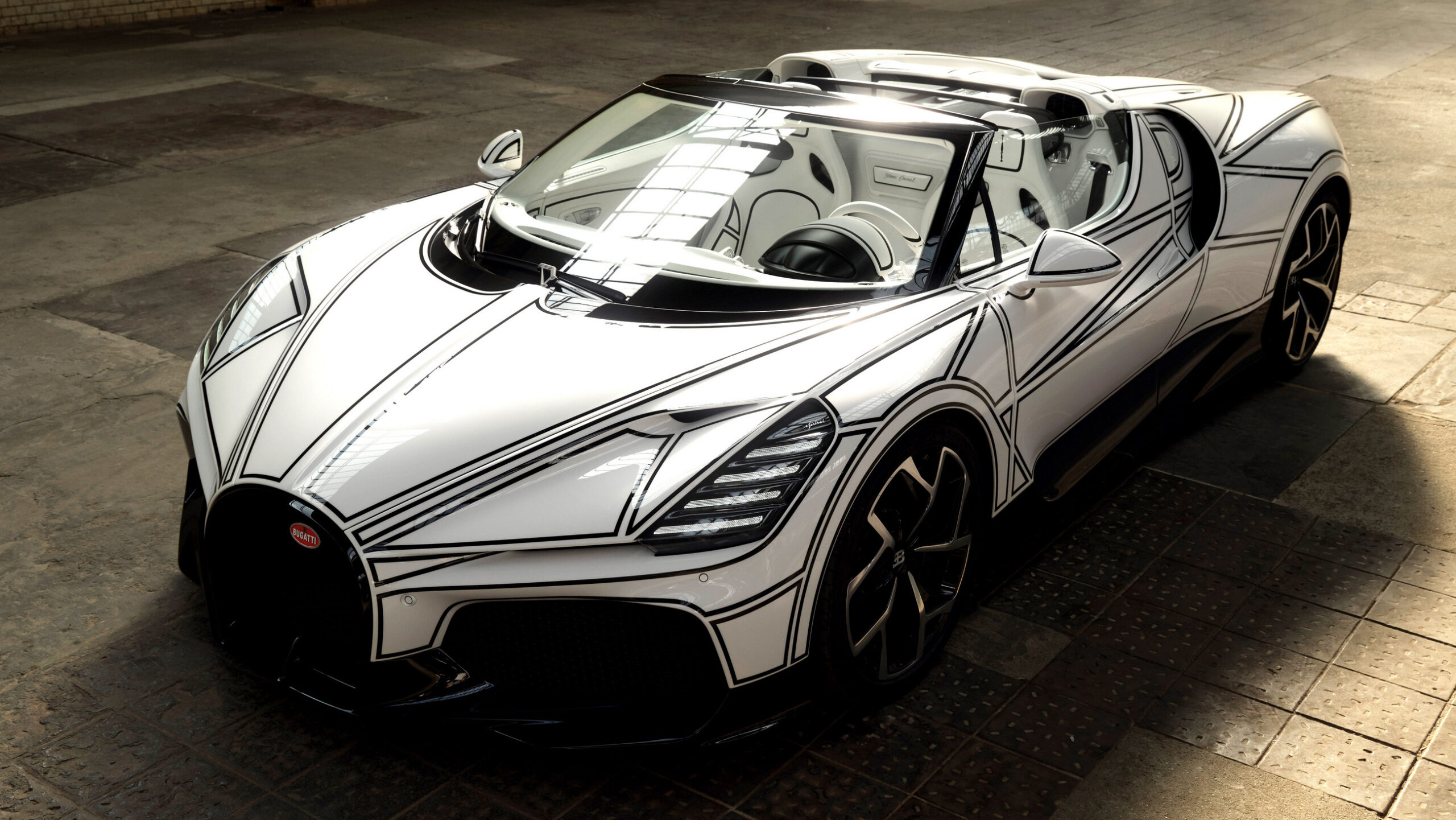
Blanc Éternel Hides Its Speed Behind a Gas Cap
Bugatti built a 261-mph roadster and made sure you'd notice the porcelain first.
From the other desks.

Gold Leaf on a Lacquer Dial, and the Weight of What That Costs
Awake's Frosted Leaf Royal Blue asks a question Vietnamese craft has never quite had to answer at this price.

ESPN Named Him. Then Unnamed Him. Nobody's Explaining the Gap.
A retraction without a reckoning is just a deleted link.

Hide My Email Has Been Showing Your Email
Apple's privacy flagship has a hole in it. They've known for over a year.