Boreham Built a New Escort From Nothing and Called It the Original
At £300,000, the Boreham Escort RS isn't nostalgia — it's a philosophical argument with a 10,000rpm redline.
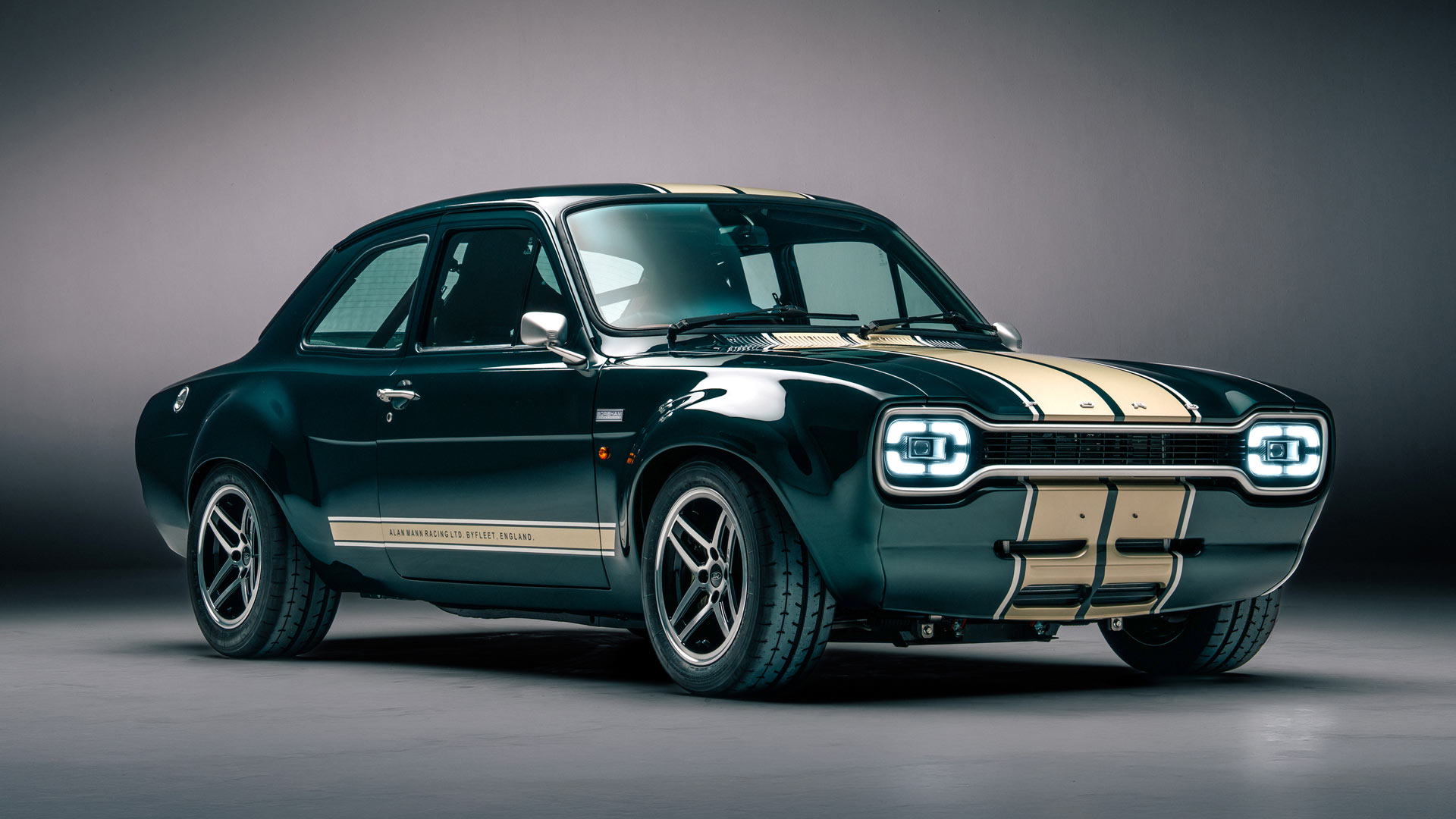
Photo · Motoring Research
What a Copy Costs
Imagine standing in front of something that looks exactly like a memory. Same silhouette. Same proportions you've seen in old rally photographs, in grainy footage from stages that no longer exist. And then someone tells you it's brand new. Not restored. Not resurrected from a donor shell. New, from the ground up — licensed by Ford, built by a British firm called Boreham Motorworks, and priced at £300,000.
The instinct is to feel something complicated about that.
Because the question the Boreham Escort RS forces you to ask isn't really about the car. It's about what we think authenticity is for. When does a faithful reproduction become the real thing? When does heritage stop being about preservation and start being about permission?
The Continumod
Boreham has coined a word for what they've made: a "continumod." Not a restomod, which implies a surviving original being dragged forward through time. A continumod, as they describe it, is an entirely new creation — a continuation of the lineage rather than a modification of an existing object. Autocar reports that the car is described as "the first brand-new road-going Ford Escort Mk1 in more than 50 years," and it debuted in full production form, with final specifications, at the London Concours.
The specs are not subtle. Ten thousand rpm. A redline that belongs in a racing context, sitting inside a shape that most people associate with a different era entirely. Boreham has called it a contender to be "one of the most focused lightweight performance cars of the modern era." That's a significant claim, and the 10k redline suggests they mean it physically, not just rhetorically.
Ford's blessing matters here. This isn't a boutique operation quietly borrowing an icon's visual language and hoping nobody calls the lawyers. The licensing is official. Which means Ford looked at what Boreham was doing — building a wholly new car in the image of a fifty-year-old one — and said yes. That institutional endorsement is its own kind of statement. It means the original manufacturer has decided that the spirit of a thing can be transferred into a new object without the original object being involved at all.
I find myself turning that over.
The Logic of Inheritance
There's a version of this story that's easy to dismiss. Rich people want the feeling of a classic without the compromises of owning one — the fragility, the maintenance, the constant negotiation with age. So someone builds them a new version, wraps it in nostalgia, charges accordingly. That story exists. It's not wrong.
But the Boreham Escort is doing something stranger than that. A restomod preserves the transaction between you and the original object. Even heavily modified, there's still a document of the past inside it — a VIN, a floor pan, a firewall that was stamped in a factory decades ago. The continumod severs that entirely. What's inherited is purely conceptual: the shape, the name, the lineage. The steel is all new.
And yet Ford considers this legitimate. Boreham considers this legitimate. The London Concours — a venue that takes these distinctions seriously — gave it a debut. The market, presumably, will consider it legitimate at £300,000 a unit.
What that tells you is that heritage, in 2025, has been fully decoupled from physical continuity. The story of a thing is now transferable into a new object, as long as the right people authorize the transfer. That's not cynical — or at least it doesn't have to be. Oral traditions work this way. Craft lineages work this way. A violin-maker who learned from a master and builds in that tradition isn't making fakes. But they're also not making the master's violins.
The Boreham Escort sits in that uncomfortable, interesting space.
What the Redline Says
Here's what keeps pulling me back. The 10,000rpm redline is not a nostalgic choice. Nothing about the original Escort's era produced engines that sang at ten thousand revolutions. That number is a contemporary performance engineering decision — it's there because Boreham wanted to build one of the most focused lightweight performance cars alive, and that's what that ambition requires.
Which means the car is actually doing two things simultaneously. The exterior is a conversation with the past. The engineering is a flat-out sprint into the present. The body says "remember this," and the engine says "forget everything you know about what this car could do."
That tension is either the most honest thing about the Boreham Escort or the most revealing. It's honest because it doesn't pretend the past was better — it takes the icon seriously enough to wonder what it would become with fifty more years of knowledge behind it. It's revealing because it shows that what we're actually buying, at this price point, isn't a piece of history. It's a fantasy of what history could have been.
I don't say that to diminish it. Fantasies about what could have been are some of the most powerful things humans make. They're called art, sometimes. They're called architecture. Sometimes they're called a £300,000 Ford Escort RS with a 10,000rpm redline and Ford's blessing, making its world debut in London.
The question isn't whether Boreham should have built it. The question it leaves you with is simpler and harder: what else in your life are you preserving out of loyalty to an object, when what you actually love was always just the idea?
Keep reading cars.

800 Horsepower, One Ton of Doubt
Lamborghini built the most powerful SUV it's ever made. It's also slower than what it replaced.

£11,990 Draws a Line Under Every Excuse You Had Left
Dacia just made the cheapest new car in Britain electric — and that's not a footnote, it's a verdict.

Blanc Éternel Hides Its Speed Behind a Gas Cap
Bugatti built a 261-mph roadster and made sure you'd notice the porcelain first.
From the other desks.

Gold Leaf on a Lacquer Dial, and the Weight of What That Costs
Awake's Frosted Leaf Royal Blue asks a question Vietnamese craft has never quite had to answer at this price.

ESPN Named Him. Then Unnamed Him. Nobody's Explaining the Gap.
A retraction without a reckoning is just a deleted link.

Hide My Email Has Been Showing Your Email
Apple's privacy flagship has a hole in it. They've known for over a year.