German Engineering, Chinese Shareholders, American Consequences
A congressional bill aimed at Beijing might accidentally exile one of Stuttgart's finest from US showrooms — and nobody writing it seemed to notice.
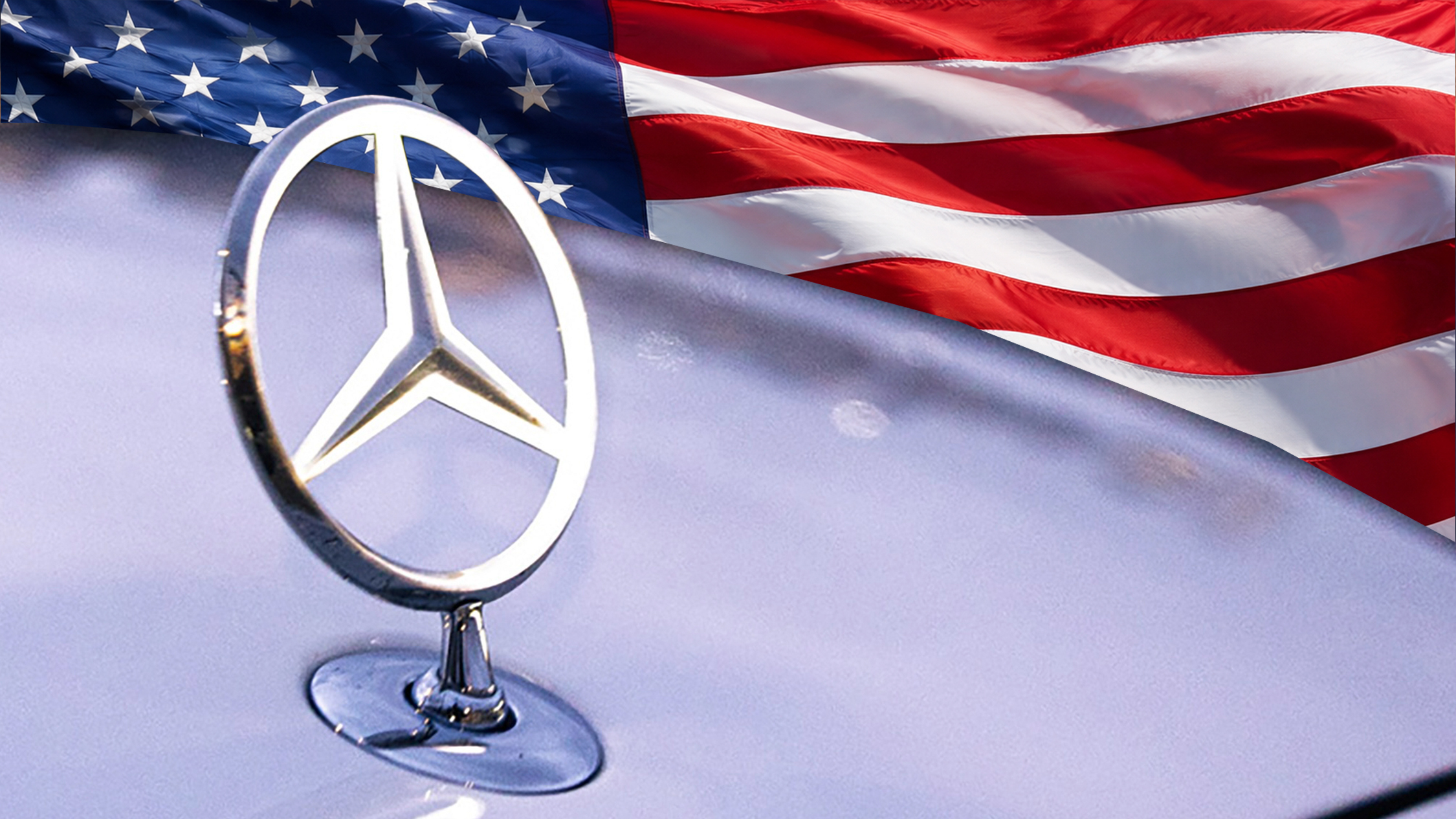
Photo · Carscoops
Nobody drafting economic warfare legislation stops to ask whether the shrapnel has a passport.
That's the quiet disaster buried inside the news that Mercedes-Benz could be banned from selling cars in the United States — not because of anything Mercedes did, not because a W-class sedan poses a national security threat, but because Chinese investors, including at least one tied to the Chinese state, hold a significant ownership stake in the company. A congressional bill designed to wall off Chinese automakers from the American market was written broadly enough that it might catch a German manufacturer in the same net. Carscoops flagged it. Jalopnik called the bill poorly written. The Autopian framed it as the complicated interplay between industrial policy, economic nationalism, and global car production — and noted that for a German automaker relying on the United States, the implications could be fatal.
All three outlets are covering the same legislative grenade. What they're collectively pointing at, without quite saying it in those terms, is something more fundamental: economic nationalism has matured past the point of caring about friendly fire.
The Target Was Never This Precise
The bill exists because there's a legitimate concern — Chinese automakers, often backed by state capital, arriving in American dealerships at prices that undercut domestic production. That's a real conversation. The political will to have it is real. But legislation that defines Chinese ownership as disqualifying, without accounting for the layered, multinational reality of how global corporations are actually capitalized, is going to catch things it was never meant to catch.
Mercedes-Benz is a German company. It builds cars in Germany. It also sells a substantial number of them in the United States. The fact that a portion of its shares are held by Chinese entities — including one with state ties — is a product of how global capital markets work, not evidence of some Trojan horse strategy to move sedans across the Pacific. These are two entirely different situations wearing the same regulatory definition.
And yet the bill, as written, reportedly doesn't distinguish between them.
What This Reveals
There's a version of this story where it gets fixed — where someone in a committee room reads the Carscoops piece, makes a call, and the language gets tightened before it becomes law. That version is possible. Legislative drafts get amended.
But the fact that it was written this way at all tells you something about the current appetite for precision. Industrial policy, when it's driven by fear rather than strategy, tends to draw circles rather than lines. It says Chinese-connected and means Chinese threat, without stopping to verify whether those two things are the same. Sometimes they are. Sometimes you're talking about a Stuttgart automaker with a complicated cap table.
The car itself — the object, the machine, the thing you actually put in gear and point down a highway — is nowhere in this conversation. That's almost the strangest part. Mercedes builds vehicles that people want, that have earned their reputation through engineering and execution, and the question of whether Americans can buy them is now subject to a shareholder register that the buyer never thought to check and the lawmaker apparently didn't either.
Economic nationalism doesn't have a problem with collateral damage. It has a problem with admitting collateral damage exists.
Keep reading cars.

800 Horsepower, One Ton of Doubt
Lamborghini built the most powerful SUV it's ever made. It's also slower than what it replaced.

£11,990 Draws a Line Under Every Excuse You Had Left
Dacia just made the cheapest new car in Britain electric — and that's not a footnote, it's a verdict.

Blanc Éternel Hides Its Speed Behind a Gas Cap
Bugatti built a 261-mph roadster and made sure you'd notice the porcelain first.
From the other desks.

Gold Leaf on a Lacquer Dial, and the Weight of What That Costs
Awake's Frosted Leaf Royal Blue asks a question Vietnamese craft has never quite had to answer at this price.

ESPN Named Him. Then Unnamed Him. Nobody's Explaining the Gap.
A retraction without a reckoning is just a deleted link.

Hide My Email Has Been Showing Your Email
Apple's privacy flagship has a hole in it. They've known for over a year.