Jony Ive Walked Into Maranello and Moved the Furniture
Ferrari's first EV didn't just arrive — it brought someone from outside the religion to rewrite the scripture.
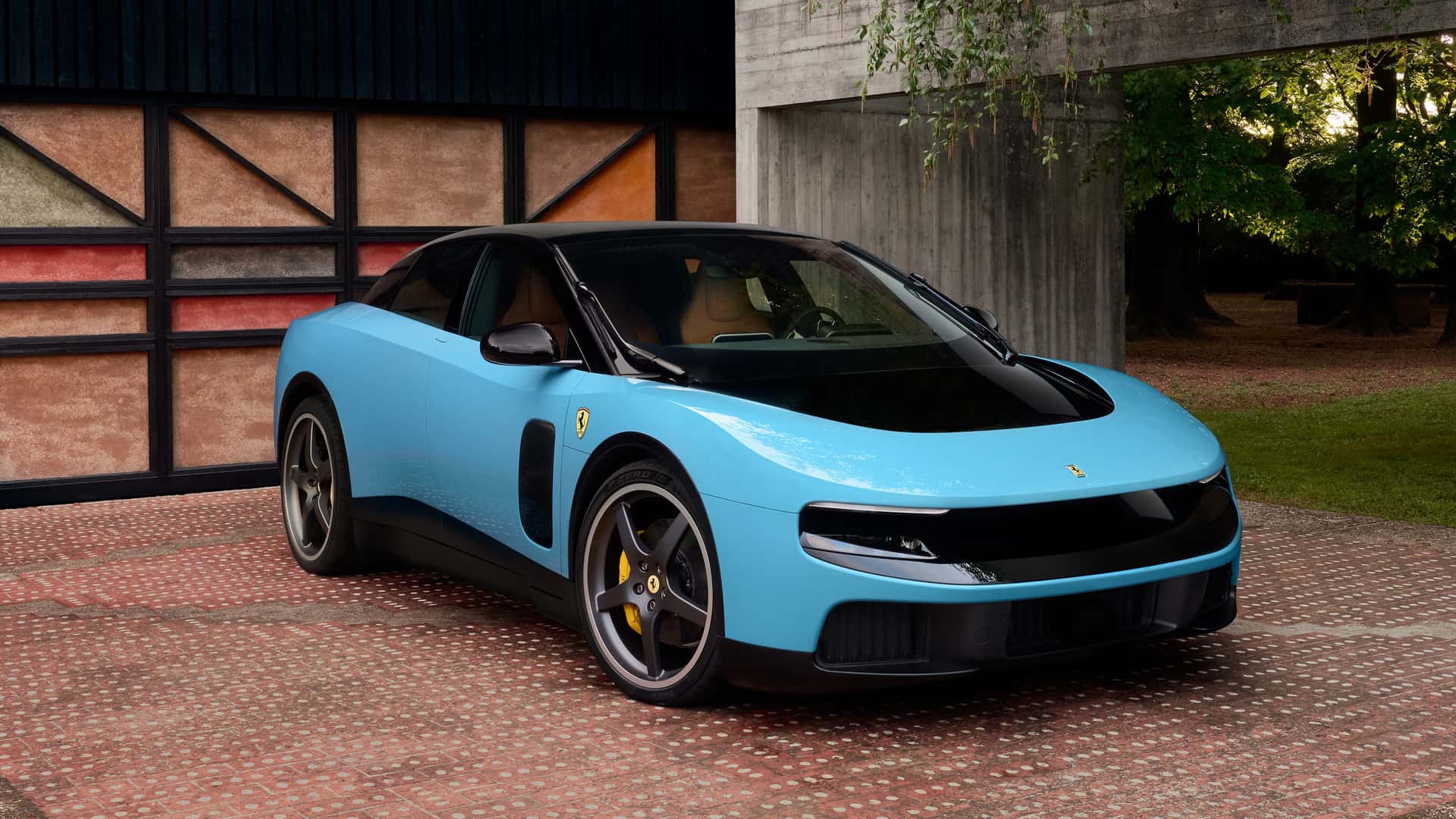
Photo · Motor1.com - Articles
Rome, and a Question Nobody Was Asking Out Loud
Somewhere in Rome, under lights arranged for maximum drama, Ferrari unveiled a car that looks like it was designed by someone who has never needed to ask permission from the prancing horse. That someone is Jony Ive — the man who shaped the object in your pocket, the laptop on your desk, the watch on your wrist — and the car is called the Luce. Ferrari's first EV. Five seats. Four doors. Over a thousand horsepower. A price that starts at 550,000 euros in Italy. And a design that, depending on where you're standing, either signals the future of one of the world's most mythologized car companies or the end of it.
The coverage that landed in the hours after the Rome reveal was telling — not for what it said about the Luce, but for the question it kept circling without ever quite asking directly: does a brand defined by decades of aesthetic doctrine have to go outside itself to stay relevant? Ferrari handed LoveFrom, the design collective Ive runs with Mark Newson, not just the interior brief but the authority, per multiple sources, to define the design direction of the entire project from the outset. That's not a collaboration. That's an admission.
I keep thinking about what that decision actually means.
The Object Itself
Start with the numbers, because they're genuinely staggering. Four electric motors, one per wheel. A 122 kWh battery. A claimed range of 523 miles, pending homologation, according to Autocar. Zero to 62 mph in 2.5 seconds. A top speed of 192 mph. At 5,026 mm in length, the Luce is the largest car Ferrari has ever built — wider and longer than the Purosangue, which already felt like an act of institutional courage when it arrived.
Then there are the details that don't fit cleanly into a spec sheet. The Luce is Ferrari's first five-seater. Its first car with suicide doors — what the industry calls coach doors — which is the kind of design choice that forces a rethink of how bodies enter and exit a space, how the car presents itself when it opens up to the world. One outlet reported that the audio system runs at 3,000 watts, a number that sounds less like a car feature and more like a small concert venue. The writer at Driving called it the best interior they'd seen in a production car. The writer from Electrek, who was flown to Rome for the reveal and spent around 30 minutes with the car up close, described a machine that challenges assumptions about what a Ferrari should look like, who should sit in it, and how it should sound — while remaining, in their words, unmistakably Ferrari in the ways that matter most: emotions.
That last part is doing a lot of work. Because the ways it doesn't look like a Ferrari are significant.
What Ive Brought That Ferrari Couldn't
Wired called it a complete break from the brand's aesthetic archetype. Carscoops noted that the result looks nothing like what buyers expect from the prancing horse. The Autopian went further, suggesting that many enthusiasts have already checked out on modern Ferraris altogether — that the cars had become too abstract, too inaccessible, objects of finance rather than desire — and then argued, with some genuine conviction, that the Luce is actually interesting in a way recent Ferraris haven't been.
That's the contradiction sitting at the center of all this coverage. The car that looks least like a Ferrari is the one that's re-engaged people who had stopped paying attention to Ferraris.
This is what Ive brought. Not just aesthetic vocabulary borrowed from consumer electronics — the Magic Mouse comparison from The Autopian is funny precisely because it's not entirely wrong — but a cultural permission structure that Ferrari couldn't generate internally. When you've spent decades building one of the most recognizable design languages in the world, that language becomes a cage. Every new car has to negotiate with everything that came before it. Every choice is made in the shadow of the Testarossa, the F40, the 250 GTO. Ive arrived without that debt. He could look at a Ferrari and see a blank surface instead of an obligation.
The result is a car with UK deliveries set for spring 2027, priced around £440,000, that Robb Report felt compelled to clarify is not an entry-level grocery hauler. Which is, in its own way, a sign of the times — a five-door, five-seat Ferrari requires disambiguation.
What It Actually Costs to Move Forward
Heritage brands have always faced this problem. The thing that makes you valuable is the thing that makes you slow. The iconography becomes the trap. And the louder your iconography — few are louder than a Ferrari — the harder it is to escape without someone from outside the room pointing at the exit.
Ferrari found that someone. The Luce exists because Maranello, at some level, understood that it couldn't get here alone. That the next chapter of what a Ferrari means required a collaborator who didn't know, or didn't care, what a Ferrari was supposed to look like.
There's something worth sitting with in that. Not just for car companies. For anyone who's been doing the same thing long enough that the doing has become the definition. Sometimes staying true to what you are requires letting someone else tell you what you could be.
The Luce goes on sale. The argument about whether it's really a Ferrari never will.
Keep reading cars.

800 Horsepower, One Ton of Doubt
Lamborghini built the most powerful SUV it's ever made. It's also slower than what it replaced.

£11,990 Draws a Line Under Every Excuse You Had Left
Dacia just made the cheapest new car in Britain electric — and that's not a footnote, it's a verdict.
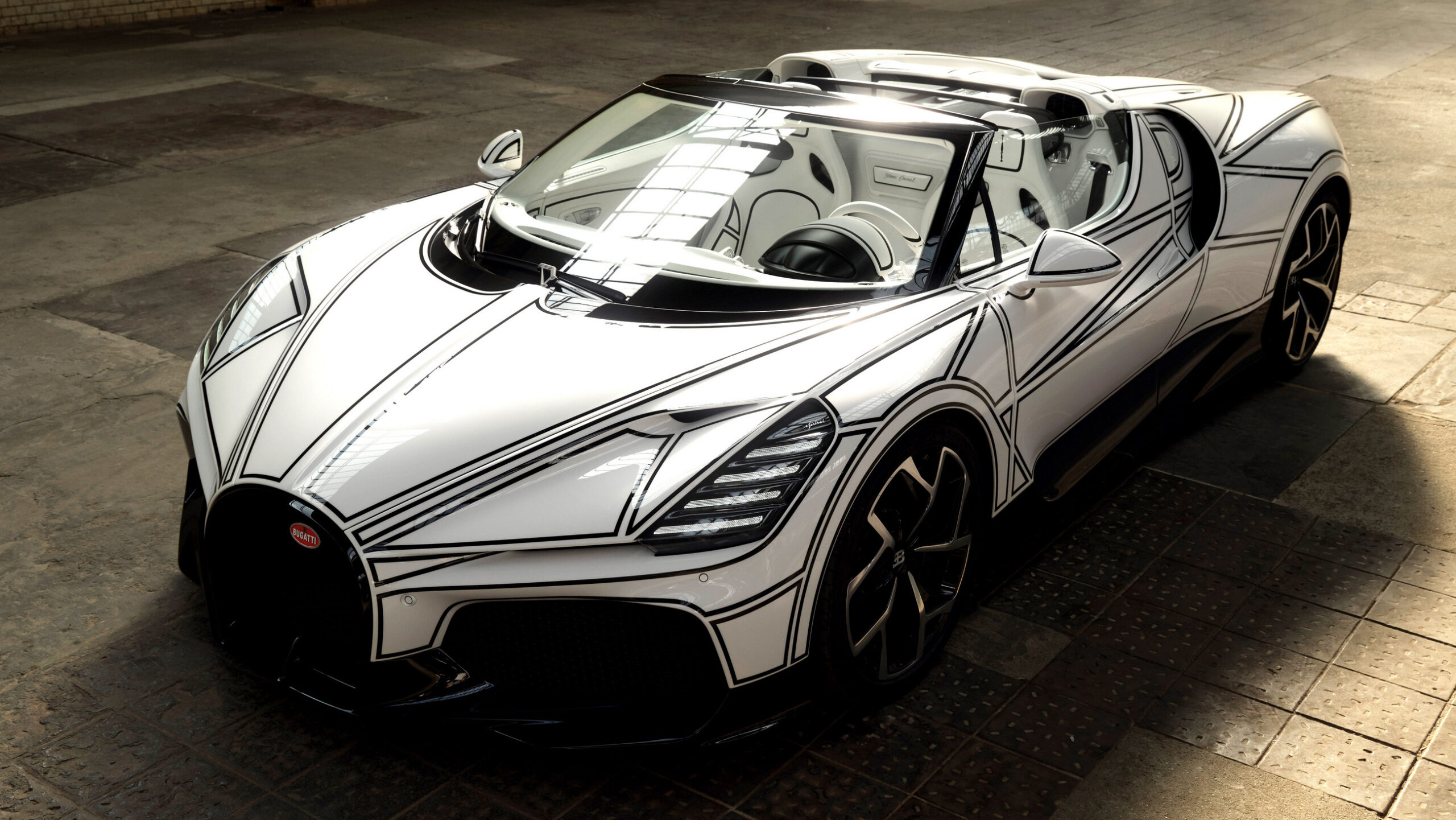
Blanc Éternel Hides Its Speed Behind a Gas Cap
Bugatti built a 261-mph roadster and made sure you'd notice the porcelain first.
From the other desks.

Gold Leaf on a Lacquer Dial, and the Weight of What That Costs
Awake's Frosted Leaf Royal Blue asks a question Vietnamese craft has never quite had to answer at this price.

ESPN Named Him. Then Unnamed Him. Nobody's Explaining the Gap.
A retraction without a reckoning is just a deleted link.

Hide My Email Has Been Showing Your Email
Apple's privacy flagship has a hole in it. They've known for over a year.