RJ Scaringe Is Fixing the Car After the Car
A $42,000 fender bender and haptic scroll wheels that aren't really mechanical — Rivian's real bet isn't on range or horsepower, it's on whether taste and accountability can outlast the hype cycle.
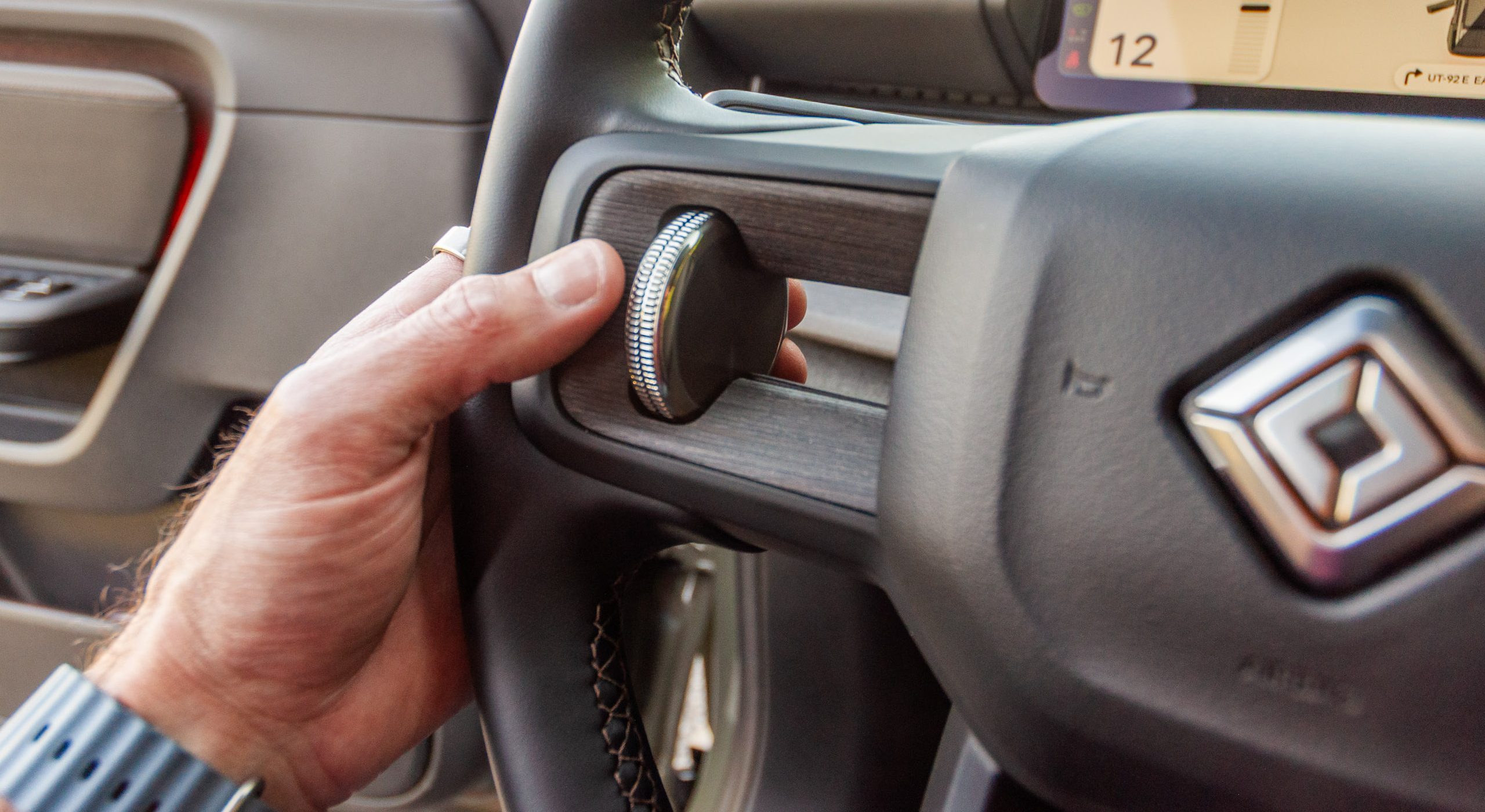
Photo · The Drive
The Bill Nobody Expected
Picture it: a parking lot. Low speed. The kind of bump that used to mean a crumpled bumper cover, a few hundred dollars, maybe a week without your vehicle while the shop ordered parts. Instead, a Rivian owner walked away from that moment with a repair estimate north of $42,000. Not a totaled truck. A fender bender.
Rivian CEO RJ Scaringe told The Drive that number should never happen — and more importantly, that he knows why it did. Which means two things simultaneously: that it has happened, and that the company has been watching. That's not spin. That's a company in the uncomfortable middle of becoming what it said it would be, staring at the gap between the promise and the invoice.
The EV industry spent years winning the spec war. Range. Charging speed. Zero-to-sixty. Numbers that fit in a headline and printed clean on a comparison chart. What nobody stress-tested publicly — what the marketing decks didn't cover — was what happens after the first ding. Who fixes it. How long it takes. What it costs. And for a category of vehicle that's supposed to represent the future, the answer has sometimes been: a lot, slowly, expensively, and with parts you can't source from anyone except the manufacturer.
Scaringe's admission isn't a scandal. It's rarer than that. It's accountability surfacing in an industry that usually waits for the lawsuit.
Haptic Feedback in a World Full of Glass
On the same day you learn about the $42,000 fender bender, you also learn that Rivian over-engineered scroll wheels for the R2's Halo interface — and that the satisfying clicks you feel when you use them aren't mechanical at all.
That last part is worth sitting with.
In a moment when every automaker is either removing physical controls entirely or defending their touchscreen monoculture, Rivian went the other direction and then kept going past it. The Drive reported that Scaringe walked them through how the R2's software-defined Halo wheels produce haptic feedback that mimics mechanical sensation — engineered to feel like something it isn't, because what it isn't is what drivers actually want. The tactile click. The resistance that tells your hand it did something. The small, reliable confirmation that the machine heard you.
It would be easy to be cynical about this. Haptic feedback that pretends to be mechanical is still a simulation. You could argue Rivian is selling the feeling of a thing rather than the thing itself. But I keep coming back to the other interpretation, the one that feels more honest: they listened to what people were actually complaining about — the cold glass, the lag, the eyes-off-road fumble — and instead of dismissing it or patching it with a software update, they built a physical object designed to answer the complaint. The scroll wheel exists because the absence of the scroll wheel was felt.
That's not engineering as theater. That's engineering as empathy.
What Gets Bet When You Bet on Taste
These two stories — the repair cost and the haptic scroll wheel — look unrelated until you hold them next to each other. Then they're the same story.
Both are about a company deciding that the experience of ownership matters as much as the experience of the product launch. One is about what happens when that commitment fails — when the design choices that make a vehicle distinctive also make it expensive and slow to repair after an accident. The other is about what that commitment looks like when it works — when the answer to a widespread frustration is a purpose-built object rather than a shrug.
Scaringe, in both conversations with The Drive, is doing something unusual for a CEO: he's naming the problem and describing the fix in the same breath, without waiting for someone else to name it first. The repair cost conversation is particularly striking. He's not hedging. He's not blaming supply chain or insurance networks or the complexity of modern vehicles in general — though all of those things are real. He's saying the outcome was wrong and it shouldn't happen. That's a different posture than most of the industry takes, and it costs something to take it publicly.
The EV moment has always been framed as a technology story. Battery chemistry. Software updates over the air. The grid and the charger and the range. But the actual lived experience of owning one of these vehicles is increasingly a design story and a service story — what it feels like under your hands, and what it costs you when something goes wrong.
The Gap Between the Showroom and the Shop
Rivian isn't the only company navigating this. But they're one of the few talking about it out loud, in specifics, with the CEO's name attached.
The $42,000 repair and the software-defined click of a scroll wheel are both symptoms of the same underlying condition: building a new kind of vehicle from scratch means you get to choose everything, and everything you choose has consequences you didn't fully anticipate. The haptic wheel is a consequence of choosing to care about touch. The repair bill is a consequence of choosing to build differently — and not yet having the service infrastructure to match the ambition.
What you do with the gap between those two things says more about a company than any spec sheet. Some close it quietly and hope nobody noticed. Some close it with a press release. Some — and this is the rarer move — close it by standing in front of a journalist and saying: that number was wrong, here's why, and here's what we're changing.
I don't know if Rivian pulls it off. Nobody does yet. But I know that a company willing to say the quiet part about its own repair costs while simultaneously over-engineering a scroll wheel nobody asked for is making a particular kind of bet — that the people who buy things want to feel like someone thought hard about them. Not just about the vehicle. About them.
That bet doesn't always pay. But it's the only one worth making.
Keep reading cars.

800 Horsepower, One Ton of Doubt
Lamborghini built the most powerful SUV it's ever made. It's also slower than what it replaced.

£11,990 Draws a Line Under Every Excuse You Had Left
Dacia just made the cheapest new car in Britain electric — and that's not a footnote, it's a verdict.

Blanc Éternel Hides Its Speed Behind a Gas Cap
Bugatti built a 261-mph roadster and made sure you'd notice the porcelain first.
From the other desks.

Gold Leaf on a Lacquer Dial, and the Weight of What That Costs
Awake's Frosted Leaf Royal Blue asks a question Vietnamese craft has never quite had to answer at this price.

ESPN Named Him. Then Unnamed Him. Nobody's Explaining the Gap.
A retraction without a reckoning is just a deleted link.

Hide My Email Has Been Showing Your Email
Apple's privacy flagship has a hole in it. They've known for over a year.