Sixty Years of Being Undeniably Right
Every supercar made since has been answering a question the Miura asked first.

Photo · Hagerty Media
Before the Template
Picture a car so visually extreme that, at its debut, the crowd reportedly couldn't look away — not because it was performing, but because it simply existed. There it sat. Low, wide, with an engine mounted transversely behind the seats and a body shaped less like engineering and more like intention. The Lamborghini Miura didn't arrive quietly. It arrived as a statement that the industry hadn't yet made — and then spent the next six decades proving the industry should have made it sooner.
This year, the Miura turns sixty. Three sources from Hagerty's coverage have circled the anniversary from different angles — the market, the history, the design — and what's remarkable isn't the variation in their approaches. It's the unanimity underneath them. Every piece arrives at the same conclusion from a different door: the Miura didn't just predict the supercar. It defined it, completely, on the first try.
That kind of certainty deserves more than a birthday candle.
What $20,000 Bought in 1967
At its U.S. introduction in 1967, a Miura cost around $20,000. In 2026 dollars, Hagerty's market coverage places that figure just north of $200,000 — and notes it made the car nearly three times more expensive than a Porsche at the time. Read that again. Not more expensive than a base commuter car. More expensive than a Porsche. The Miura wasn't priced like a sports car with ambitions. It was priced like a declaration.
And still, people bought it. Because what they were buying wasn't just transportation or even performance. They were buying the first serious, large, powerful, mid-engine production automobile — as Hagerty describes it — which is a clinical way of saying they were buying the future.
The mid-engine layout isn't a stylistic quirk. It's a physics argument. Put the mass in the middle, keep the weight centered, let the car rotate around its own spine instead of fighting against overhangs. Every supercar that came after — every machine with a beating heart behind the driver's shoulders — is quoting this geometry. The Miura didn't popularize it. It originated it, at production scale, when the industry was still building grand tourers with engines up front and ambitions that felt like compromises.
Sixty years of iteration, and the blueprint hasn't changed in its essentials.
The Honest Admission
One of the Hagerty pieces does something unexpected. The writer opens by confessing they're not a "Lamborghini person" — and not for financial reasons. The stated reason: they don't particularly like showing off, and that's how people tend to read the brand.
I find this admission more interesting than almost anything else in the coverage. Because it contains a tension that the Miura itself embodies and complicates. The car is spectacular. It is, by any honest assessment, an act of visual aggression. The most eye-catching thing on the road, as Hagerty's historical piece puts it — which isn't hyperbole, just description. And yet the Miura's spectacle isn't theater for theater's sake. It's the byproduct of decisions that were structurally, mechanically, aerodynamically motivated. The shape is the solution. The drama is the math made visible.
There's a difference between showing off and simply being unable to be modest. The Miura couldn't be modest. Not because Lamborghini was shouting — but because the engineering, done honestly, with no apology and no softening, looked exactly like that. Sincerity at that level of ambition can resemble arrogance from a distance. Most of the cars that came after learned to perform the bravado. The Miura just had it.
What Sixty Years Reveals
The Hagerty market piece is careful to note where the Miura sits now — which is to say, valued in ways that reflect both the car's historical significance and the collector market's appetite for objects that meant something first, not just loudest. The market data is specific and sourced, and I'll leave the numbers there, in their proper home. What matters more is the shape of the argument: that sixty years of inflation, of iteration, of the entire supercar industry piling more power and more technology and more everything onto the original concept, has not dislodged the Miura from its position as the reference point.
That's the thing about getting something fundamentally right. It doesn't age the way things that were merely fashionable age. Fashion cycles. Fundamentals compound.
Every year, a new mid-engine car arrives and is described in terms of what it does to the road, what it does to your body, what it means that the weight is centered and the power is immediate and the design makes no apology for any of it. Every year, the journalists writing those pieces are, without always knowing it, completing a sentence the Miura started.
Sixty years is a long time to be the answer to a question the rest of the industry is still asking.
Keep reading cars.

800 Horsepower, One Ton of Doubt
Lamborghini built the most powerful SUV it's ever made. It's also slower than what it replaced.

£11,990 Draws a Line Under Every Excuse You Had Left
Dacia just made the cheapest new car in Britain electric — and that's not a footnote, it's a verdict.
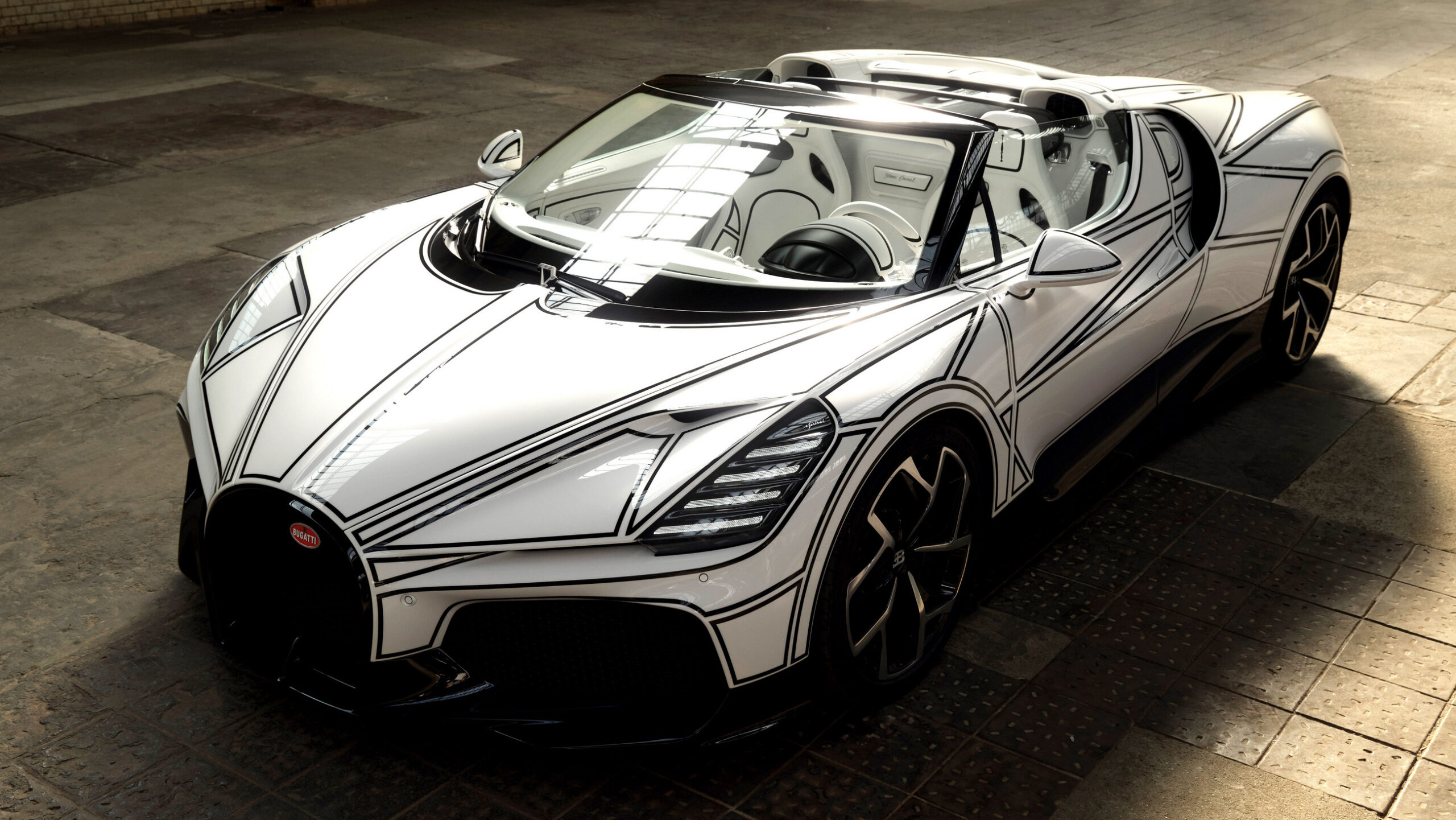
Blanc Éternel Hides Its Speed Behind a Gas Cap
Bugatti built a 261-mph roadster and made sure you'd notice the porcelain first.
From the other desks.

Gold Leaf on a Lacquer Dial, and the Weight of What That Costs
Awake's Frosted Leaf Royal Blue asks a question Vietnamese craft has never quite had to answer at this price.

ESPN Named Him. Then Unnamed Him. Nobody's Explaining the Gap.
A retraction without a reckoning is just a deleted link.

Hide My Email Has Been Showing Your Email
Apple's privacy flagship has a hole in it. They've known for over a year.