Merge Two Companies, Collect One Trillion Dollars
A SpaceX-Tesla merger wouldn't just reshape two companies — it could hand Elon Musk a trillion-dollar payout without him hitting a single operational target.

Photo · Electrek
There's a version of corporate governance where pay packages reward performance. Someone sets targets. The executive hits them. The board signs off. Shareholders get something back for the dilution.
Then there's whatever this is.
A writer at Electrek has staked out a specific and uncomfortable claim: if SpaceX and Tesla were to merge, the resulting restructuring could trigger Elon Musk's trillion-dollar compensation package automatically — not because the operational milestones were met, but because the deal itself might make them irrelevant. The structure does the work. The targets become decorative.
Sit with that for a second.
The Milestone Was Supposed to Be the Point
Musk's pay package — the one Tesla shareholders have been fighting over in Delaware courts — was always framed as performance-linked. Ambitious, yes. Absurd in scale, maybe. But tied to something: operational benchmarks, market cap thresholds, the idea that this much money flows only when this much value is demonstrably created.
What Electrek is describing isn't a performance reward. It's a structural arbitrage. A merger between SpaceX and Tesla, two companies Musk controls, could reorder the corporate landscape in a way that sidesteps the original conditions entirely. The deal becomes the milestone. The payout follows not from execution but from reorganization.
This matters beyond the number. A trillion dollars in dilution without the corresponding delivery is a specific kind of betrayal — not illegal, necessarily, but a demonstration that the protections shareholders thought they had were always conditional on Musk not finding a more creative path around them.
And he tends to find the path.
What the Merger Conversation Actually Reveals
The Electrek piece lands at a particular moment — SpaceX is reportedly heading toward an IPO, which means the two companies are already in a period of unusual structural attention. The question of what happens when their orbits intersect, legally and financially, is suddenly not hypothetical.
What's interesting isn't the merger itself. Mergers happen. What's interesting is the implication that the deal structure could be engineered to produce a specific financial outcome for a specific person, independent of whether the business rationale holds up. When the structure is the product, the product doesn't have to be.
Shareholder protections are supposed to prevent exactly this kind of thing — a controlling figure using their position across multiple entities to manufacture a trigger that ordinary performance never would have. The Electrek take suggests those protections have a loophole with a trillion-dollar prize sitting behind it.
Boards, courts, and institutional investors have been slow to reckon with the specific problem of an executive who operates at this scale across this many entities simultaneously. The old frameworks assumed some separation. Some daylight between the companies, the decisions, the interests. There isn't any here.
When the man who could propose the merger is also the man who benefits most from the merger triggering his pay package, the conflict isn't incidental. It's architectural.
The question isn't whether Elon Musk has built valuable things. He has. The question is whether 'valuable things exist' is sufficient justification for a trillion-dollar automatic payout that bypasses the terms under which it was originally promised.
Shareholders who voted for the milestones didn't vote for the merger clause they didn't know was coming.
Keep reading cars.

800 Horsepower, One Ton of Doubt
Lamborghini built the most powerful SUV it's ever made. It's also slower than what it replaced.

£11,990 Draws a Line Under Every Excuse You Had Left
Dacia just made the cheapest new car in Britain electric — and that's not a footnote, it's a verdict.
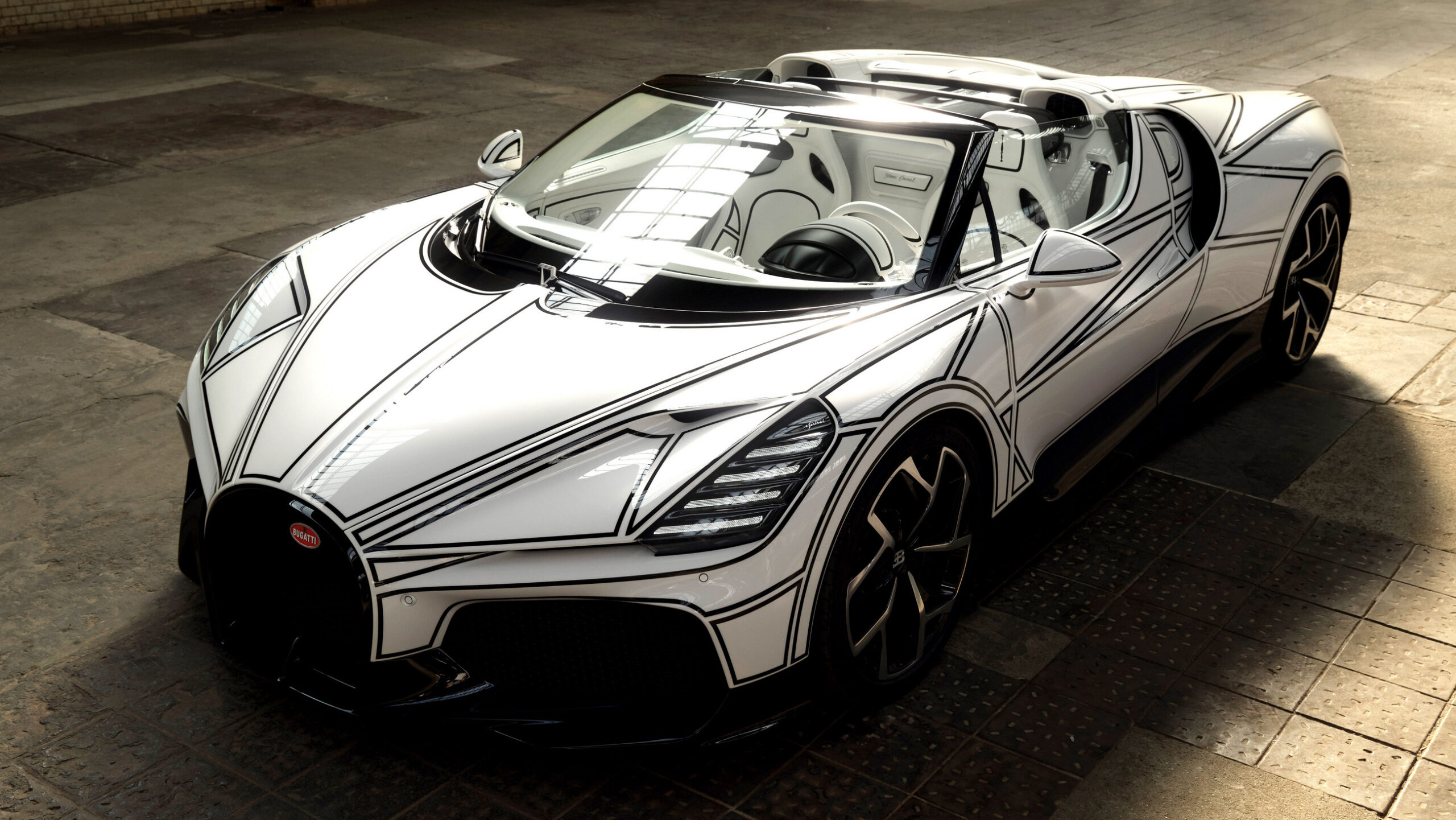
Blanc Éternel Hides Its Speed Behind a Gas Cap
Bugatti built a 261-mph roadster and made sure you'd notice the porcelain first.
From the other desks.

Gold Leaf on a Lacquer Dial, and the Weight of What That Costs
Awake's Frosted Leaf Royal Blue asks a question Vietnamese craft has never quite had to answer at this price.

ESPN Named Him. Then Unnamed Him. Nobody's Explaining the Gap.
A retraction without a reckoning is just a deleted link.

Hide My Email Has Been Showing Your Email
Apple's privacy flagship has a hole in it. They've known for over a year.