Serena Williams Walked Back Through the Gate. Notice Who Held It Open.
She doesn't need Wimbledon. Wimbledon needs to remember what it looks like when someone truly arrives.
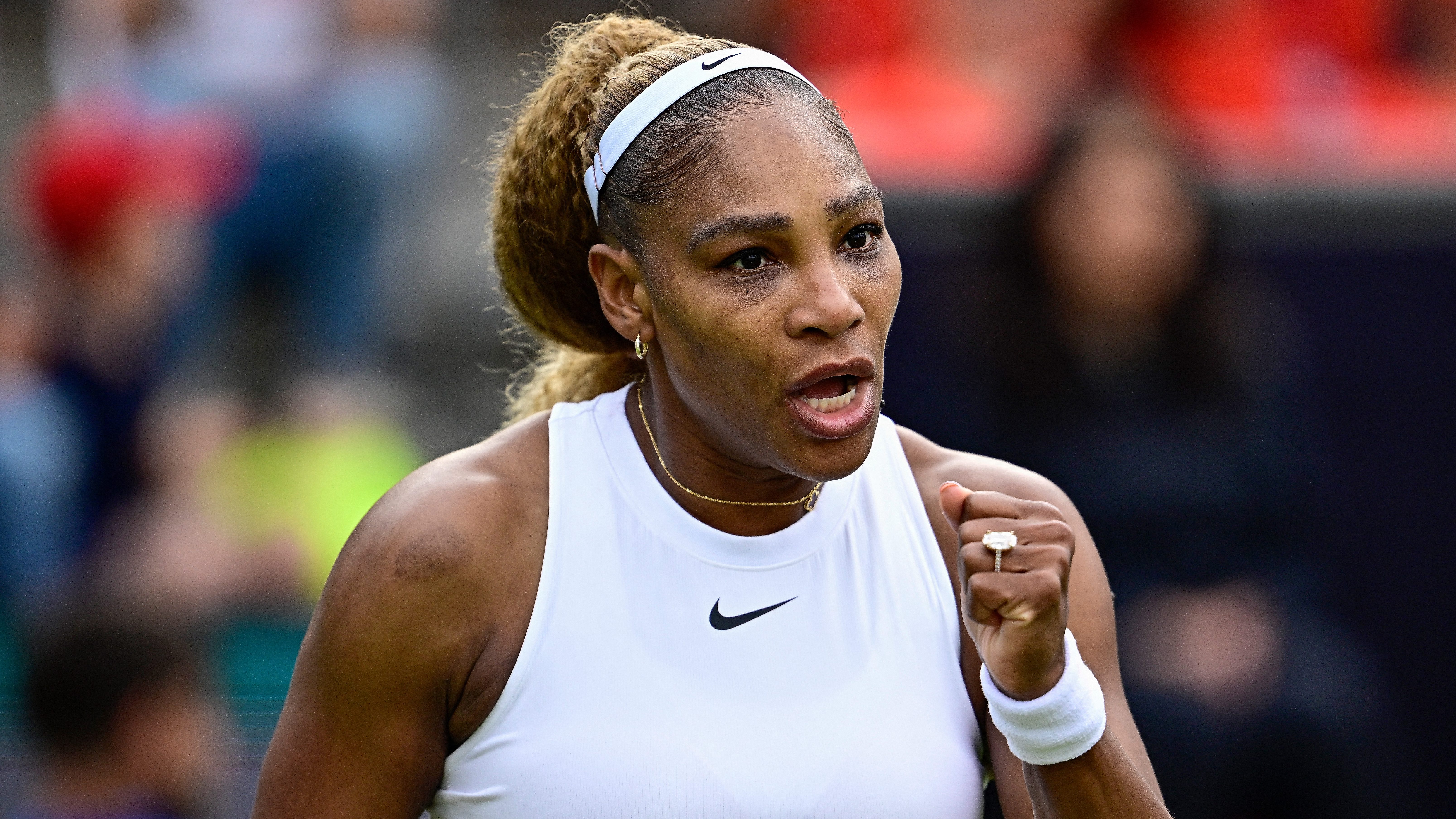
Photo · Andscape
The Weight of a Thank You
Marta Kostyuk is not a woman who runs out of things to say. Ask anyone on tour. The Ukrainian has made a reputation out of speaking plainly, publicly, without apology — in press conferences, in politics, anywhere a microphone appears. She is, by any measure, a player comfortable filling silence.
And yet, according to The Guardian's reporting, when Serena Williams greeted Kostyuk after a training session on Court 10 at Aorangi Park and thanked her for the hit, Kostyuk went quiet. What came back wasn't a tennis response. It was something closer to reverence: No, thank you for playing with me.
That's the whole picture, right there, compressed into one exchange on a practice court at the southernmost edge of the All England Club. Not in a press conference. Not in a speech. Just two players, one of them briefly forgetting that she's supposed to be a peer.
The rest of us are doing the same thing.
Four Years Is a Long Time to Stay Gone
Serena Williams stepped away after the 2022 US Open. Not a long press-tour goodbye, not a retirement lap — she stepped away. And for four years, the sport went on doing what sports do: generating results, producing champions, building new narratives. The rankings moved. The draws filled. The grass at the All England Club got cut and re-cut and cut again.
Now she's back for Wimbledon singles. The NY Post confirmed her draw, her opponent, the schedule — the logistical facts of reentry. She is, officially, a competitor again.
Here is what I keep turning over: this isn't a comeback story in the classic sense. A comeback story has a shape — the fall, the struggle, the redemption arc. It requires the protagonist to need something. It requires the sport to have taken something from her that she wants back.
But look at how this is actually unfolding. She trains in Aorangi Park, the practice area reserved only for players. Her presence there, before she's hit a single ball in competition, stops someone as formidable as Kostyuk mid-sentence. She hasn't played a match yet and she's already reorganizing the gravitational field of the tournament. That's not someone trying to prove something. That's someone who understands exactly what she carries into a room — and decided, for reasons the Guardian admits are hard to gauge, that the room needed it.
Andscape framed it through the lens of Paid in Full, a 2002 film — the same year, they noted, that Williams was assembling her first Serena Slam, holding all four major titles simultaneously. The connection they're drawing is about more than nostalgia. It's about the particular weight of someone who has already built the myth deciding to walk back into it, eyes open, on her own terms.
What She's Actually Saying
There's a version of this story where we talk about fitness, about rankings, about whether the serve is still there, about what four years away does to fast-twitch muscle. That version is fine. Useful, even. But it misses the actual stakes.
When someone who has nothing left to prove shows up anyway, they're not making an argument about themselves. They're making an argument about the space they're entering.
Serena Williams returning to Wimbledon singles is, in some essential way, a comment on what Wimbledon is without her. On what the sport looks like when its most recognizable figure is sitting at home. The Guardian noted she'll steal the early spotlight while the top female players are, in their phrasing, toiling — and there's something honest and a little uncomfortable in that framing. The current field is working. They're grinding through qualifying, through rankings math, through the slow accumulation of a career. And then she walks through the gate and the whole conversation shifts.
Is that fair? Probably not, in a strict accounting. But greatness rarely is.
I think about the Kostyuk moment a lot. Because Kostyuk is not easily impressed. She's been through things that would undo most athletes. She plays with a kind of earned defiance. And she still couldn't find the words. That's not a publicity beat. That's involuntary. That's what happens when you're standing next to something you recognize as singular.
What We Do With What We Witness
Here's the question that lingers after reading across all of this coverage: what do we do when a legend decides the moment still matters?
Most athletes leave and the door closes behind them. The sport doesn't wait. The audience moves on. The story finds new protagonists. That's how it's supposed to work, and mostly it does. But every so often someone comes back not because they're chasing something, but because they're offering something — a reminder of what the whole enterprise is capable of producing, what it looks like at its absolute apex.
Serena Williams at Wimbledon isn't a cautionary tale about athletes who can't let go. It's something rarer and stranger: a figure who understands her own weight in the culture, and chooses to set it down in the center of the room, and walk away from it on her own schedule.
We all have things we were once very good at. Things we walked away from before they walked away from us, or after, or in some messy combination of both. We know what it costs to step back in — the exposure of it, the possibility of falling short in public, the question of whether the version of yourself that showed up before can still show up now.
She's answering that question on the grass courts of SW19.
The rest of us are watching to find out what our answer is.
Keep reading sports.

ESPN Named Him. Then Unnamed Him. Nobody's Explaining the Gap.
A retraction without a reckoning is just a deleted link.

Three People Died Celebrating. FIFA Hasn't Said Their Names.
Mexico City buried three people after the World Cup crowds came through. At some point, the sport has to sit with that.

Sell the Stadium, Lose the Room
NFL franchises are rolling out the welcome mat for World Cup tourists — and the desperation is showing.
From the other desks.

800 Horsepower, One Ton of Doubt
Lamborghini built the most powerful SUV it's ever made. It's also slower than what it replaced.

Gold Leaf on a Lacquer Dial, and the Weight of What That Costs
Awake's Frosted Leaf Royal Blue asks a question Vietnamese craft has never quite had to answer at this price.

Hide My Email Has Been Showing Your Email
Apple's privacy flagship has a hole in it. They've known for over a year.