Robert Wickens Drove 24 Hours With No Feeling Below the Waist
A documentary about a paralyzed racer at the Nürburgring isn't really about what the body can't do.
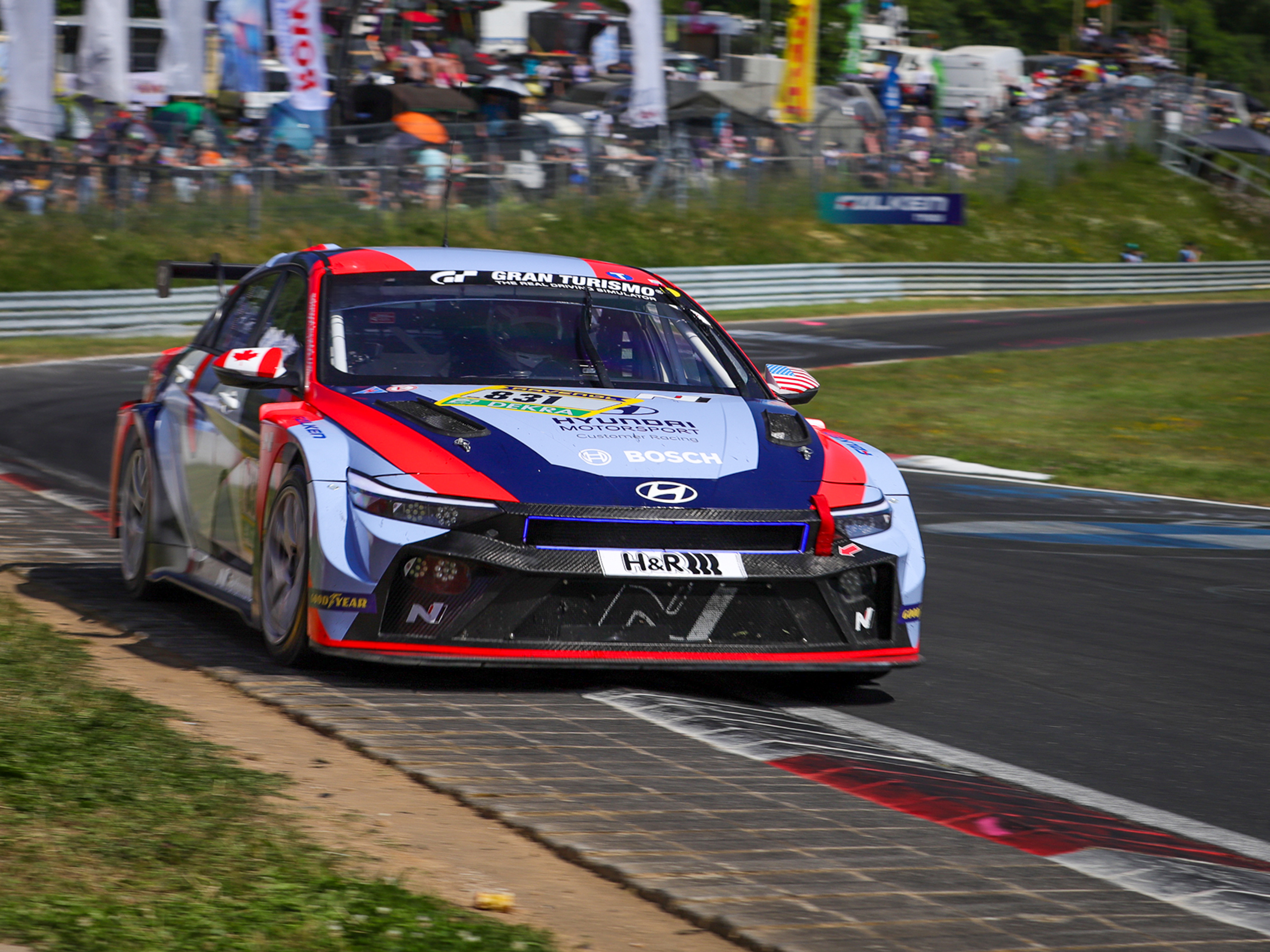
Photo · Hagerty Media
What the Green Hell Asks For
Picture the Nürburgring at night. Not the sanitized daylight version you've seen in manufacturer promo reels — the other one. Headlights strobing through fog in the Eifel forest, armco appearing and vanishing, the road dropping away faster than reflex can answer. The Nordschleife at hour fourteen of twenty-four is a negotiation between machine, mind, and the animal instinct to survive. Most drivers emerge from it hollowed out. Some don't emerge at all.
Now picture doing it without feeling your legs.
Robert Wickens was paralyzed from the waist down in an IndyCar crash. That's the fact at the center of everything Hyundai built their documentary around — a film covering his 2025 run at the ADAC RAVENOL 24h Nürburgring, released free on YouTube ahead of the 2026 edition of the race. The coverage from both Hagerty and Autoweek treats this as a story about return, about resilience, about a man reclaiming something the sport took from him. And it is all of those things. But I keep thinking it's also something else.
It's a stress test of what motorsport actually requires.
The Myth of the Instrument
There's a version of racing culture that has always worshipped the physical. The driver as athlete, as specimen, as a body trained to tolerance levels most humans never approach. The neck that can brace against G-forces. The reflexes clocked in milliseconds. The cardiovascular system that keeps the mind clear at 170 miles per hour when the brain is screaming at the body to stop.
Wickens, racing with hand controls and paralysis below the waist, doesn't fit that myth. And the fact that he completed the Nürburgring 24 Hours doesn't just complicate the myth — it quietly dismantles it.
What the Nordschleife actually demands, it turns out, is something harder to measure than leg strength. It demands the ability to read a circuit that changes every lap — temperature, rubber, the slow creep of fatigue in a co-driver who got back in the car two hours ago and hasn't mentioned the headache. It demands the courage to commit to a braking point when every signal in your nervous system is uncertain. It demands trust: in the machine, in the team, in the version of yourself you've agreed to become for the duration.
None of those things live in your legs.
Twenty-Four Hours Is a Long Time to Be Honest
What makes the Nürburgring 24 specifically brutal — not just technically but psychologically — is duration. A sprint race lets you sustain a performance. A twenty-four hour race forces you to negotiate with yourself repeatedly, through the night, through the doubt, through the hours when the gap between who you thought you were and who you actually are becomes impossible to ignore.
Hyundai chose to document Wickens in exactly this setting, and the choice says something. A shorter, cleaner race would have proven capability. The 24 Hours proves character — the willingness to keep returning to the car, to keep finding the commitment, to keep trusting the adapted controls and the team behind them across a full day and night on one of the most unforgiving circuits on the planet.
Both sources frame this as a comeback story. I think it's also a proof of concept — that the sport's gatekeeping was always about the body because the body was the easiest thing to measure, not because it was the most important thing on offer.
What Gets Left at the Curb
I'm not naive about what physical ability still means in motorsport. The sport remains demanding in ways that adaptation can only partially address, and Wickens himself has put in visible, documented work to compete at this level. The documentary exists partly because his story is extraordinary — if it were routine, Hyundai wouldn't be making films about it.
But extraordinary is a door that swings both ways. It lets you say: look at what this man overcame. It also lets you say: look at what the sport was willing to exclude before someone forced the question.
The Nürburgring doesn't care about your biography. It doesn't award points for narrative arc or emotional weight. You either get around it or you don't. Wickens got around it — twenty-four hours of it, with a team, in a Hyundai, on a circuit that has ended careers and occasionally lives.
That happened. The documentary exists so you can watch it happen. And somewhere in those hours, in the dark stretches of the Nordschleife when the only thing keeping the car on the road is judgment and nerve, there's an answer to a question the sport spent years refusing to ask.
Keep reading cars.

800 Horsepower, One Ton of Doubt
Lamborghini built the most powerful SUV it's ever made. It's also slower than what it replaced.

£11,990 Draws a Line Under Every Excuse You Had Left
Dacia just made the cheapest new car in Britain electric — and that's not a footnote, it's a verdict.

Blanc Éternel Hides Its Speed Behind a Gas Cap
Bugatti built a 261-mph roadster and made sure you'd notice the porcelain first.
From the other desks.

Gold Leaf on a Lacquer Dial, and the Weight of What That Costs
Awake's Frosted Leaf Royal Blue asks a question Vietnamese craft has never quite had to answer at this price.

ESPN Named Him. Then Unnamed Him. Nobody's Explaining the Gap.
A retraction without a reckoning is just a deleted link.

Hide My Email Has Been Showing Your Email
Apple's privacy flagship has a hole in it. They've known for over a year.