Thirty Years Old, Original Tires, More Than MSRP
When a used 4Runner clears new-car money, the market isn't making a mistake — it's making a confession.
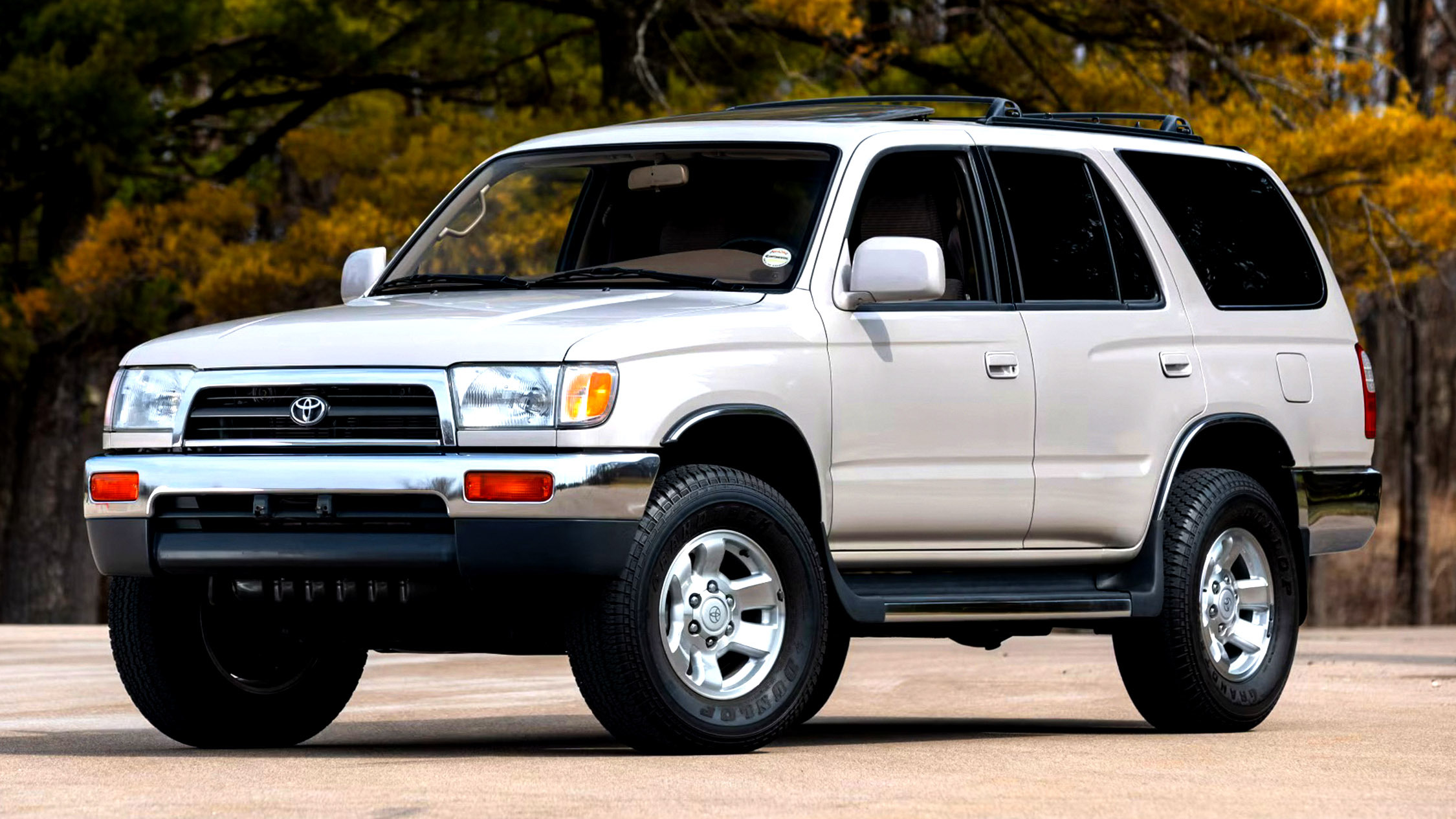
Photo · Carscoops
There's a number in the Carscoops piece that stops you cold. A 1994 Toyota 4Runner — three decades old, still wearing what the story describes as its original tires — sold for more than a brand-new one costs today. Not close. Over. And the writer isn't treating it as an anomaly. They're treating it as a data point, which is the more unsettling read.
Because data points have implications.
What the Market Is Actually Saying
The used car market has been strange for a few years now, but this is a different kind of strange. Pandemic-era pricing gouged people on rental-fleet Corollas and pre-owned crossovers nobody actually wanted — that was desperation math. This is something else. This is a buyer looking at a 30-year-old truck, noting the low miles, noting the provenance, noting that it hasn't been touched in ways that would diminish it, and deciding it's worth more than walking into a dealership and ordering new.
That's not irrational. That's a values statement dressed up as a transaction.
The 4Runner the Carscoops piece covers isn't just old — it's preserved. Low mileage. Original equipment. The kind of condition that, in any other collectible category, would have people using words like specimen. Watch collectors understand this calculus. Sneaker collectors understand it. The car market has understood it for European classics for decades. What's newer is the Japanese truck joining that conversation without apology.
Something shifted when the generation that grew up riding in these things got old enough to have real money. Nostalgia is always a factor — but nostalgia alone doesn't move markets this decisively. What moves markets is scarcity meeting desire meeting the slow realization that the new thing doesn't feel like the old thing.
The New One Can't Be This
And here's where the piece gets interesting without quite saying it directly: the transaction is partly a verdict on the current 4Runner. Not a cruel one. Just an honest one. You can buy a new 4Runner. Toyota will sell you one. It will be more capable in measurable ways, more connected, safer by every modern standard. It will also be a fundamentally different object — heavier, more complex, carrying the weight of everything the market now expects a truck-based SUV to be.
The 1994 doesn't carry any of that. It's lighter in every sense. Simpler. The kind of machine you can understand by looking at it. When a buyer pays over new-car money for that, they're not confused about which one is more capable. They know. They're buying the one that asks less of them while giving something the new one structurally cannot — a relationship with the machine that doesn't require a software update.
There's a version of this story that's pure nostalgia play, and I'd be skeptical of that version. But the Carscoops piece grounds it in specifics: condition, mileage, originality. Those aren't sentimental details. Those are the same criteria that determine value in any collectible market. The sentiment is real, but the pricing logic underneath it isn't soft.
Vintage Japanese trucks are collectible assets now. The market just stopped pretending otherwise.
The only question left is whether Toyota's watching — and whether they think the answer is to build something new that feels like it, or to let the originals keep appreciating while the new ones do their job. One of those paths is more honest than the other.
Keep reading cars.

800 Horsepower, One Ton of Doubt
Lamborghini built the most powerful SUV it's ever made. It's also slower than what it replaced.

£11,990 Draws a Line Under Every Excuse You Had Left
Dacia just made the cheapest new car in Britain electric — and that's not a footnote, it's a verdict.

Blanc Éternel Hides Its Speed Behind a Gas Cap
Bugatti built a 261-mph roadster and made sure you'd notice the porcelain first.
From the other desks.

Gold Leaf on a Lacquer Dial, and the Weight of What That Costs
Awake's Frosted Leaf Royal Blue asks a question Vietnamese craft has never quite had to answer at this price.

ESPN Named Him. Then Unnamed Him. Nobody's Explaining the Gap.
A retraction without a reckoning is just a deleted link.

Hide My Email Has Been Showing Your Email
Apple's privacy flagship has a hole in it. They've known for over a year.