Fifty Years of Getting It Right, and Nobody Wants You to Stop
Watches & Wonders 2026 was full of bold engineering and quiet anniversaries — but the story underneath all of it is about what we actually want from the things we keep.
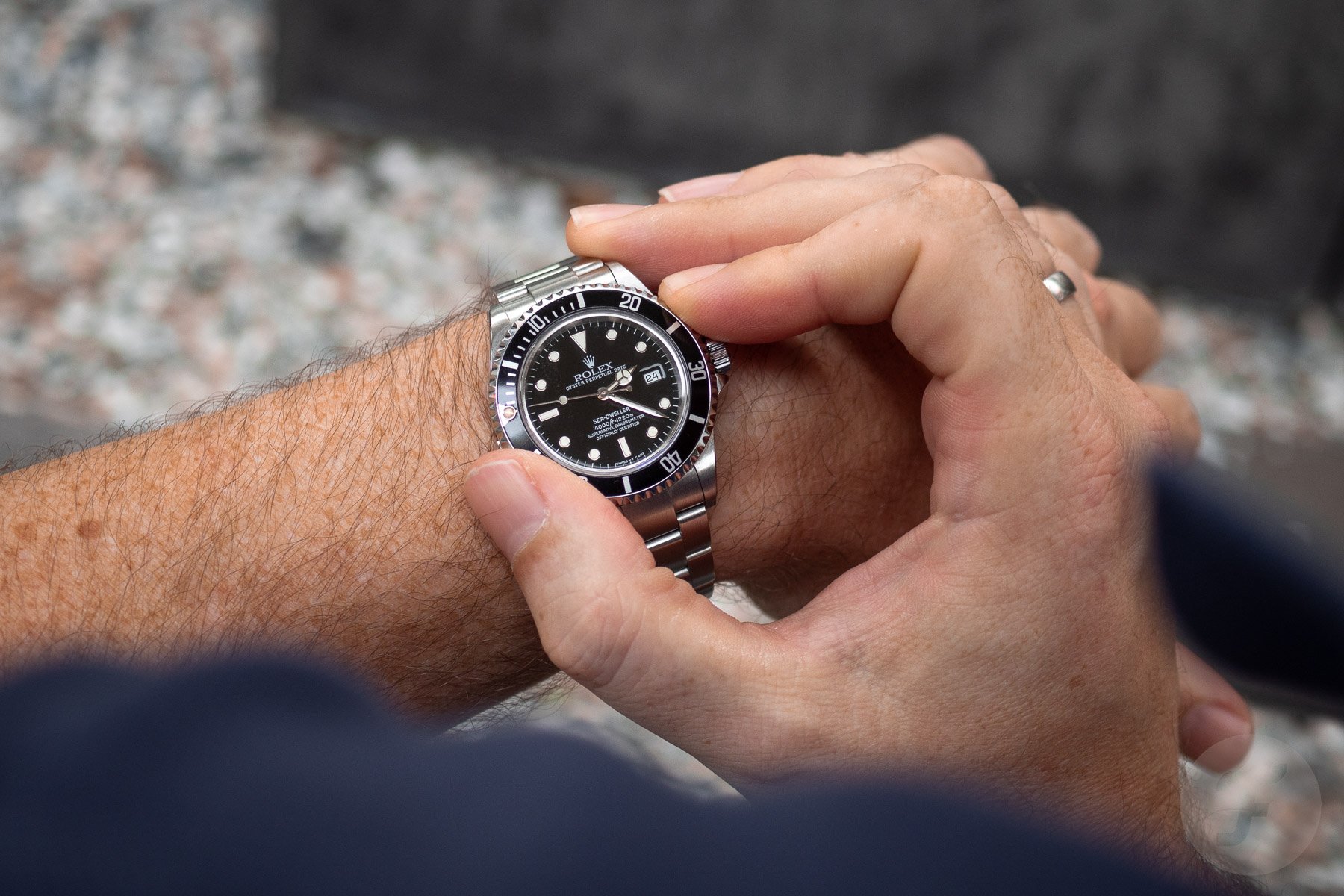
Photo · Fratello Watches – The Magazine Dedicated To Luxury Watches
The Room Full of New Things
Imagine walking into a room where every object is trying to tell you something. Not loudly — these things don't do loud, not exactly — but insistently. A tourbillon oscillating through 98% of possible positions. A movement that weighs less than a sheet of paper. A perpetual calendar you can set with the crown. A dial cut from sodalite. A hand-pump that winds a watch the way an old blood pressure cuff inflates. The room is Geneva, the week is Watches & Wonders, and somewhere between the third and fourth brand presentation, you start to feel the weight of all that ingenuity pressing down on you.
This year's fair brought more than thirty brands, hundreds of references, and enough editorial coverage to fill a small library. I read through a significant portion of that coverage — Fratello, Hodinkee's adjacent world, SJX, Monochrome, Time+Tide, WristReview, DEPLOYANT, Oracle Time, and more — and what struck me wasn't any single watch. It was the pattern underneath all of them.
The pattern is this: the brands that made the most noise at Watches & Wonders 2026 were almost universally the ones that changed the least.
The Courage of Not Reinventing
Patek Philippe didn't celebrate the Nautilus turning 50 by engineering some forced anniversary complication or chasing a trend. According to WristReview's coverage, the brand went back to what mattered from the beginning — slim cases, clean dials, balanced proportions, quiet confidence. The anniversary pieces got the spotlight, but the message was older than the occasion: we know what this is, and we're not going to apologize for it.
That same posture showed up elsewhere. Jaeger-LeCoultre introduced a new Master Control collection built around an integrated bracelet and a fresh movement, but as Worn & Wound noted in its coverage, the underlying orientation was toward chronometric elegance rather than spectacle. WristReview observed that JLC's complicated pieces — including a new entry in the Hybris Inventiva line with a multi-axis tourbillon — felt less like flexes and more like reminders of what the manufacture has always been capable of. SJX reported that the new Gyrotourbillon takes its oscillator through 98% of possible positions, which is a staggering engineering claim. And yet the watch doesn't announce itself. It just does the thing.
Piaget, per WristReview, came back to what the Polo line is supposed to feel like — the gadroons, the precious metals, the stone dials. Rolex marked the Oyster case's 100th anniversary and introduced a new proprietary gold alloy called Jubilee Gold, first appearing on the Day-Date, according to Monochrome's hands-on coverage. Even that — a new material — was deployed in service of an existing icon rather than a new direction.
The throughline isn't laziness. It's something closer to conviction.
When Restraint Becomes the Statement
There were genuine departures. Richard Mille, a brand not historically associated with simplicity, unveiled the RM 55-01 — a time-only, hand-wound piece with a movement weighing under 5 grams, according to SJX. For a manufacture that built its identity on horological spectacle, that kind of reduction is its own kind of bold. Ressence arrived with the Type 11, its first-ever proprietary calibre, the Werk RW-01, a development WristReview noted had been a long time coming given the brand's futuristic design language and its previous reliance on an older base movement.
Credor showed up to Watches & Wonders for the first time, under its own name, with just a few watches — and according to WristReview, said more with that restraint than many brands manage with twenty releases. Grand Seiko's SBGZ011, the Mystic Waterfall, stopped Oracle Time's editor in their tracks on the stand floor; a Spring Drive piece from the Micro Artist Studio that, amid a week of engineered noise, made someone quietly ignore their schedule.
H. Moser & Cie. brought a watch that requires the literal push of a pump to power it — Fratello flagged it as one of the fair's more eccentric moments. Worn & Wound's coverage of the Streamliner Pump went somewhere more personal, touching on nostalgia and the strange sensation of caring about a reference point you didn't expect to recognize in yourself.
That piece stayed with me. Because it named something the broader coverage mostly danced around.
What We're Actually Buying
Watches are the one category of object where the argument for mechanical complexity over digital convenience has to be made fresh every single year, and yet nobody really makes it anymore. The argument has been won — not by logic, but by feeling. People who wear mechanical watches know they're wearing something slower, less precise, more fragile than the phone in their pocket. They choose it anyway. That choice is the whole conversation.
What Watches & Wonders 2026 revealed, across 35 sources and hundreds of new references, is that the industry has largely stopped trying to justify itself through revolution. The Nautilus turns 50 and Patek Philippe doesn't reinvent it — they refine it, honor it, and trust that you already know why it matters. Tudor updates the Black Bay Ceramic with a new full-ceramic bracelet, according to multiple sources including Worn & Wound and DEPLOYANT, and the story is about craft rather than disruption. Roger Dubuis revives a biretrograde display originally co-developed by its founder in 1989, according to WristReview, and frames it as homecoming rather than novelty.
Iteration, done with enough integrity, stops being iteration. It becomes a kind of argument about permanence — about the value of objects that don't need to change to remain worth having.
I keep coming back to that. Not because I'm ready to spend what any of these watches cost, but because the question underneath the question is one I recognize: what do you hold onto, and what do you let go of, and how do you tell the difference?
The best watches at this year's fair didn't answer that. They just made you sit with it a little longer.
Keep reading fashion.

Gold Leaf on a Lacquer Dial, and the Weight of What That Costs
Awake's Frosted Leaf Royal Blue asks a question Vietnamese craft has never quite had to answer at this price.

Kyle Smith Has a Job Title That Didn't Exist Before. That's the Whole Tell.
When the NFL hires a fashion editor, it's not about clothes — it's about who gets to decide what matters.
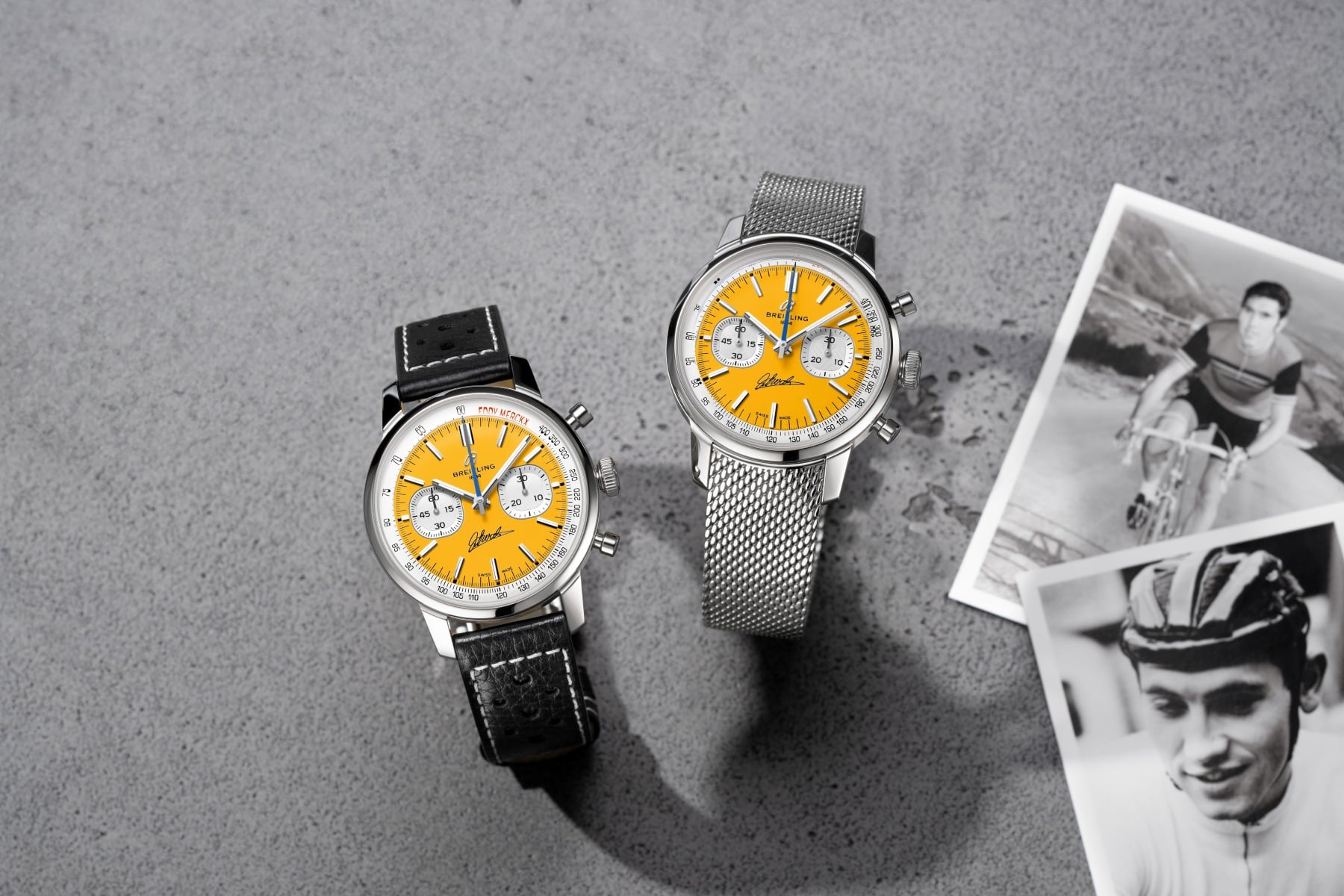
525 Victories, One Dial, and Cycling's Long Wait for a Wrist
Breitling's Eddy Merckx edition doesn't just reference a legend — it asks whether motorsport's younger sibling has finally earned its place in serious watch culture.
From the other desks.

800 Horsepower, One Ton of Doubt
Lamborghini built the most powerful SUV it's ever made. It's also slower than what it replaced.

ESPN Named Him. Then Unnamed Him. Nobody's Explaining the Gap.
A retraction without a reckoning is just a deleted link.

Hide My Email Has Been Showing Your Email
Apple's privacy flagship has a hole in it. They've known for over a year.