Jonathan Anderson Has Two Stages. Watch Which One He Dances On.
At Dior, he brought the rave. At his own store, he brought the truth.

Photo · Style - Esquire
The Permission Slip
Imagine two rooms. In one, a fashion house — storied, Parisian, institutional — fills its runway with the energy of rave culture, the pulse of underground clubs, the shadow of nights that didn't end until the morning said so. In the other, a small Soho storefront hangs illustrations from a vintage gay erotic magazine and calls it a Pride exhibition. Both rooms belong to Jonathan Anderson. But only one of them required his own name above the door.
That gap is worth sitting with.
The designer has been one of fashion's more interesting double lives for a while now. Running JW Anderson and Dior Men simultaneously means operating at two entirely different frequencies — the intimate and the monumental, the personal and the inherited. Most conversations about Anderson focus on the tension of serving two masters. But this particular moment, these two projects running nearly in parallel, asks a sharper question: not whether he can do both, but what each context allows him to say.
What Rave Culture Carries
For Dior Men SS27, Anderson drew on rave culture and the work of Fred Again, according to an interview with Esquire, weaving those influences alongside the Dior house archive to sketch out his vision of the contemporary Dior man. That is not a small statement. Rave culture carries a specific history — one built in darkness, in warehouses, in spaces that existed partly because they were ignored by the mainstream. It was queer in significant proportion. It was working-class. It was communal in a way that had nothing to do with luxury and everything to do with survival and joy.
Bringing that energy to a house like Dior is a translation act. Something gets carried across, and something stays behind. The question isn't whether Anderson did it beautifully — the Esquire coverage suggests he found genuine coherence between the archive and the influence. The question is what version of rave culture makes it through the gate of a storied fashion house, and what version waits outside.
The sweat stays outside. The grief stays outside. The specific queerness — the kind that isn't aesthetic but biographical, the kind that lives in bodies and danger and desire — that tends to wait at the door.
Bob Mizer's Soho Window
And then there's the other room.
At the JW Anderson store in Soho, running from June 25 until July 6 according to Dazed, Anderson mounted an exhibition of illustrations drawn from Bob Mizer's Physique Pictorial magazine — rare vintage gay erotic imagery, presented openly, during Pride. This is not rave culture refracted through a French house archive. This is not influence filtered into silhouette and fabric. This is a designer putting explicit queer desire on the wall of his own building and inviting people to look at it.
The distinction matters enormously. Physique Pictorial existed in an era when images like those it published were contraband, when the act of producing or distributing them carried legal risk. Mizer's work was part of a lineage of queer visual culture that survived precisely because it found small, defiant channels — magazines, mail order, rooms where the right people knew to gather. Hanging those illustrations in a Soho window during Pride is not a neutral curatorial choice. It is a specific act of remembrance and provocation, one that names its subject directly rather than encoding it into aesthetic energy.
You can do that when the only brand at risk is your own.
Radical Identity and the Flagship Problem
Fashion has always had this architecture. The side project, the independent label, the collaboration with a small gallery — these are the spaces where designers say what they actually think. The flagship is where they translate it. Sometimes brilliantly. Sometimes into something that retains the shape of the original feeling but not its teeth.
I don't think this is cynicism on anyone's part. It's structure. A house like Dior carries obligations that a Soho storefront doesn't. Shareholders, licensees, wholesale partners, decades of brand equity — these aren't abstract concerns, and navigating them isn't selling out. It's just a different kind of work, with different constraints and different possibilities.
What's striking about Anderson's current moment is how visible both rooms are at once. He isn't compartmentalizing quietly. The Dior show and the Physique Pictorial exhibition landed in the same cultural window, covered by outlets that reach overlapping audiences. Anyone paying attention to one is likely to encounter the other. That simultaneity feels deliberate, even if its full meaning is left for viewers to assemble.
What he seems to be doing — and this is my read, not his stated intent — is showing the full range without pretending either room is the complete picture. The rave energy at Dior isn't dishonest. The Mizer exhibition at JW Anderson isn't a corrective. Together they describe something more honest than either could alone: a designer who understands that radical identity moves in different registers depending on the room, and who is choosing, in this moment, to make both registers audible.
The question fashion never quite answers is whether the rooms ever get closer together. Whether the things that live in the side project eventually earn space in the flagship. Whether the door gets left open.
For now, Anderson is holding both keys. Watch what he does with them.
Keep reading fashion.

Gold Leaf on a Lacquer Dial, and the Weight of What That Costs
Awake's Frosted Leaf Royal Blue asks a question Vietnamese craft has never quite had to answer at this price.
Kyle Smith Has a Job Title That Didn't Exist Before. That's the Whole Tell.
When the NFL hires a fashion editor, it's not about clothes — it's about who gets to decide what matters.
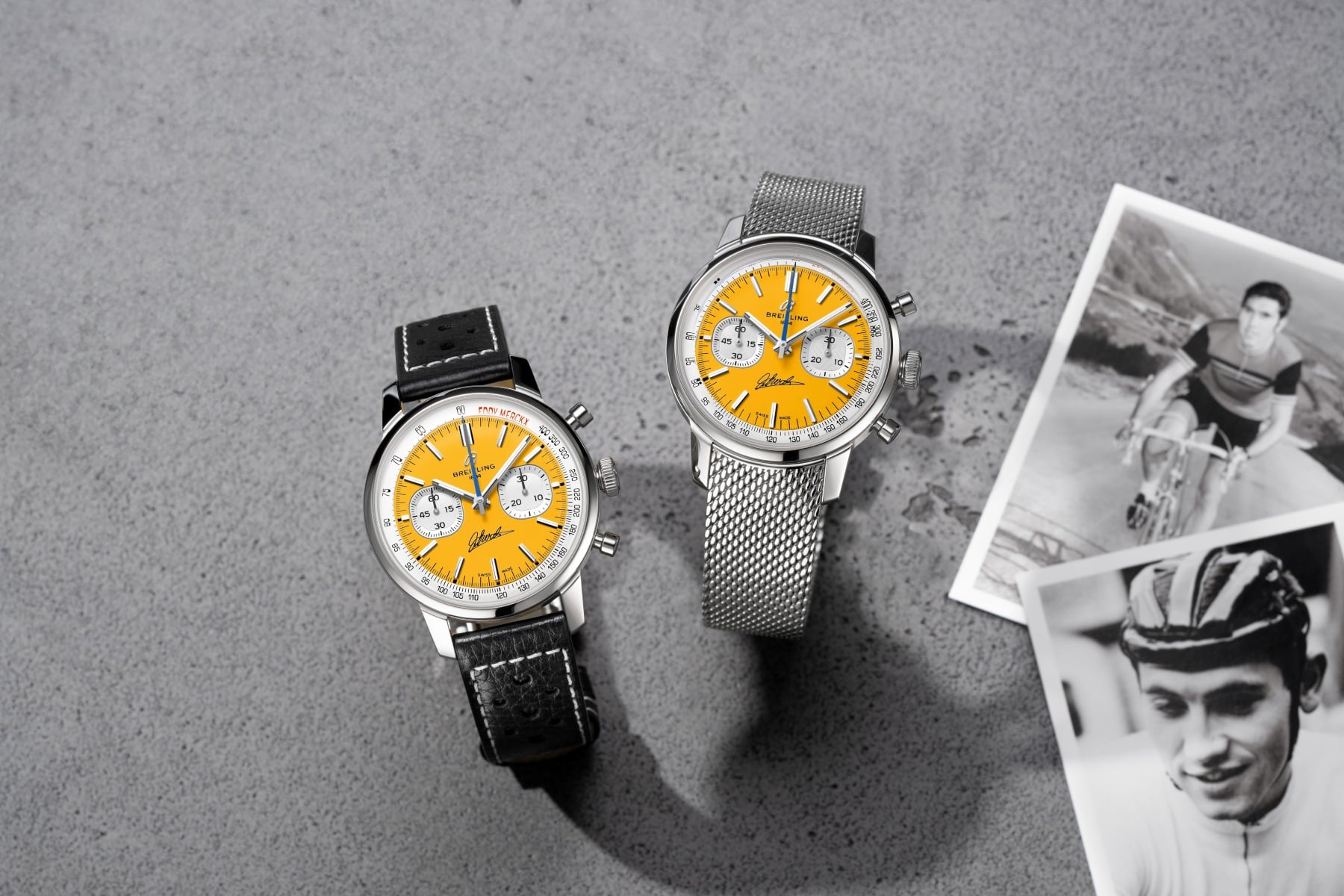
525 Victories, One Dial, and Cycling's Long Wait for a Wrist
Breitling's Eddy Merckx edition doesn't just reference a legend — it asks whether motorsport's younger sibling has finally earned its place in serious watch culture.
From the other desks.

800 Horsepower, One Ton of Doubt
Lamborghini built the most powerful SUV it's ever made. It's also slower than what it replaced.

ESPN Named Him. Then Unnamed Him. Nobody's Explaining the Gap.
A retraction without a reckoning is just a deleted link.

Hide My Email Has Been Showing Your Email
Apple's privacy flagship has a hole in it. They've known for over a year.