Prada Stitched Something That Has to Work
When a fashion house builds the layer between an astronaut and the moon, the question isn't about branding anymore.

Photo · WWD
The Room Where It Happened
Imagine standing in a SoHo flagship — white walls, controlled light, the particular silence of a space designed to make you feel slightly underdressed — and being shown a garment meant for the lunar surface. Not inspired by space. Not a capsule collection with a rocket printed on the lining. The actual thing. The thing that goes between a human body and the moon.
That's what Prada and Axiom Space unveiled recently, and I keep returning to it not because it's surprising that a fashion house did this, but because of what it means that one finally did — and what it cost them to get there.
The garment is the inner layer of the spacesuit that NASA astronauts will wear on the lunar surface during the Artemis IV mission. Not the outer shell. Not the helmet. The inner layer — the part closest to the body, the part nobody photographs, the part that has to actually function when everything around it is trying to kill you. Prada, a house whose name exists in the cultural vocabulary as shorthand for a certain kind of considered refinement, built that.
Lorenzo Bertelli, speaking to WWD at the SoHo event, framed it in terms of the brand's history of pushing past expected limits. Which is the right thing to say, and probably also true. But it understates what's actually happening.
What Infrastructure Looks Like Now
Fashion has always had a complicated relationship with function. The industry spent decades arguing that craft was its own justification — that a coat cut with obsessive precision didn't need to do anything except be itself, and that was enough. Prestige lived in the aesthetic, in the heritage, in the name on the label.
Then something shifted. The houses that endured started to want proof. Not proof of their taste — that was assumed — but proof of their capability. Technical fabrics. Collaborations with athletes. Performance lines that weren't afterthoughts. The argument, slow and mostly unspoken, was that real craft should be able to go anywhere.
Prada going to the moon is that argument taken to its logical extreme, and it lands differently than any athletic collaboration because the stakes are not metaphorical. There is no version of this where the garment underperforms and the story is just bad press. The performance requirement is binary in a way that fashion almost never is.
The Business of Fashion noted that Prada is positioning itself as the first major fashion player to make genuine inroads in the space industry. That framing — first — matters because it reveals the competitive logic underneath the mission-critical one. Someone was always going to get here. The question was who had the technical credibility and the institutional nerve to do it without it reading as a stunt.
Prada did, apparently. And the fact that the reveal happened at their SoHo flagship, in the middle of a retail environment, tells you something about how they want this read: not as a departure, but as a continuation.
The Layer Nobody Sees
What I find myself sitting with is the choice of which part of the suit they built.
The outer shell is the photograph. It's the silhouette against the lunar surface, the image that ends up everywhere, the thing that looks like something. The inner layer is invisible by design. It exists in contact with skin, doing its work in the dark, underneath everything else. Nobody will see Prada's name on the moon.
And that, strangely, is what makes this credible. A house chasing the image would have found a way to put their mark on the part that gets photographed. Instead, they took the component that demands the most from a materials and construction standpoint and the least from a visibility one. That's not how brands behave when they're performing. That's how they behave when they actually believe in the work.
There's something in that worth holding onto, separate from anything to do with space or NASA or Artemis IV. The question of whether you'd do the same job if nobody could see it — whether the standard you hold yourself to is internal or audience-dependent — is not just a fashion question. It's the oldest craft question there is.
Prada's answer, apparently, is that they'd build it the same way regardless. They just happen to have chosen a context where you can't fake the answer.
What Comes After
The Artemis IV lunar mission is still ahead of us. The garment exists now, unveiled, documented, discussed. What happens when astronauts actually wear it — when it does what it was built to do, in a place where the margin for error is essentially zero — that's the moment the collaboration either means something permanent or becomes a footnote.
I don't think it becomes a footnote. Not because I'm particularly optimistic about fashion's relationship with technology, but because the logic of this move is too clean. If Prada builds a garment that functions on the lunar surface, the conversation about what a fashion house is capable of shifts in a way that can't be walked back. Every subsequent claim about craft has a different ceiling.
And if the industry is watching — which it is, because the Business of Fashion is covering it and WWD is covering it and you're reading about it here — then other houses are already doing the math. The race to own the next category of infrastructure, whatever it turns out to be, probably started the moment Prada walked into that SoHo flagship with something that had to work.
That's not a warning. It's just what happens when someone raises the bar by building something nobody can see.
Keep reading fashion.

Zegna Flew to Malibu to Tell You Vacation Has Standards
Alessandro Sartori staged a runway on the California coast. The real argument wasn't about clothes.

Two Independents, One Dial, No Permission Slip
The Ming x J.N. Shapiro 37.06 Lightning isn't a collaboration — it's an argument that craft never needed a dynasty behind it.
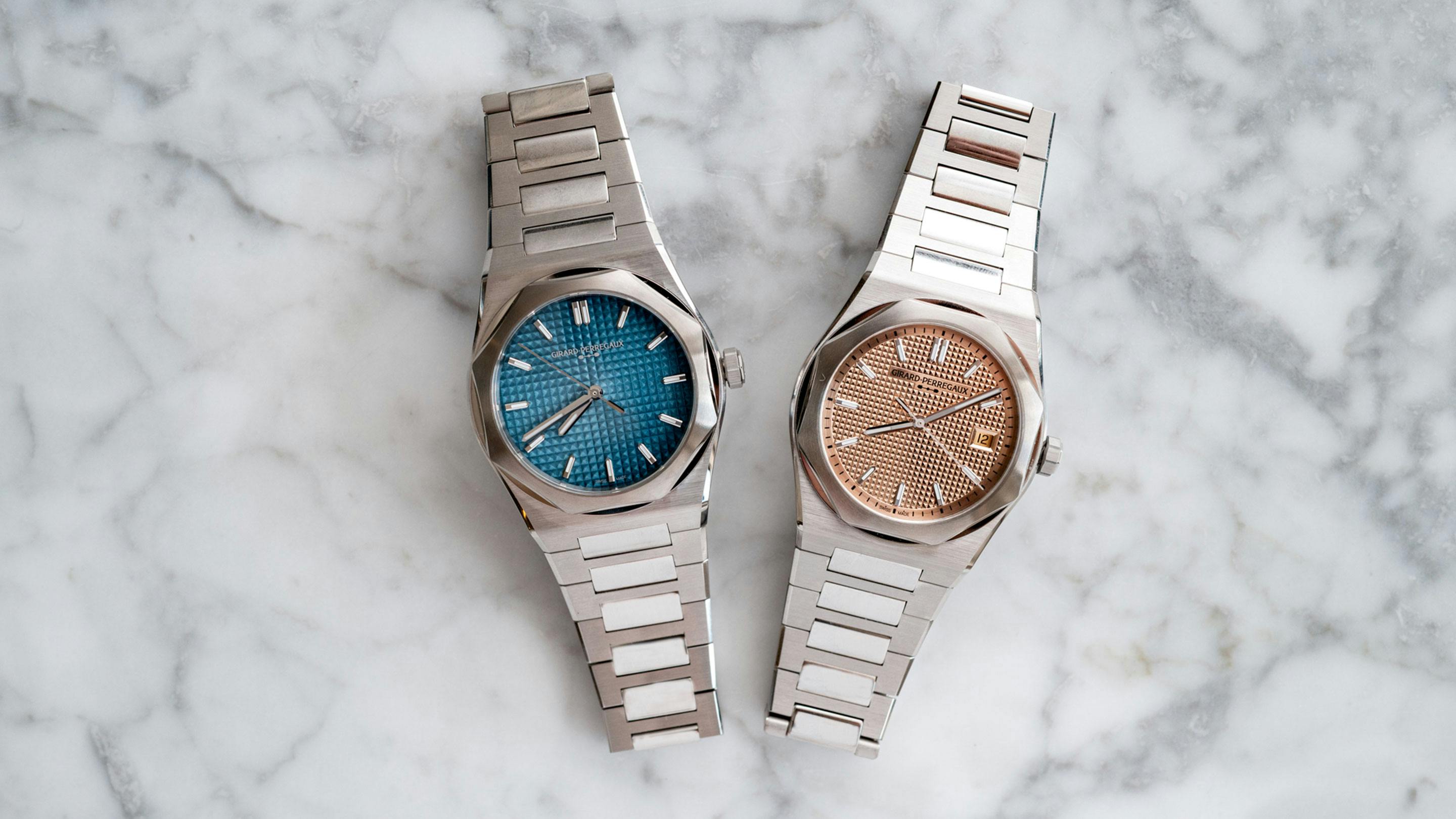
Girard-Perregaux Stopped Gatekeeping the Laureato
Fifty years in, the icon trades scarcity for permanence — and that might be the bolder move.
From the other desks.

Nobody Needed Permission to Go This Far
Three builds. Three different answers to the same unspoken question: how much is too much?

Three Canadian Cities Read the Contract and Walked
Montreal, Toronto, and Vancouver all passed on 2026 World Cup hosting. FIFA should be asking why.

Meta Built an AI to Handle Support. Hackers Made It the Attack.
Twenty thousand Instagram accounts walked out the door through the front-facing chatbot, and the front door was Meta's idea.