Surrender as Craft: What It Means to Say 'I Leave It Up to You'
A writer sat down at a hinoki counter and gave up control. That decision turns out to be the most sophisticated thing you can do.

Photo · Worn & Wound
The Hardest Thing to Do With Money
Imagine walking into a room where you cannot order anything. Where the entire transaction — the thing you're paying for, possibly paying a great deal for — is the act of not deciding. No menu. No substitutions. No negotiating the terms. You sit down, and then you wait to be shown something.
Most of us have been trained to read that as vulnerability. We've been told, in a thousand different ways across fashion and tech and every lifestyle vertical that exists to sell us things, that the informed consumer is the empowered consumer. That knowing what you want before you walk through the door is the whole game. That taste is a kind of preparation.
A writer at Worn & Wound just sat down at a hinoki wood counter in the West Village and staked out the opposite position. Their piece — which moves between a sushi counter called Sushi Teru and a watchmaker called Kiwame Tokyo — argues that omakase, the Japanese practice of surrendering a meal or an object to the judgment of a craftsperson, is not a passive act. It's a philosophical one. The translation they offer is quiet and precise: I leave it up to you.
I keep coming back to that phrase. Not because it's unfamiliar, but because of how rarely we actually mean it.
What You're Really Paying For
The piece draws a line between two disciplines — food and watchmaking — that most people wouldn't think to connect. But the argument holds. Both involve someone who has spent years, possibly a lifetime, developing a sensitivity to materials and timing that you simply do not have. Both require the client, at some point, to decide whether they trust that. And in both cases, the decision to trust is its own kind of act — maybe the most important one in the whole exchange.
There's something uncomfortable about this if you've spent any time in watch collecting, or in fashion for that matter. The culture of both skews toward the expert consumer. Toward the person who already knows the reference numbers, the movement architecture, the provenance of the fabric. Knowledge as status. Research as respect. The idea that showing up informed signals you belong at the table.
But what the Worn & Wound writer is describing — and what I think they get exactly right — is that there's a ceiling to that approach. At some point, the most sophisticated move is to stop performing your knowledge and start trusting someone else's. The hinoki counter is the room where that happens. You don't get there by reading more forums.
Kiwame Tokyo, as the piece frames it, operates in that same space. The work being done there isn't designed to be decoded by a consumer who did their homework. It's designed to be received by someone who decided to listen.
The Control We Mistake for Taste
I've been thinking about why this resonates now, specifically. There's a version of fashion and watch culture that has spent the last decade building infrastructure around the opposite idea — around transparency, around access to information, around the consumer as the final authority. And a lot of that has been genuinely good. It democratized knowledge that used to be gatekept. It gave people tools to spot the cynical from the sincere.
But somewhere in there, the tools became the point. The research became a substitute for the experience. And the result, if you spend any time in the spaces where serious objects get discussed, is a kind of paralysis dressed up as discernment. People who can tell you everything about a thing but have lost the ability to simply receive it.
Omakase breaks that. Not because it's anti-intellectual — the craft being practiced at a place like Sushi Teru or Kiwame Tokyo is as intellectually dense as anything — but because it relocates the intelligence. It says: the knowledge lives in the hands across from you. Your job is to be present for what those hands have decided to make.
The writer at Worn & Wound is describing a meal and a watch. But what they're really describing is a kind of faith. The specific, earned faith you extend to someone who has spent longer than you can imagine becoming very good at one thing.
What You Bring Home
Here's what I think the piece is actually about, underneath the craft philosophy and the West Village geography: the objects we're most changed by are rarely the ones we chose most carefully.
The jacket you still wear ten years later. The watch that keeps finding its way back to your wrist. The meal you still describe to people. These things tend to arrive through some version of surrender — a gift, a recommendation you followed blindly, a moment when you walked into a room and decided to stop deciding. They weren't the product of your most rigorous research. They were the product of your most open moment.
That's the confession underneath the Worn & Wound piece, and it's a meaningful one. The best things come from letting someone else decide — not because your judgment doesn't matter, but because judgment alone was never enough. At some point you have to sit down at the counter, fold your hands, and say: I leave it up to you.
The only question is whether you've found someone worth saying it to.
Keep reading fashion.

Gold Leaf on a Lacquer Dial, and the Weight of What That Costs
Awake's Frosted Leaf Royal Blue asks a question Vietnamese craft has never quite had to answer at this price.

Kyle Smith Has a Job Title That Didn't Exist Before. That's the Whole Tell.
When the NFL hires a fashion editor, it's not about clothes — it's about who gets to decide what matters.
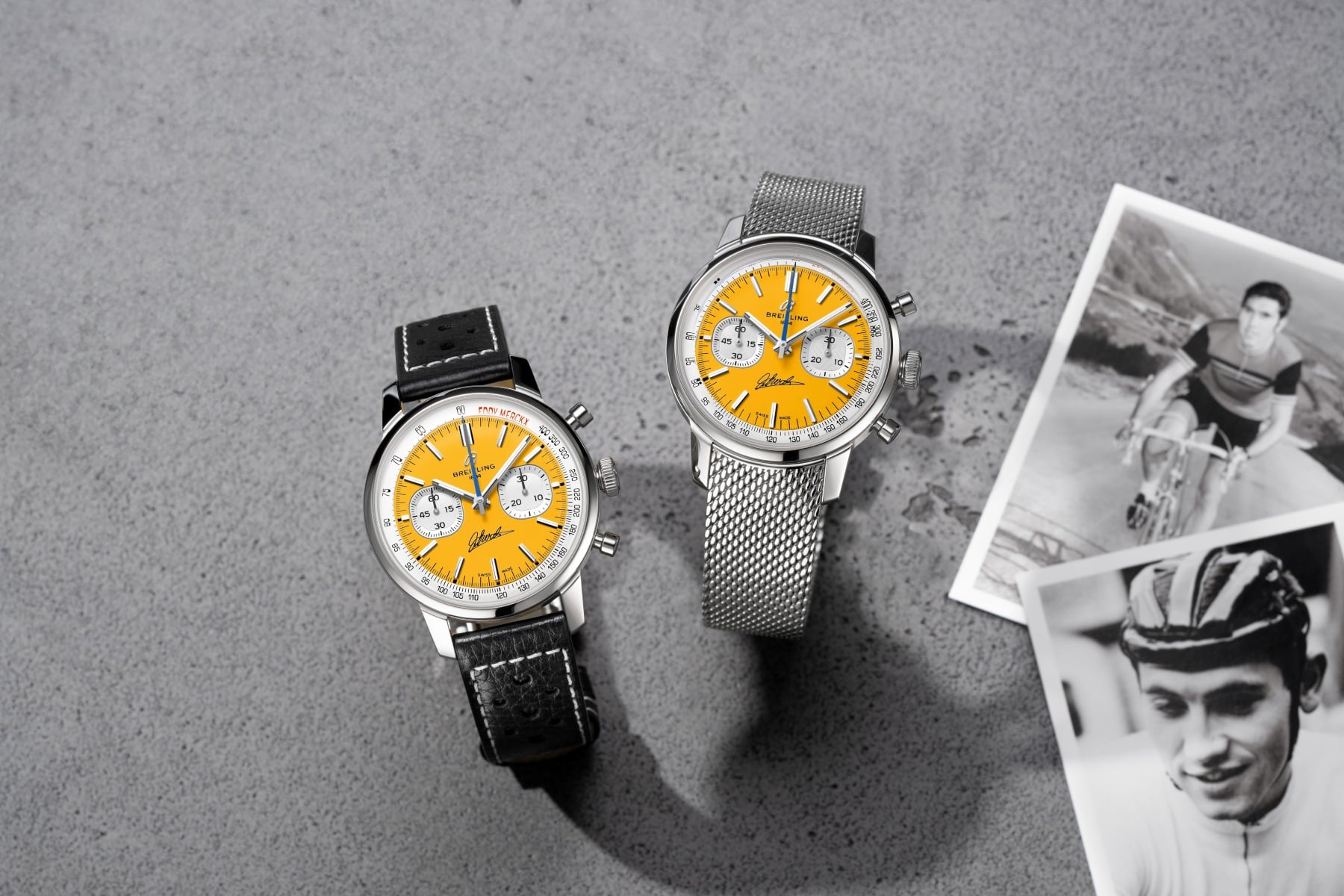
525 Victories, One Dial, and Cycling's Long Wait for a Wrist
Breitling's Eddy Merckx edition doesn't just reference a legend — it asks whether motorsport's younger sibling has finally earned its place in serious watch culture.
From the other desks.

800 Horsepower, One Ton of Doubt
Lamborghini built the most powerful SUV it's ever made. It's also slower than what it replaced.

ESPN Named Him. Then Unnamed Him. Nobody's Explaining the Gap.
A retraction without a reckoning is just a deleted link.

Hide My Email Has Been Showing Your Email
Apple's privacy flagship has a hole in it. They've known for over a year.