The Watch That Disappears
Vacheron Constantin spent a decade making something you're not supposed to notice — and that's exactly the point.

Photo · Style - Esquire
There's a particular kind of confidence that doesn't announce itself. You've seen it in a room before — the person who isn't performing, isn't competing, isn't trying to fill the space. They're just there, completely at ease, and somehow that's the most interesting thing happening. It's a quality that takes years to develop, and even longer to manufacture.
The watch world has been busy lately. Bold signatures are getting bolder. Sizes are climbing. Complications are multiplying like someone left the door open. It's all very impressive and, if you spend enough time in it, a little exhausting. So when Vacheron Constantin walked into Watches & Wonders 2026 with something that measured 7.35mm from caseback to crystal, the contrast wasn't just aesthetic. It was philosophical.
What a Decade of Patience Looks Like
The original Overseas Ultra-Thin launched in 2016. Forty millimeters wide, 7.5mm thick, white gold, Calibre 1120. It was already a statement of restraint in an era that didn't much reward restraint. And then, for ten years, nothing. No successor. No iteration. The line simply waited while the brand went elsewhere — including, according to SJX Watches, launching what it described as the world's most complicated wristwatch and a quarter-ton astronomical clock. Vacheron spent its anniversary year going as large and complex as watchmaking allows, and then turned around and handed you something you could slide under a shirt cuff without thinking twice.
The new reference — the Overseas Self-Winding Ultra-Thin 2500V/210P-H028, if you want to be precise about it — arrives in a 39.5mm platinum case, half a millimeter slimmer than its predecessor. That sounds like a rounding error. It isn't. The movement inside, Calibre 2550, measures 2.4mm thick. Fratello Watches called it a masterclass in miniaturization, and that's not overstatement. Getting a self-winding movement to work reliably at that depth isn't a matter of scaling things down. It requires rethinking how the parts relate to each other, how tolerances are held, how energy moves through a system that has almost no room to move at all.
Escapement Magazine noted something worth sitting with: the watch's inventory of functions is limited to hours and minutes. That's it. No date. No second hand. No complication to justify the price or the engineering. Just time, told quietly, in platinum, on your wrist.
The Harder Thing to Make
This is where the watch world gets genuinely interesting, and where most of the coverage around this release only goes halfway. Everyone acknowledges the thinness. Everyone notes the new caliber. What fewer pieces reckon with is what it means to choose less as your statement.
Look at what surrounded this release. TAG Heuer reinvented the chronograph. Patek Philippe celebrated thirty years of the Annual Calendar, a complication that requires just one manual correction per year. Piaget doubled down on ornamental stone dials. Panerai released divers that lean into their own considerable size with evident pride. Hublot debuted the next evolution of the Big Bang. Every one of these watches is doing something — performing a function, telling a story, making a case for its own existence through visible complexity.
The Overseas Ultra-Thin makes its case by removing the case entirely. The movement is the point, and the movement is designed to be invisible. You're not meant to see the engineering. You're meant to feel its absence — the way the watch sits against a wrist, the way it doesn't interrupt a sleeve, the way it asks nothing of you. That requires more confidence than adding a complication. It requires the maker to trust that you'll understand what you're not seeing.
I find that genuinely rare. Not just in watches.
Platinum and the Weight of Understatement
The choice of platinum matters here in a way that goes beyond material hierarchy. Platinum is heavier than gold, denser, harder to machine. It doesn't polish the same way, doesn't wear the same way. On a watch this thin, that density is felt differently — there's a presence to it that contradicts the silhouette. You're holding something substantial that doesn't look substantial. The contradiction is the experience.
Ten years is a long time to wait for a successor to anything. In watch terms, it's almost a generation. The 2016 Ultra-Thin has had time to become a reference point, a thing people point to when explaining what they mean by restraint. The 2026 version doesn't try to replace that memory. It arrives 0.15mm thinner and lets the number speak.
SJX described the new Ultra-Thin as "low-profile, both literally and figuratively" — a throwaway line that's actually the whole story. In a year when Vacheron could have led with anything, they led with something that barely exists. Seven-and-a-half millimeters of platinum and a movement that took a decade to get right, doing nothing but telling time.
The hardest thing to make is the thing that looks like it wasn't made at all.
Keep reading fashion.

Gold Leaf on a Lacquer Dial, and the Weight of What That Costs
Awake's Frosted Leaf Royal Blue asks a question Vietnamese craft has never quite had to answer at this price.

Kyle Smith Has a Job Title That Didn't Exist Before. That's the Whole Tell.
When the NFL hires a fashion editor, it's not about clothes — it's about who gets to decide what matters.
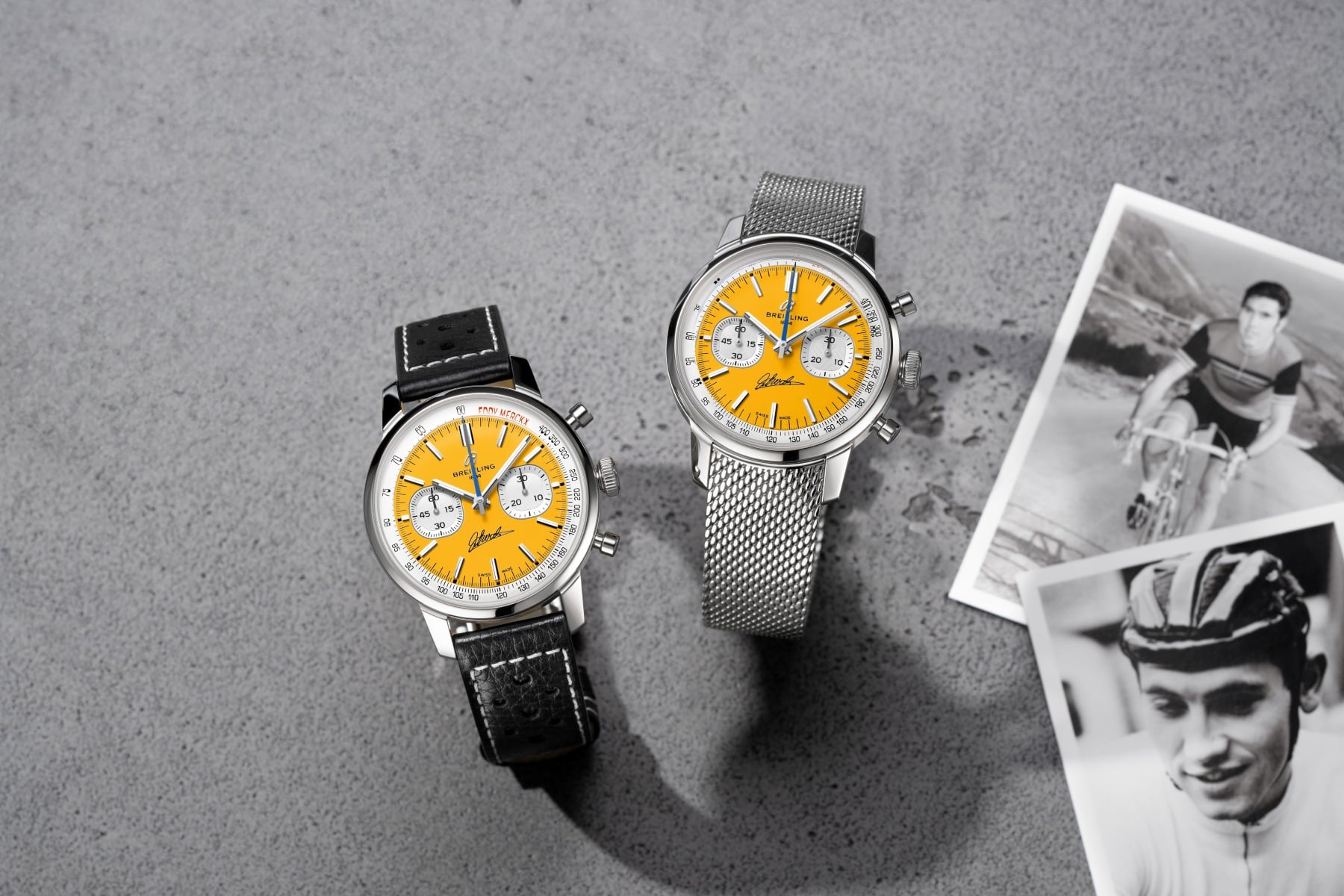
525 Victories, One Dial, and Cycling's Long Wait for a Wrist
Breitling's Eddy Merckx edition doesn't just reference a legend — it asks whether motorsport's younger sibling has finally earned its place in serious watch culture.
From the other desks.

800 Horsepower, One Ton of Doubt
Lamborghini built the most powerful SUV it's ever made. It's also slower than what it replaced.

ESPN Named Him. Then Unnamed Him. Nobody's Explaining the Gap.
A retraction without a reckoning is just a deleted link.

Hide My Email Has Been Showing Your Email
Apple's privacy flagship has a hole in it. They've known for over a year.