Your Body, Their Rules
GQ just drew a line in the sand about who gets to change themselves — and the line reveals more than the argument.

Photo · GQ
The Permission Slip
Imagine two people walking into the same clinic. Same procedure. Same recovery. Same result, more or less. One of them leaves and nobody says a word. The other leaves and the internet convenes a trial.
This is not a hypothetical. This is the actual terrain GQ has decided to map.
A writer at GQ has published a piece arguing, plainly, that trans people and looksmaxxers deserve the same right to modify their bodies without being made to justify themselves to the rest of us. It's a reasonable argument. It's also, apparently, a controversial one — and the controversy is the thing worth sitting with, because it tells you something about how thoroughly we've politicized the body itself. Not just what people do with it. The permission structure around it. Who decides what counts as natural. Who gets to call something a choice and who gets called something worse.
Looksmaxxing, for those who haven't encountered the term, is the practice of optimizing one's appearance — through skincare, fitness, cosmetic procedures, whatever it takes — treated with the seriousness of a discipline. The GQ piece acknowledges that the conversation around it has grown increasingly politicized. That framing alone is worth pausing on. Because looksmaxxing isn't new behavior. People have always tried to look better. What's new is that it has a name, a community, a language — and now, apparently, a politics.
The Consistency Problem
Here's the thing GQ gets exactly right, whether or not the piece fully unpacks it: our tolerance for body modification has never been ideologically consistent. It has always been identity-dependent.
A woman who gets a rhinoplasty is making a personal choice. A man who does the same might get a raised eyebrow, maybe a Reddit thread. A trans woman who pursues facial feminization surgery gets a congressional hearing's worth of scrutiny. The procedure can be identical. The social response is not. And the variable isn't the intervention — it's the identity of the person seeking it, and what that identity is understood to mean to people who have decided they have a stake in it.
This is the argument GQ is making, and it's a clean one. If you believe in bodily autonomy, you either believe in it or you don't. You don't get to believe in it selectively — for the modifications that feel legible to you, that fit within your understanding of what a body is supposed to be doing when it changes. That's not a principle. That's a preference dressed up as one.
I keep coming back to fashion's own history with this question. The industry has spent decades telling people what their bodies should look like, then pivoting to celebrate diversity, then arguing internally about where the line is between aesthetic vision and harm. It has never fully resolved the tension. Maybe no industry does. But fashion at least has the honesty to admit it's in the business of appearance — that it cares, visibly and without apology, about the surface. The looksmaxxing conversation is messier because it arrives without that honesty. It wants to be about health, or authenticity, or self-improvement — and then the politics creep in and reveal that it was always also about control.
What 'Natural' Is Actually Doing
The word that keeps doing the most unexamined work in these conversations is natural. As in: this modification is natural, and this one isn't. As in: this person is pursuing a natural expression of themselves, and this one is being manipulated by ideology, or insecurity, or something that should be treated rather than accommodated.
Natural is a word that sounds like a description but functions as a verdict. It tells you whose choices are legible and whose require explanation. And once you start pulling at it, it unravels fast — because almost nothing we do to our bodies is natural in any strict sense. The haircut. The glasses. The orthodontia. The gym. The moisturizer. The concealer. The question was never really whether to modify. It was always about which modifications get to be invisible, get to be assumed, get to pass without comment.
The GQ writer is staking out a position that says: stop pretending there's a principled distinction here when what you're actually doing is sorting people by how sympathetic you find their reasons. It's a fair challenge. And the fact that it needed to be made in 2024, explicitly, in a major publication, suggests the sorting is still very much ongoing.
The Real Subject
Fashion taught me — or tried to — that style is a form of autobiography. That what you put on your body, and what you do to it, is a way of telling the world something about who you are and who you're trying to become. That's always been true. What's changed is that the world has gotten louder in its opinion about whether your autobiography is the right one.
The GQ piece isn't really about looksmaxxing. And it isn't really about trans identity, except insofar as both are being used as test cases for the same underlying question: who holds the authority over a body that isn't theirs?
The answer we keep giving, collectively, is: it depends on the body. It depends on who it belongs to, what community claims it, what politics surround it, whether its choices make us comfortable or anxious or threatened in some way we can't quite name but feel entitled to act on.
That's the answer worth examining. Not because GQ says so. But because one day you'll want to change something about yourself, for your own reasons, and you'll discover exactly how much permission you're expected to ask for first.
Keep reading fashion.

Gold Leaf on a Lacquer Dial, and the Weight of What That Costs
Awake's Frosted Leaf Royal Blue asks a question Vietnamese craft has never quite had to answer at this price.

Kyle Smith Has a Job Title That Didn't Exist Before. That's the Whole Tell.
When the NFL hires a fashion editor, it's not about clothes — it's about who gets to decide what matters.
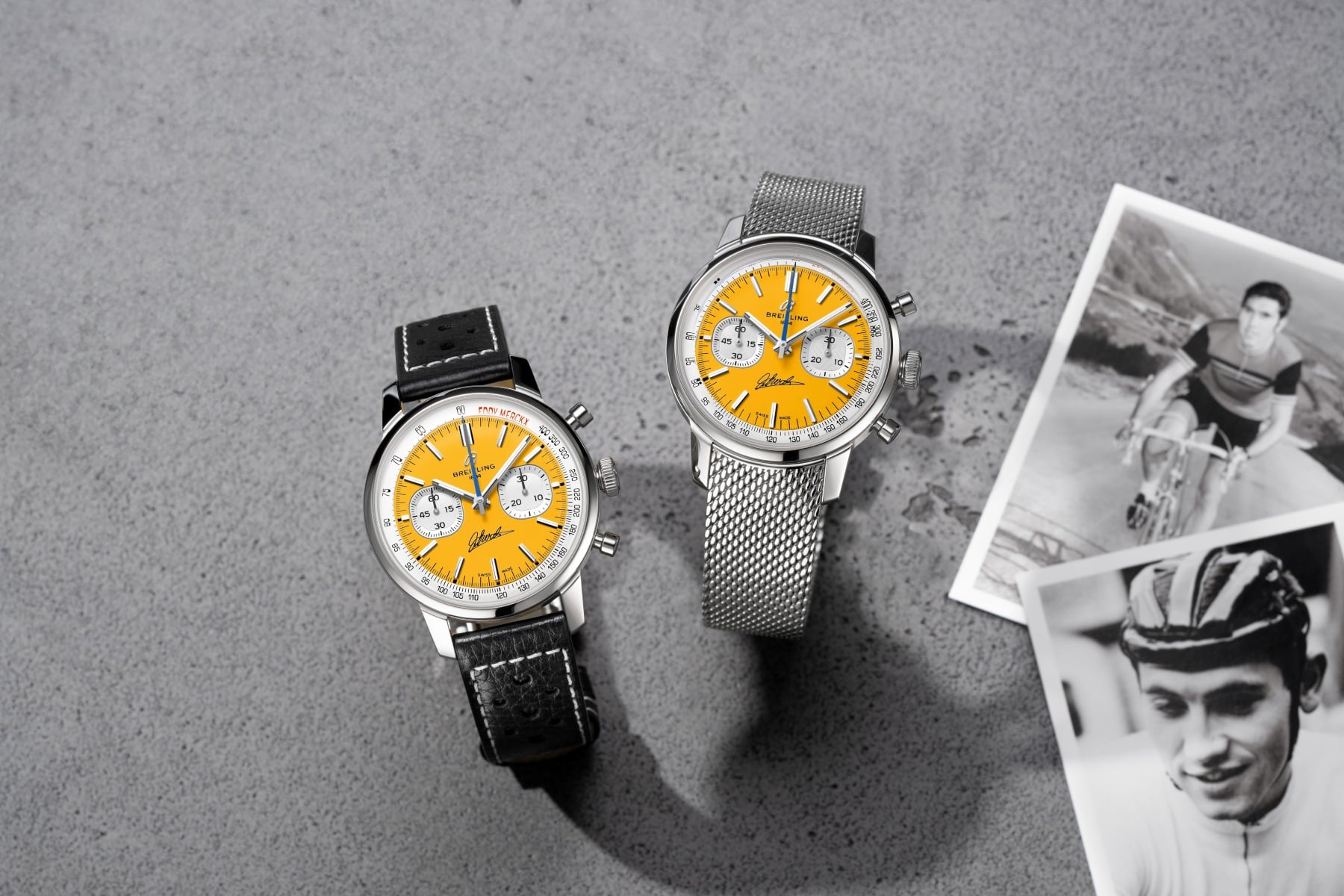
525 Victories, One Dial, and Cycling's Long Wait for a Wrist
Breitling's Eddy Merckx edition doesn't just reference a legend — it asks whether motorsport's younger sibling has finally earned its place in serious watch culture.
From the other desks.

800 Horsepower, One Ton of Doubt
Lamborghini built the most powerful SUV it's ever made. It's also slower than what it replaced.

ESPN Named Him. Then Unnamed Him. Nobody's Explaining the Gap.
A retraction without a reckoning is just a deleted link.

Hide My Email Has Been Showing Your Email
Apple's privacy flagship has a hole in it. They've known for over a year.