Anthony Rizzo Had to Earn the Microphone Twice
A World Series champion walked into a broadcast booth and discovered that rings don't transfer.
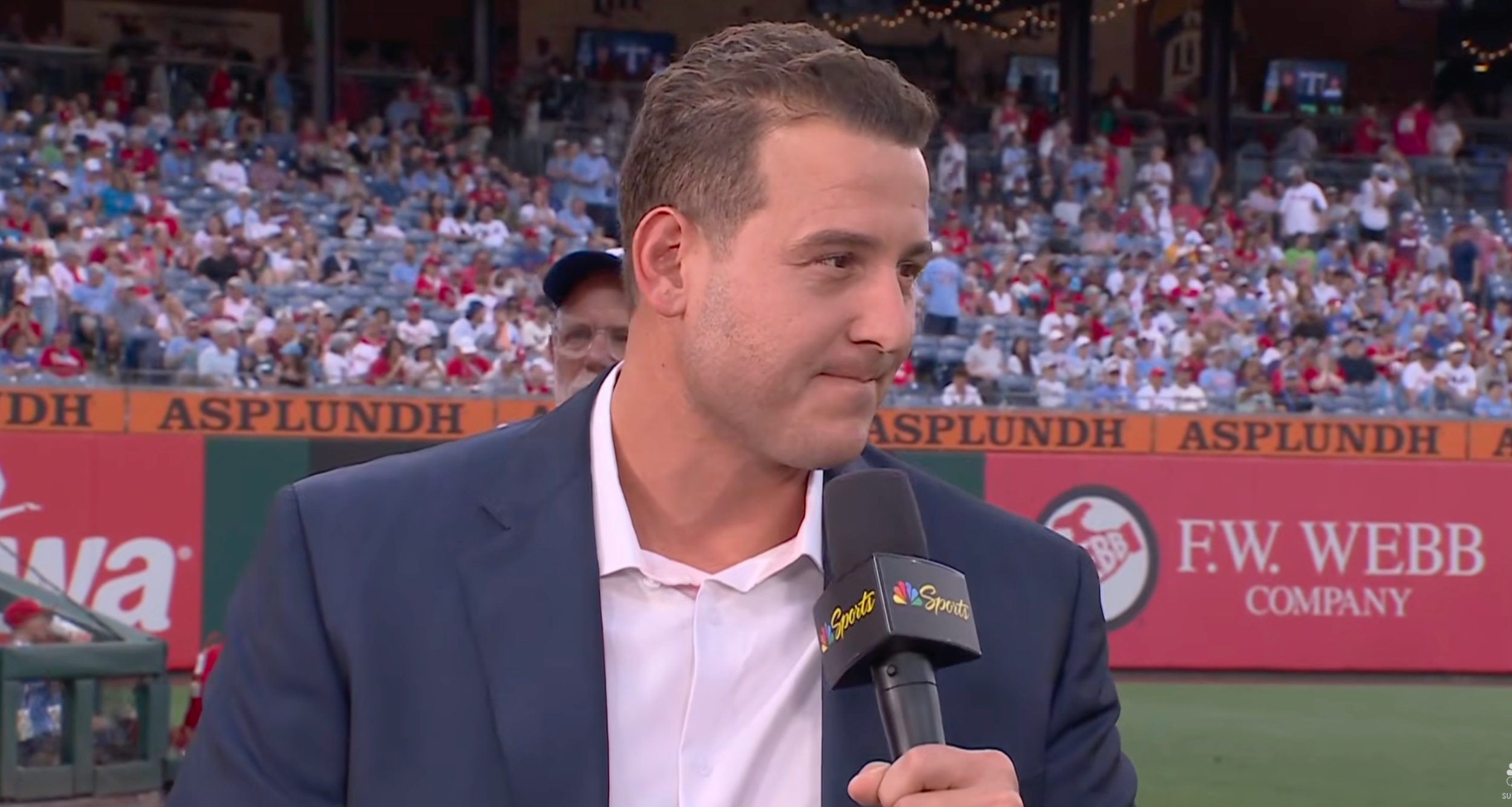
Photo · Awful Announcing
There's a particular kind of credibility that only exists inside an institution — and broadcasting is one of the oldest institutions in sports. You can win a World Series, play fifteen years at the highest level, and still walk into a television booth as a stranger.
Anthony Rizzo is finding this out in real time. A writer at Awful Announcing covered Rizzo's first season as a contributor on NBC's Inside the Pitch during Sunday Night Baseball — a role that, according to the piece, came together over dinner with NBC. Casual enough origin. What followed has been anything but casual.
Rizzo described himself as "fearless" in the role. The writer notes he's been maturing into it. Both things can be true simultaneously, and the gap between those two descriptions is where the actual story lives.
The Credential Problem
Here's what the institution never tells you: playing the game at an elite level earns you the invitation. It does not earn you the chair. The chair has to be earned differently — through a different kind of preparation, a different kind of instinct, a different relationship with language under pressure.
Athletes who move into broadcasting often assume the credibility migrates with them. Sometimes it does, partially. But the camera doesn't care about your batting average. The microphone doesn't care about your postseason numbers. What they care about is whether you can hold a thought across a commercial break, whether your analysis lands for someone watching from a couch in Cincinnati who never played above Little League, whether you can be interesting and accurate at the same time without a script.
That's not a natural extension of what made you great on the field. It's a separate craft.
What "Fearless" Actually Costs
Rizzo calling himself fearless is the most revealing line in the whole piece — not because it's arrogant, but because it's honest about the psychological task in front of him. Fear would be rational. He's operating without a safety net that existed his entire athletic career: the body. The muscle memory. The thing that his nervous system had been trained to do since childhood.
Now he's sitting in a booth with a headset on, and none of that matters. The fearlessness he's describing isn't the absence of pressure. It's the decision to perform anyway while the new skill set is still forming.
That's a harder thing to do than most people give athletes credit for. The ones who flame out in broadcast often aren't the ones who lack intelligence or insight. They're the ones who couldn't tolerate being a beginner again after a lifetime of being exceptional. Rizzo, at least by his own account, seems to be tolerating it.
Whether the audience is tolerating it alongside him is the institutional question nobody fully answers until the ratings data arrives and the contract conversations start.
What makes the Awful Announcing piece worth sitting with isn't the verdict on Rizzo's performance — it's the framing of his trajectory as a maturation. That word is doing serious work. Maturation implies process. It implies patience from the network, patience from the audience, and patience from Rizzo himself. It implies NBC made a bet on a person, not just a name.
Those bets are rarer than they look. And they're worth watching — because the way institutions decide to grant or withhold credibility to athletes-turned-analysts tells you everything about who broadcasting thinks it's actually for.
Rizzo is fearless. The booth is still deciding what to make of that.
Keep reading sports.

ESPN Named Him. Then Unnamed Him. Nobody's Explaining the Gap.
A retraction without a reckoning is just a deleted link.

Three People Died Celebrating. FIFA Hasn't Said Their Names.
Mexico City buried three people after the World Cup crowds came through. At some point, the sport has to sit with that.

Sell the Stadium, Lose the Room
NFL franchises are rolling out the welcome mat for World Cup tourists — and the desperation is showing.
From the other desks.

800 Horsepower, One Ton of Doubt
Lamborghini built the most powerful SUV it's ever made. It's also slower than what it replaced.

Gold Leaf on a Lacquer Dial, and the Weight of What That Costs
Awake's Frosted Leaf Royal Blue asks a question Vietnamese craft has never quite had to answer at this price.

Hide My Email Has Been Showing Your Email
Apple's privacy flagship has a hole in it. They've known for over a year.