One More Night
The Warriors shouldn't still be here. That's exactly the point.
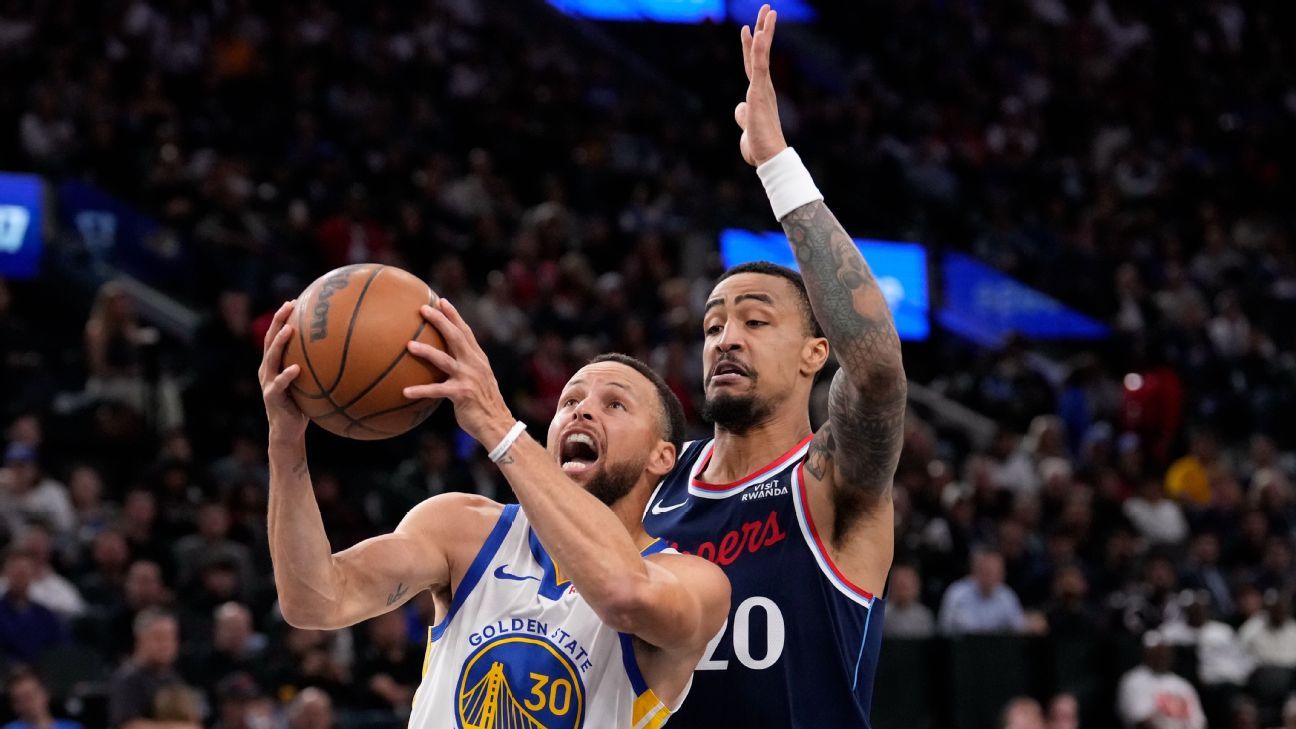
Photo · www.espn.com - TOP
The Lead That Wasn't
Thirteen points. Fourth quarter. The Clippers had it. You could feel the season closing like a door — the slow, administrative finality of a team running out of time, out of runway, out of reasons. The Warriors had been good enough to get here and apparently not good enough to leave. That's usually how it ends.
And then Stephen Curry decided otherwise.
What followed was the kind of performance that makes you question your own cynicism. Seven three-pointers. Thirty-five points. A 13-point deficit erased in the final quarter of a play-in game, against a team that had every reason to hold on and couldn't. The Guardian called it a dazzling display of unmatched shooting skill — and that framing feels right, because what Curry does isn't just scoring. It's a kind of argument. Every shot is him making a case. And Wednesday night, the jury came back in his favor.
The Warriors are still alive. Golden State now faces Phoenix for a spot in the actual playoffs. You can debate whether they deserve to be there. But that debate misses the real question.
What We Actually Want
Every sports cycle has a story it tells itself about what matters. Right now, that story is youth. Lottery picks. Rebuilds. The patient accumulation of assets toward some future dynasty. It's a rational story. It's also a little bloodless.
What happened Wednesday night was not rational. It was a man in his mid-thirties, who has already done everything the game can ask of a player, refusing to let a season die in a play-in game. CBS Sports framed it plainly: getting to watch Curry in the playoffs would be worth the cost of a lottery pick. That's not just a compliment. It's a value statement about what the game is actually for.
Because here's the thing about dynasty remnants — they make you feel something that young teams can't, not yet. Young teams play with hunger. Veterans like Curry play with memory. Every shot carries the weight of every shot before it. You're not just watching a basketball game. You're watching someone insist that what they built still means something, that the window hasn't closed, that one more night is worth fighting for.
Draymond Green felt it too. In the fourth quarter, he locked down Kawhi Leonard — one of the most gifted scorers of his generation — and shut him out. Two aging warriors, doing what they've always done, in a moment that had no business going their way. The Guardian captured the mood with a quote that cuts straight to it: for one night, we're us.
Four words. An entire identity.
The Curse and the Comeback
The Clippers, for their part, did what the Clippers do. The New York Post called it a continuation of the "Clippers curse" — the franchise's haunted history of leads that evaporate, seasons that collapse, futures that never quite arrive. Whether you believe in curses or not, there's something structurally familiar about the way this one ended. Thirteen points. Fourth quarter. Gone.
But the Clippers' collapse is just the shadow of the Warriors' resurrection. One story requires the other. What makes a comeback is the thing that was supposed to stop it.
CBS Sports noted Al Horford alongside Curry in its accounting of the win — another veteran, another player past the age when the league usually stops paying attention, doing the thing that mattered when it mattered. The ageless wonders, they called them. There's affection in that phrase, but also a mild disbelief, the way you might describe someone who still runs marathons in their fifties. Impressed, slightly confused, glad they exist.
The Permission to Believe
I keep coming back to that fourth quarter. Not because of the basketball — though the basketball was extraordinary — but because of what it asks of the people watching.
At some point in every long career, the audience has to decide whether to keep believing. The player is still there. The skill is still there, maybe slightly different in shape, but undeniably present. The question is whether you're willing to invest emotionally in something that has a known expiration date, something that's closer to the end than the beginning.
Most of the time, the sensible answer is no. You root for the future. You protect yourself.
But then Curry hits a three to cut it to ten, and then another to cut it to seven, and the deficit keeps shrinking and the crowd keeps rising and you realize you never actually made the sensible choice at all. You were always going to watch. You were always going to care. Because greatness that refuses to die doesn't need your permission — it just needs one more night.
The Warriors face Phoenix next. They might lose. They probably shouldn't even be here. But they are, and Curry is, and for now that's the whole story.
Keep reading sports.

ESPN Named Him. Then Unnamed Him. Nobody's Explaining the Gap.
A retraction without a reckoning is just a deleted link.

Three People Died Celebrating. FIFA Hasn't Said Their Names.
Mexico City buried three people after the World Cup crowds came through. At some point, the sport has to sit with that.

Sell the Stadium, Lose the Room
NFL franchises are rolling out the welcome mat for World Cup tourists — and the desperation is showing.
From the other desks.

800 Horsepower, One Ton of Doubt
Lamborghini built the most powerful SUV it's ever made. It's also slower than what it replaced.

Gold Leaf on a Lacquer Dial, and the Weight of What That Costs
Awake's Frosted Leaf Royal Blue asks a question Vietnamese craft has never quite had to answer at this price.

Hide My Email Has Been Showing Your Email
Apple's privacy flagship has a hole in it. They've known for over a year.