The Padres Don't Want You to Root for Them. They Want You to Watch.
A writer at Defector just made the case that San Diego's identity isn't about winning — it's about the crime.
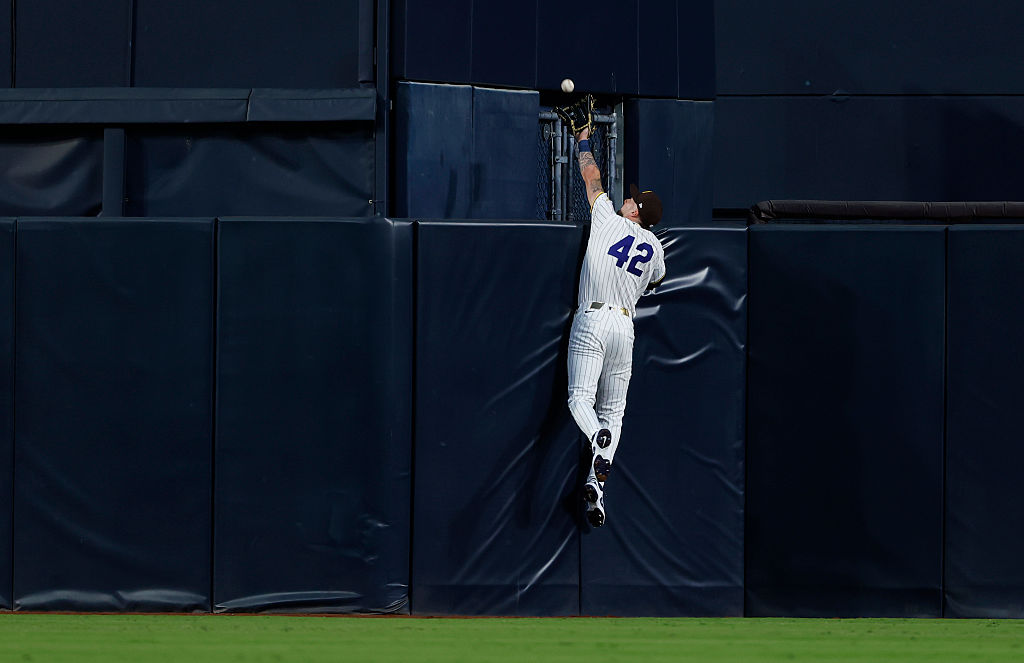
Photo · Defector
The Bit That Isn't a Bit
Somewhere in the middle of a piece at Defector this week, the San Diego Padres are described as robbers. Not metaphorically lazy robbers — actual career criminals, constitutionally incapable of a quiet life, drawn back to transgression the way a good thief is drawn back to a mark. The Mariners are the victim. A pitch that didn't cut is the evidence. The writer frames a single at-bat in the third inning like a heist film cold open.
You can laugh at this, and you should, but don't let the laugh distract you from what's actually being argued. Because underneath the bit is something that most sports coverage refuses to say plainly: the story isn't winning. The story is the feeling of watching something dangerous happen and not being able to look away.
That's a real argument. And the fact that it's being made — earnestly, through the costume of absurdist crime fiction — says something about where we are with sports fandom right now.
What the Narrative Admits
Teams sell winning. They always have. Playoff odds, win totals, offseason acquisitions framed as the final piece. The whole machine runs on the promise of a championship that, statistically, almost no one's fanbase will ever actually see. And yet people keep watching. Keep caring. Keep showing up.
The writer at Defector isn't pretending the Padres are a dynasty. They're not. What the piece is doing — and doing well — is locating the actual reason a person tunes in on a Wednesday night against Seattle. It's not a championship calculus. It's adrenaline. It's the specific pleasure of watching a team that feels like it operates outside the normal rules, that treats a regular-season at-bat like it owes someone money.
The crime narrative works because it's honest about the transaction. You're not here for the standings. You're here because something might happen. Something reckless and improbable and briefly, completely alive.
There's a reason the piece opens with the pull of a life you can't leave behind. That's not just color. That's the actual psychology of being a fan of a team like this — the craving, the return, the one more job. The Padres, as characters, are more interesting than most teams precisely because they seem to understand that drama is the product, not the byproduct.
Most franchises would never let this be the story. Most franchises want you focused on the destination. San Diego, whether by design or just by nature, keeps making the ride the point.
The question worth sitting with isn't whether the Padres will win anything. It's whether the sports world is finally ready to admit that for a lot of us, winning was never really what we came for.
Keep reading sports.

ESPN Named Him. Then Unnamed Him. Nobody's Explaining the Gap.
A retraction without a reckoning is just a deleted link.

Three People Died Celebrating. FIFA Hasn't Said Their Names.
Mexico City buried three people after the World Cup crowds came through. At some point, the sport has to sit with that.

Sell the Stadium, Lose the Room
NFL franchises are rolling out the welcome mat for World Cup tourists — and the desperation is showing.
From the other desks.

800 Horsepower, One Ton of Doubt
Lamborghini built the most powerful SUV it's ever made. It's also slower than what it replaced.

Gold Leaf on a Lacquer Dial, and the Weight of What That Costs
Awake's Frosted Leaf Royal Blue asks a question Vietnamese craft has never quite had to answer at this price.

Hide My Email Has Been Showing Your Email
Apple's privacy flagship has a hole in it. They've known for over a year.