The Kid Who Won't Let You Figure Him Out
Pete Crow-Armstrong isn't building a brand the way athletes are supposed to — and that might be exactly the point.
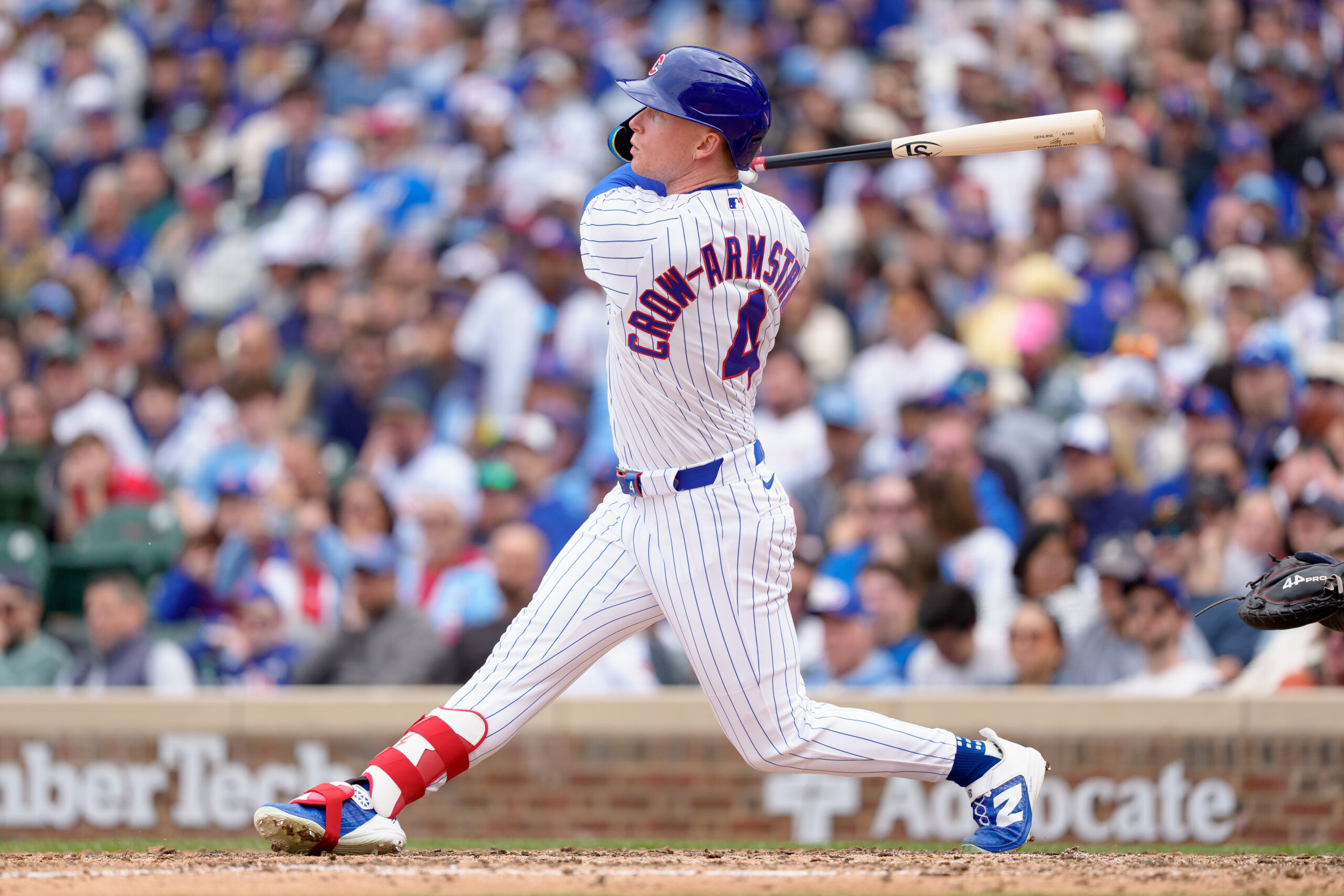
Photo · Boardroom
The Playbook Nobody Handed Him
There's a version of this story that writes itself. Young phenom arrives in a storied baseball city, wins over the crowd, lands the sponsorship deal, starts talking about his journey. You've read it before. You could probably draft the press release from memory — the gratitude, the humility, the carefully managed revelation of personality. The whole thing assembled like flatpack furniture, sturdy and forgettable.
Pete Crow-Armstrong is doing something different. Whether by instinct or design — and with him, it's hard to tell which, which is sort of the whole point — he's building something that resists easy categorization. And in a sports media moment that rewards the instantly legible, that's either brave or reckless. Maybe both.
He grew up in California. He plays center field for the Chicago Cubs. He's an All-Star. These are the coordinates. But coordinates don't tell you what a person actually is.
Wrigley as a Proving Ground
Chicago is not a soft landing. Cubs fans, as Crow-Armstrong himself has acknowledged, know the game. They've been watching long enough to know the difference between a prospect who looks good in March and a player who holds up when the season gets heavy. Winning them over isn't a marketing problem — it's a baseball problem, and it has to be solved on the field before anything else matters.
What's interesting is that Crow-Armstrong seems to understand this. He's spoken about Wrigley Field as the right place to build a career, which is the kind of thing a player says when they're not just passing through. It signals something about how he's thinking — not about the moment, but about the arc. There's a difference between a player who wants to be famous in a city and a player who wants to mean something to one. He appears to be after the latter.
The defense has been a significant part of how that trust gets built. In a sport where offense generates highlights and highlights generate attention, a center fielder who makes his case with his glove is already operating outside the conventional script. It's a slower kind of reputation to build. It requires people to actually pay attention over time rather than react to a single moment. That's a bet on the audience — a bet that they're watching closely enough to notice.
And according to Crow-Armstrong, they are. Cubs fans know ball. He said it, and he meant it as a compliment.
The New Balance Question
Then there's the New Balance deal, which is where the brand conversation gets genuinely interesting.
New Balance occupies a particular cultural position right now — neither the default choice nor the obvious contrarian one. It's a brand that has quietly accumulated credibility by not chasing every trend, by being slightly out of step in ways that eventually started looking like foresight. Signing with them means something different than signing with the category giants. It's a statement about what kind of attention you're trying to attract.
Crow-Armstrong has talked about unpredictability as a core part of how he thinks about his own identity — on the field and off it. He embraces personal style not as a performance but as an extension of something genuine. The partnership with New Balance, the way he's described it, isn't about becoming a spokesperson for someone else's vision. It's about finding alignment with a brand that doesn't need you to be predictable either.
This is rarer than it sounds. The conventional athlete brand playbook is built on legibility. You pick a lane — the humble grinder, the flashy superstar, the community pillar — and you stay in it, because consistency is what sponsors can sell and what fans can follow. Crow-Armstrong seems to be arguing that the lane itself is the problem. That the most honest version of who he is doesn't fit neatly, and that forcing it to fit would cost him something he's not willing to give up.
I keep coming back to how unusual that instinct is at his age, at his moment. Most people, when handed a platform, try to make themselves more accessible. He seems to be doing the opposite — not by being difficult or withholding, but by refusing to simplify.
What Unpredictability Actually Costs
Here's the tension nobody in the coverage quite names directly: unpredictability is a genuine brand strategy only if the underlying talent is undeniable. You can afford to be hard to categorize when the results do the arguing for you. An All-Star center fielder with a Gold Glove-caliber reputation and a growing presence in one of baseball's most historically resonant cities has that foundation. The style, the New Balance deal, the philosophy of keeping people slightly off-balance — all of it lands differently because the baseball is real.
Without the baseball, it's just a personality. And personalities without substance have a short shelf life in Chicago, where, as Crow-Armstrong himself noted, the fans have been around long enough to know the difference.
What he's actually building — slowly, deliberately, in a city that will hold him to it — is the hardest thing in sports: a reputation that belongs entirely to him. Not to a template, not to a sponsor's brief, not to the story someone else decided to tell about him.
The kid from California, playing center field at Wrigley, wearing New Balance, and refusing to let you get ahead of him.
Some things you just have to watch unfold.
Keep reading sports.

ESPN Named Him. Then Unnamed Him. Nobody's Explaining the Gap.
A retraction without a reckoning is just a deleted link.

Three People Died Celebrating. FIFA Hasn't Said Their Names.
Mexico City buried three people after the World Cup crowds came through. At some point, the sport has to sit with that.

Sell the Stadium, Lose the Room
NFL franchises are rolling out the welcome mat for World Cup tourists — and the desperation is showing.
From the other desks.

800 Horsepower, One Ton of Doubt
Lamborghini built the most powerful SUV it's ever made. It's also slower than what it replaced.

Gold Leaf on a Lacquer Dial, and the Weight of What That Costs
Awake's Frosted Leaf Royal Blue asks a question Vietnamese craft has never quite had to answer at this price.

Hide My Email Has Been Showing Your Email
Apple's privacy flagship has a hole in it. They've known for over a year.