Twelve Minutes as National Autobiography
Andscape just framed the halftime show as America's most honest mirror — and it's hard to argue back.
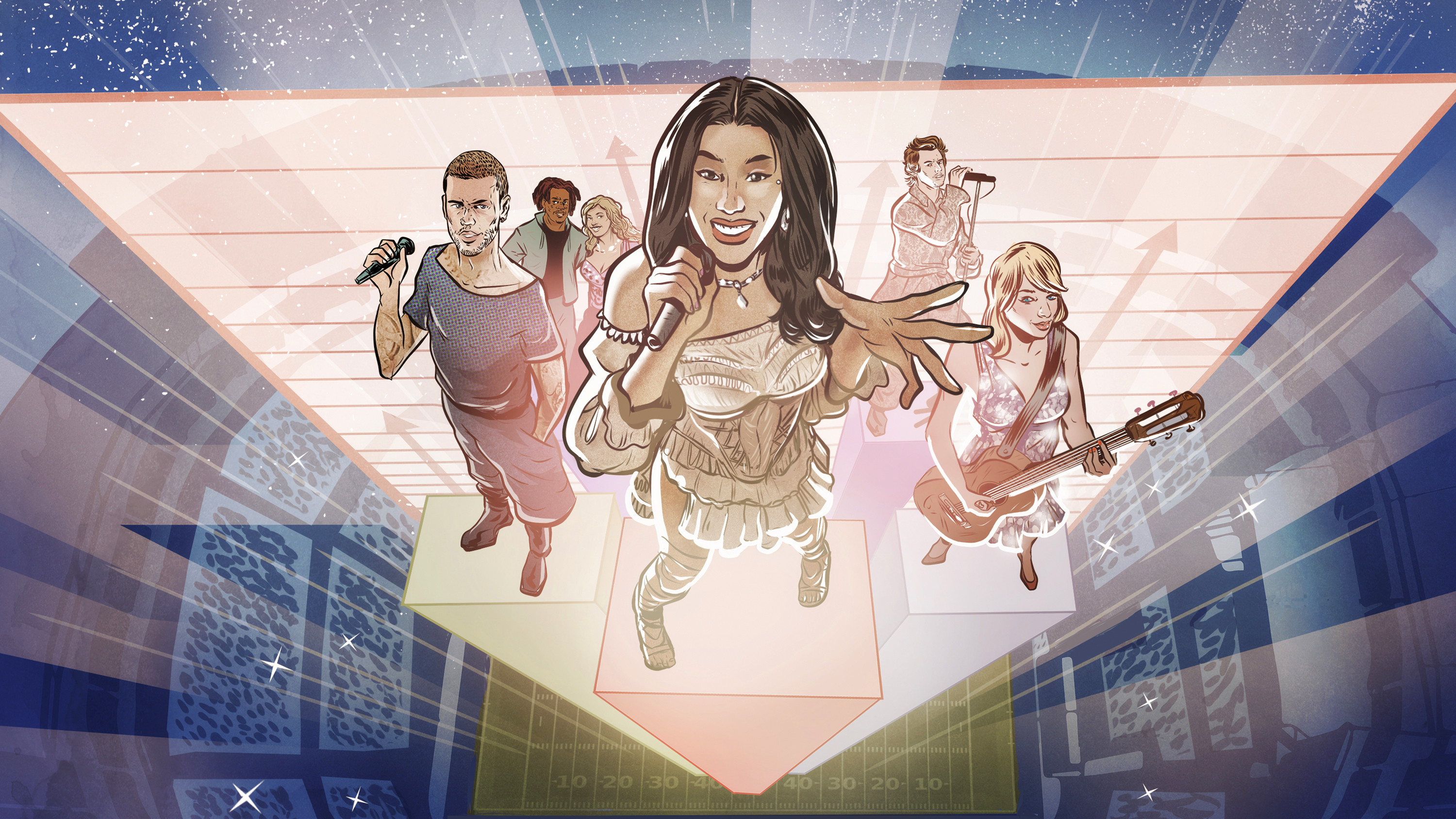
Photo · Andscape
The Stage Nobody Admits They're Watching For
Picture the room. It's February. The food is out, the drinks are half-gone, someone's explaining a penalty to someone who doesn't care. Then the lights go down at midfield, and the room — every room, every year — goes quiet.
Not because football stopped. Because something else started.
There's a reason the halftime show outlasts the final score in memory. Most people cannot tell you who won Super Bowl XLVII. They can tell you what happened in the middle of it. That asymmetry is not an accident. It's a signal — and for a long time, the sports world treated it like a footnote. Entertainment's little intrusion. The bathroom break that went theatrical.
Andscape is treating it like something else entirely.
What a Yearlong Series Means
The publication has launched what it's calling 'The American Carnival' — a yearlong cultural examination of the halftime show's impact, working through history, politics, race, economics, and music. The framing is deliberate and it's worth sitting with: they're not covering the show as spectacle. They're covering it as text. As evidence. As something that, in their words, often says more about America than the game itself.
That's a significant editorial bet. Yearlong series cost resources. They require conviction. You don't commit to that kind of architecture unless you believe the subject can bear the weight — and Andscape clearly believes 12 minutes on the most-watched stage in the country have been carrying weight that the mainstream sports press has mostly looked away from.
The series recently published a halftime power rankings piece, which is the kind of entry point that looks casual and isn't. Rankings are how you get people arguing. They're how you surface the criteria. You can learn more about what a publication values from how it ranks things than from almost anything else it writes. Who's at the top? Who got left out? What does it mean that certain performances rank high — and by whose measure?
I don't have the full rankings in front of me. What I have is the frame, and the frame is the story.
The Mirror Has Always Been There
Here's what's interesting about the moment this series arrives in: we are four months out from the next Super Bowl, according to Andscape's own framing. That's not coverage. That's preparation. That's a publication deciding that the conversation about what the halftime show means should happen before the show, not just as hot takes the morning after.
That shift matters. The halftime show has spent decades being processed reactively — who showed too much, who brought too many dancers, who made the wrong political gesture, who played too old a catalog, who played too new. The reaction cycle is fast and it's loud and it mostly misses the point. Andscape is slowing that down, pulling back the frame, and asking what the accumulated history of these 12-minute performances actually reveals about the country that watches them.
And the answer, when you sit with it, is: quite a lot.
The show has never been politically neutral, even when it tried to be. The choice of who performs is a statement. The choice of what they play is a statement. The staging, the guests, the messages sewn into the choreography — all of it lands differently depending on who's watching, where they live, what they've lived. A performance that reads as triumphant in one zip code reads as a provocation in another. That's not a bug in the format. That's what makes it interesting. That's what makes it, as Andscape puts it, a carnival — loud, crowded, entertaining on the surface, and underneath that surface, something more complicated and more revealing.
What the Sports World Has Been Slow to Admit
Sports media, broadly, has gotten more comfortable in recent years acknowledging that the games don't happen in a cultural vacuum. But the halftime show has always been an awkward case — too entertainment to be covered like sport, too massive to be covered like a concert, too political at times to be covered without taking a position.
So it mostly got covered as vibes. As moment. As Twitter.
A yearlong series changes the terms of that coverage. It says: this is a subject serious enough to deserve sustained attention. It says: the 12 minutes are a doorway, and we are going to walk through it and not come back until we understand what's on the other side.
I find myself thinking about all the rooms that go quiet when the lights drop. About the fact that for a few minutes every February, hundreds of millions of people are watching the same thing at the same time — something that barely happens anymore, something we've mostly lost to algorithmic fragmentation and niche content and personalized feeds. The halftime show is one of the last genuinely shared cultural moments in American life.
Andscape recognized that first. Or at least, said it loudest.
Whatever the power rankings reveal — whatever the series ultimately argues — the more important move was deciding the argument was worth having at all. Twelve minutes. One stage. A country watching itself and calling it entertainment.
Keep reading sports.

ESPN Named Him. Then Unnamed Him. Nobody's Explaining the Gap.
A retraction without a reckoning is just a deleted link.

Three People Died Celebrating. FIFA Hasn't Said Their Names.
Mexico City buried three people after the World Cup crowds came through. At some point, the sport has to sit with that.

Sell the Stadium, Lose the Room
NFL franchises are rolling out the welcome mat for World Cup tourists — and the desperation is showing.
From the other desks.

800 Horsepower, One Ton of Doubt
Lamborghini built the most powerful SUV it's ever made. It's also slower than what it replaced.

Gold Leaf on a Lacquer Dial, and the Weight of What That Costs
Awake's Frosted Leaf Royal Blue asks a question Vietnamese craft has never quite had to answer at this price.

Hide My Email Has Been Showing Your Email
Apple's privacy flagship has a hole in it. They've known for over a year.