Raw Model Power Was Never Going to Be Enough
A writer at Android Authority switched sides. The reason says more about AI product design than any benchmark ever will.
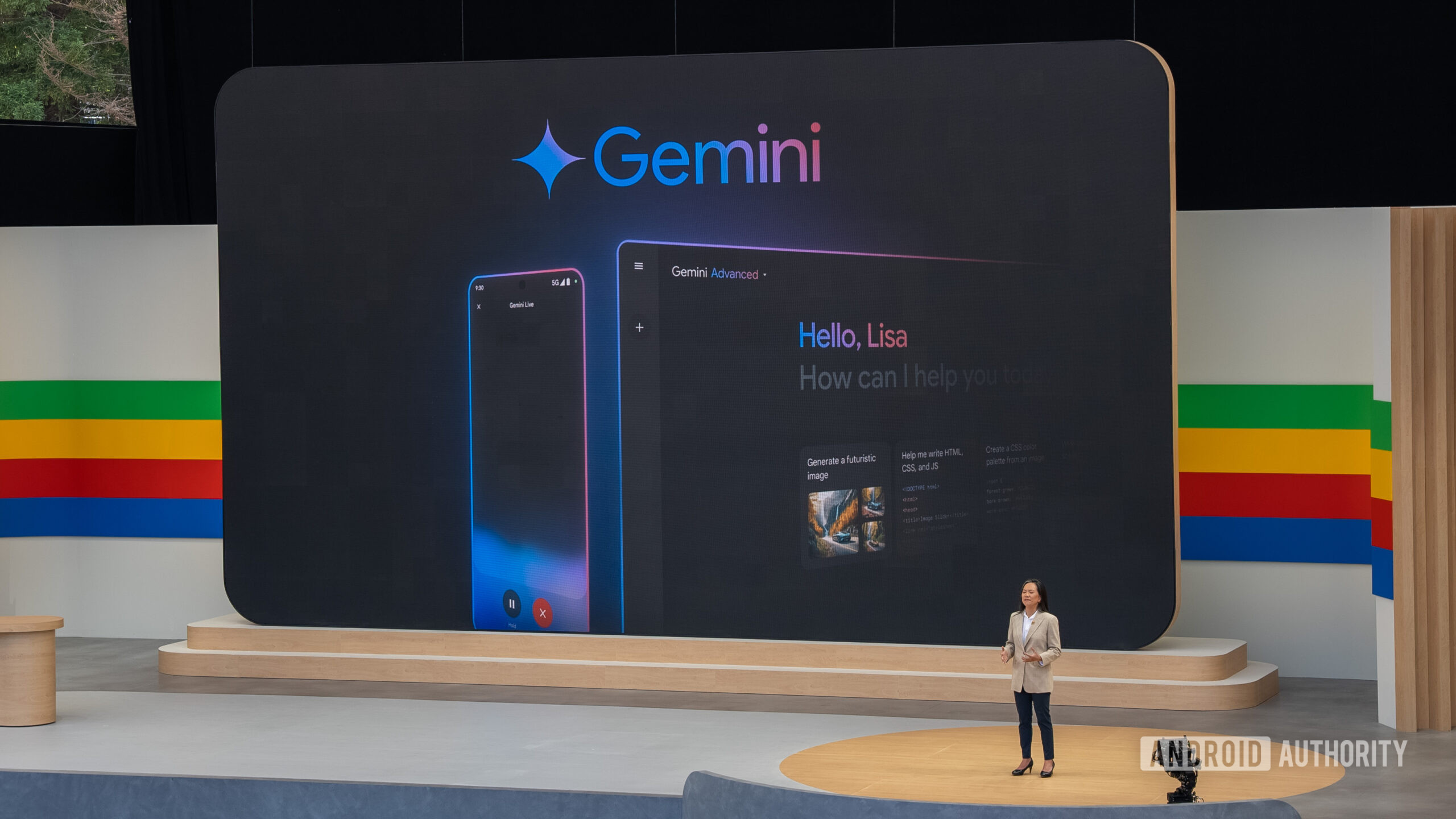
Photo · Android Authority
Someone at Android Authority sat down to use Gemini Notebooks and came away reconsidering ChatGPT. That's worth pausing on — not because brand allegiances in AI matter much, but because of why it happened.
It wasn't the model. It was the container.
The Thing Nobody Wants to Admit About Chatbots
For two years, the dominant story in AI has been model wars. Parameter counts. Benchmark scores. Which company's system can write better poetry or pass which professional exam. The discourse has been almost entirely about raw capability — as if the smartest possible response to any prompt is automatically the most useful product.
The Android Authority piece quietly dismantles that assumption. What shifted the writer's perspective wasn't Gemini suddenly becoming smarter than ChatGPT. It was NotebookLM's integration giving the experience structure — a place to put sources, a way to ground the AI's responses in specific material, a context that persists. The chatbot became a tool because it was handed a job with defined edges.
This is not a small distinction. A chatbot without structure is a very fast, very confident guesser. A tool with context is something you can actually rely on. The writer at Android Authority found the latter more useful, and that finding lands harder than any spec sheet comparison.
What This Moment Reveals
We are somewhere in the middle of an awkward transition — past the pure novelty phase, not yet at the utility phase. Most people who use these products regularly have started running into the same wall: the AI is impressive right up until it isn't, and when it fails, it fails confidently and without warning. The blank chat window, the infinite context, the respond-to-anything posture — it turns out that's not always a feature. Sometimes it's just friction wearing a different coat.
Notebooks, as a concept, is a direct answer to that. You define the scope. You supply the material. The AI works within what you've given it rather than reaching into the fog of its training data and returning with something plausible-sounding. That's a product philosophy, not a model upgrade — and the fact that it moved someone away from a deeply entrenched ChatGPT habit suggests the philosophy is doing real work.
OpenAI has custom instructions, memory, projects. Google has NotebookLM and now tighter Gemini integration around it. Both companies are circling the same problem from different directions: how do you make something that's genuinely good at everything feel useful for something specific?
The answer, apparently, is to stop pretending the blank box is enough.
There's a version of this story that's just competitive tech coverage — Google gains a point, OpenAI loses one, repeat. But the more interesting version is about what users actually need from AI and how long it took the products to catch up to that. A writer switched tools not because the underlying model leapfrogged the competition, but because one product finally felt like it was designed around a real workflow. That's the signal worth tracking.
Benchmarks got us here. Structure might be what keeps us.
Keep reading tech.

Hide My Email Has Been Showing Your Email
Apple's privacy flagship has a hole in it. They've known for over a year.

Sony Killed the Disc. Sony Is Also Killing the Store.
Two announcements, one company, and a quiet admission that "ownership" was always their word to define.

Apple Went to the Highest Court It Could Find. That Tells You Everything.
When a contempt ruling sends you to the Supreme Court, you're not defending a policy anymore — you're defending a worldview.
From the other desks.

800 Horsepower, One Ton of Doubt
Lamborghini built the most powerful SUV it's ever made. It's also slower than what it replaced.

Gold Leaf on a Lacquer Dial, and the Weight of What That Costs
Awake's Frosted Leaf Royal Blue asks a question Vietnamese craft has never quite had to answer at this price.

ESPN Named Him. Then Unnamed Him. Nobody's Explaining the Gap.
A retraction without a reckoning is just a deleted link.