China Didn't Wait for Permission to Build a Hypercar
When BYD rolls out a 1,000-horsepower drop-top and calls it intelligent, the subtext isn't ambition — it's arrival.

Photo · Electrek
The Stage They Built
Picture a car show so aggressive it earns the word insane from the people covering it. That's how the Electrek podcast described Beijing this year — not breathless, not hyperbolic, just accurate. The Beijing Auto Show has become the kind of event where superlatives run out before the press days do, where new electric vehicles arrive in waves so dense that individual reveals blur into a general sensation of velocity. And somewhere inside all of that noise, BYD rolled out a drop-top electric hypercar with more than 1,000 horsepower and called it the world's first intelligent electric supercar.
Sit with that for a second. Not a supercar. Not an attempt at a supercar. The world's first intelligent one. That's not a product claim. That's a positioning statement aimed directly at Stuttgart and Maranello.
The car is called the Denza Z. It had its global debut at Beijing. By summer, according to Electrek's coverage, it's heading to Europe — not to prove something to enthusiasts, but to go directly at the brands those enthusiasts have trusted for generations.
What a Thousand Horsepower Actually Means
Power numbers are easy to throw around and easy to dismiss. Manufacturers have been inflating them for decades, and the gap between a spec sheet and a sensation is wide enough to lose your faith in. But 1,000 horsepower in a drop-top electric is a specific kind of statement, because it removes almost every excuse the competition has left.
Range anxiety? That's been shrinking as a genuine objection for years now. Charging infrastructure? Getting there. Performance? That argument is now closed. You cannot look at a four-figure horsepower figure in a convertible hypercar and tell yourself the legacy automakers still own the top of the performance conversation. They don't. The Denza Z, whatever its final driving feel turns out to be, has already won the spec-sheet argument before a single European journalist gets behind the wheel.
I keep thinking about what it means when the theatrical move — the halo car, the headline-grabber, the thing you build to announce your ambitions — starts coming from a brand that most Western consumers still associate with practical urban EVs. BYD didn't get to a 1,000-horsepower hypercar by accident. They got there by spending years being underestimated, by building volume and infrastructure and battery expertise while the conversation about serious performance stayed fixed on names with decades of motorsport heritage. And now here's the Denza Z, heading to Europe this summer, not to learn anything — to teach.
The Show Behind the Show
The Electrek podcast framed Beijing as absolutely insane, and the Denza Z was one data point among many. That's the part worth pausing on. This wasn't a single standout moment in an otherwise conventional auto show. The volume of new EVs unveiled, the sheer density of ambition on display, suggests something systemic rather than episodic. Beijing wasn't a moment. It was a demonstration of a pace that the rest of the world's automakers are going to have to reckon with structurally, not just product by product.
Western automakers are not asleep — that's too easy and too wrong. But there's a difference between developing competitive products and setting the cultural tempo of an industry. For most of automotive history, that tempo was set somewhere in Germany, or occasionally Japan, or in rare moments of inspiration, Italy. The Beijing Auto Show suggests the tempo is being set somewhere else now, and has been for long enough that catching up is no longer just an engineering problem.
It's an imagination problem.
What Gets Left Behind
Here's the question I can't shake after reading the coverage: what happens to the emotional story European luxury automakers have been selling when the performance gap closes and the technology gap inverts? The heritage argument — the decades of racing history, the hand-assembled engines, the provenance — doesn't disappear, but it changes shape. It becomes a different kind of purchase, a different kind of meaning. More like a watch than a tool. More like an heirloom than a machine.
Maybe that's fine. Maybe there's a durable market for that kind of meaning and always will be. But the Denza Z going to Europe this summer isn't just a product launch. It's a question being asked loudly, in public, with 1,000 horsepower behind it: how much is the story worth when someone else has matched the substance?
Beijing already has an answer. Europe gets to respond.
Keep reading cars.

800 Horsepower, One Ton of Doubt
Lamborghini built the most powerful SUV it's ever made. It's also slower than what it replaced.

£11,990 Draws a Line Under Every Excuse You Had Left
Dacia just made the cheapest new car in Britain electric — and that's not a footnote, it's a verdict.
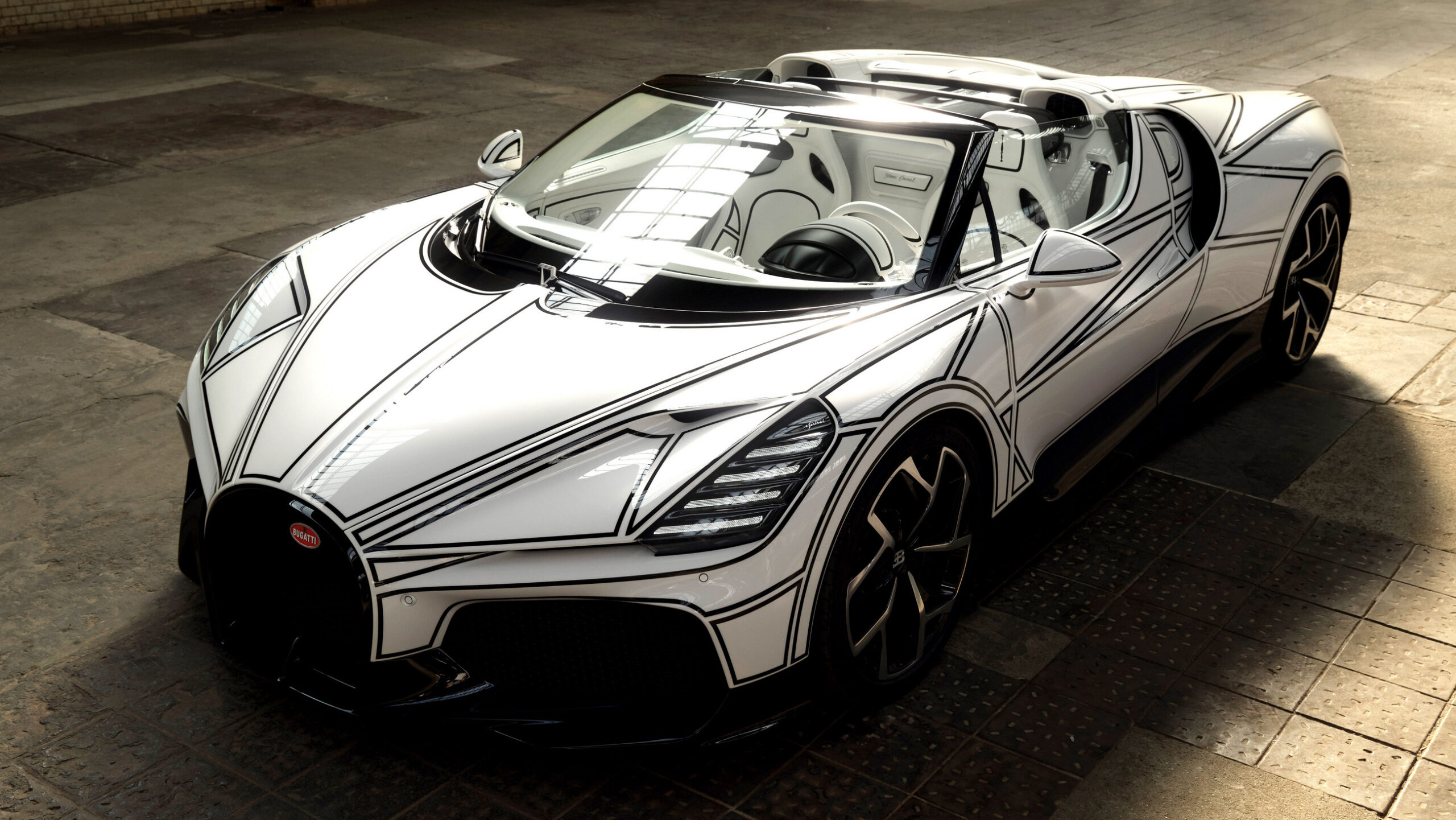
Blanc Éternel Hides Its Speed Behind a Gas Cap
Bugatti built a 261-mph roadster and made sure you'd notice the porcelain first.
From the other desks.

Gold Leaf on a Lacquer Dial, and the Weight of What That Costs
Awake's Frosted Leaf Royal Blue asks a question Vietnamese craft has never quite had to answer at this price.

ESPN Named Him. Then Unnamed Him. Nobody's Explaining the Gap.
A retraction without a reckoning is just a deleted link.

Hide My Email Has Been Showing Your Email
Apple's privacy flagship has a hole in it. They've known for over a year.