Two Ecosystems, One Mirror
Both sides keep banning the other's tech while quietly depending on it — and neither wants to admit what that means.
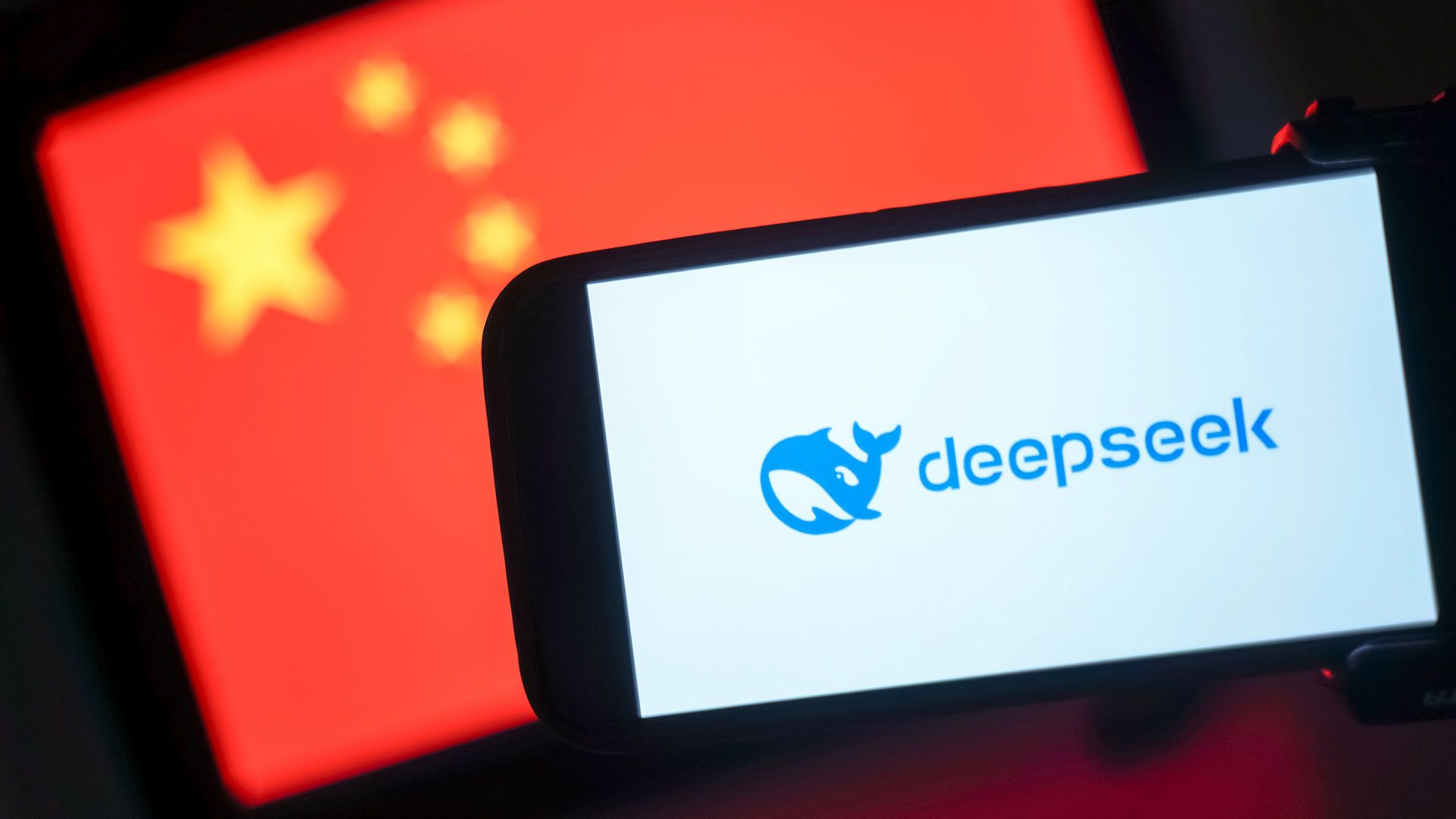
Photo · Latest from TechRadar
The Posture
Imagine two men at a negotiating table, each holding the other's wallet. Neither mentions it. Both give speeches about self-reliance. This is, more or less, where we are with the US-China AI standoff — and the longer you look at it, the harder it is to take either side's official position seriously.
The pattern across a week of tech coverage is almost too neat to be real. China is cracking down on Western AI models and foreign chipmakers while Western nations — including the US — keep embracing DeepSeek as a cheaper, capable alternative to homegrown options. Meanwhile, OpenAI has banned clusters of ChatGPT accounts it believes were operating out of China, accounts that used its own tools to run covert influence campaigns against US tech policy. Let that sit for a second. A Chinese operation, allegedly, used American AI to argue that American AI infrastructure was bad. The irony is so dense it almost collapses under its own weight.
And then there's Meta, which spent roughly two billion dollars acquiring Manus — a Chinese-founded agentic AI startup — in December, only to now be separating from it entirely following pressure from Beijing. A two-billion-dollar bet, unwound. The headline writes itself, but the subtext is what stays with you: American capital wanted Chinese AI capability badly enough to write a nine-figure check, and Chinese government leverage was strong enough to claw it back.
The Infrastructure Bet Nobody Admits Is Happening
While the AI model war gets most of the oxygen, there's a quieter contest happening overhead — literally. A Chinese state-backed satellite company is actively courting the governments and partners that Starlink has, per reporting from Rest of World, pushed aside. The timing is pointed: this is happening in the days before SpaceX's record public listing. One side is monetizing dominance; the other is building redundancy. Both moves are rational. Both are also admissions that the other side's infrastructure works — and that depending on it is a vulnerability.
This is what a genuine technology cold war actually looks like. Not a clean decoupling. Not two hermetically sealed systems. Something messier: parallel economies that keep reaching across the wall to borrow what they publicly claim to reject.
At a Rest of World event during New York Tech Week, the conversation apparently circled the same uncomfortable truth — the difficulty of navigating a world where American and Chinese AI companies have achieved a kind of dual dominance, and where most of the rest of the world is stuck choosing between two systems neither built for them. That framing — dominance as a structural problem, not just a competitive one — is the one that keeps getting underplayed in the coverage.
What Narratives Cost
Here's what I keep coming back to: the official stories both sides are telling require a kind of selective memory that's getting harder to maintain.
The US story is roughly: Chinese AI is a threat, a vector for espionage, an influence operation in waiting. Probably true, in specific ways. But it's hard to hold that position while American developers are integrating DeepSeek into production pipelines because it's cheaper and — in certain benchmarks — comparable. You can't simultaneously warn that the other side's tools are dangerous and use them to build your product. Or rather, you can, but it reveals that the actual calculus is capability and cost, not principle.
The Chinese story is roughly: Western AI is an instrument of foreign influence, and the country must develop sovereign alternatives. Also probably true, in specific ways. But a government that pressures a foreign company to unwind a two-billion-dollar acquisition is also a government that let the acquisition happen in the first place — that saw value in what was being built and decided, later, that political control mattered more than commercial momentum.
Both positions are coherent. Neither is honest about the dependency it's managing.
The Actual Race
The tech press tends to cover this as a competition with a scoreboard — who's ahead in models, who's winning on chips, who controls the satellite layer. That framing isn't wrong, but it misses something. The more revealing contest isn't about who builds the best thing. It's about who gets to define what counts as trustworthy infrastructure — and who, by necessity or by choice, ends up inside the other side's system anyway.
Influence operations run on borrowed tools. Satellite constellations are built to replace dependencies that already exist. Acquisitions get made and unmade based on which government blinks first. None of this looks like two sealed-off worlds. It looks like two powers in a complicated, occasionally hostile, structurally codependent relationship — each trying to narrate its way to sovereignty while the actual wiring runs in both directions.
I've watched enough tech cycles to know that the gap between the official story and the operational reality tends to close eventually. Sometimes the story catches up to the reality. Sometimes the reality quietly reshapes itself to fit the story. Right now, both sides are betting on the latter. The infrastructure bets — the satellite plays, the model integrations, the acquisition reversals — suggest neither is as confident as the press releases imply.
The wallets are still on the table. The speeches continue.
Keep reading tech.

Hide My Email Has Been Showing Your Email
Apple's privacy flagship has a hole in it. They've known for over a year.

Sony Killed the Disc. Sony Is Also Killing the Store.
Two announcements, one company, and a quiet admission that "ownership" was always their word to define.
Apple Went to the Highest Court It Could Find. That Tells You Everything.
When a contempt ruling sends you to the Supreme Court, you're not defending a policy anymore — you're defending a worldview.
From the other desks.

800 Horsepower, One Ton of Doubt
Lamborghini built the most powerful SUV it's ever made. It's also slower than what it replaced.

Gold Leaf on a Lacquer Dial, and the Weight of What That Costs
Awake's Frosted Leaf Royal Blue asks a question Vietnamese craft has never quite had to answer at this price.

ESPN Named Him. Then Unnamed Him. Nobody's Explaining the Gap.
A retraction without a reckoning is just a deleted link.