We Keep Asking If Apple Can Invent Again. Wrong Question.
Every CEO transition story has a villain. This one keeps trying to make Tim Cook the victim.
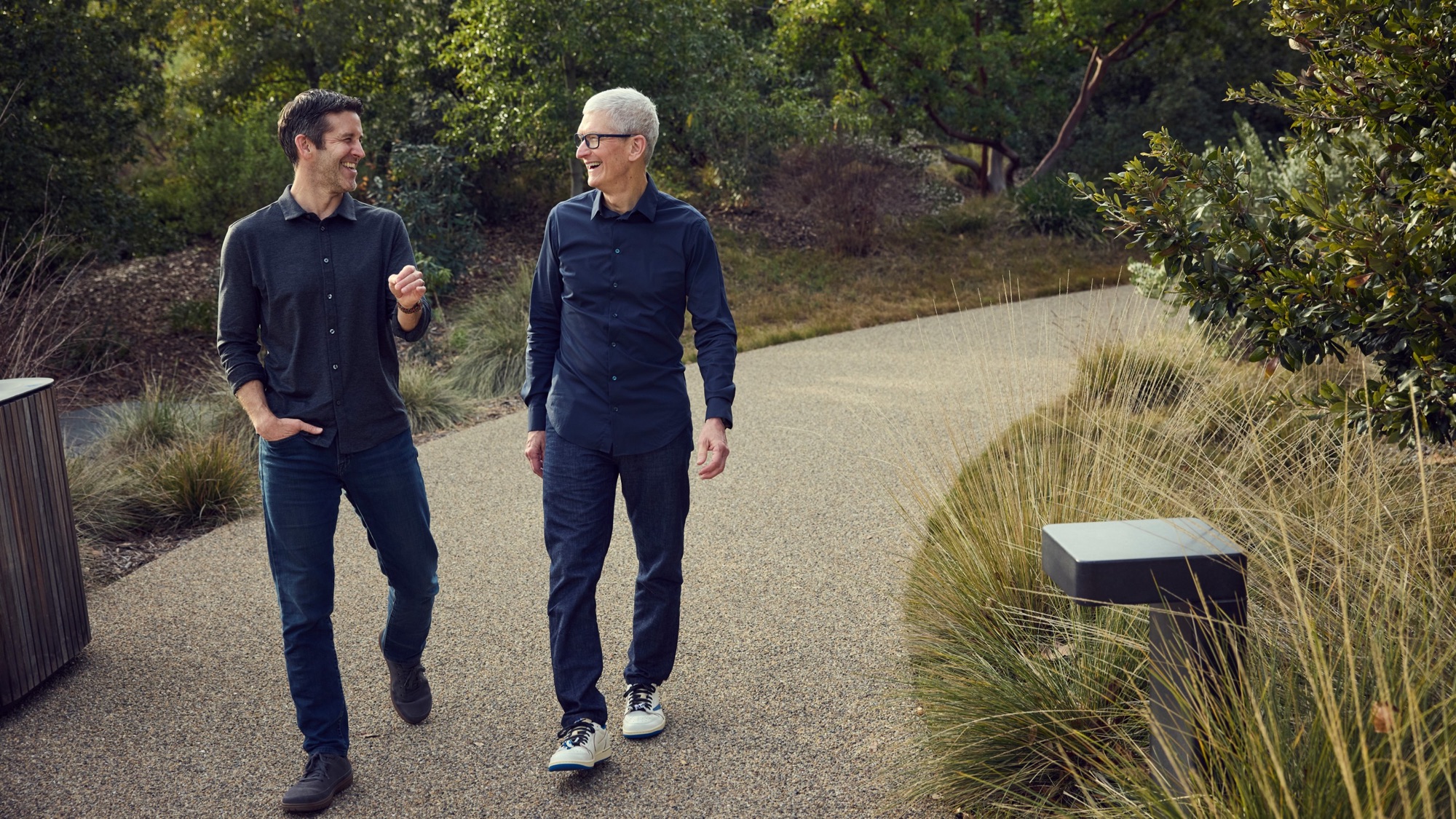
Photo · Daring Fireball
The Obituary Written Too Early
Picture a room full of financial journalists typing the same sentence in slightly different fonts. Tim Cook built the machine. Now someone has to actually drive it. The transition is barely announced and already the coverage has its shape: operational genius passes the baton to a new era that must — must — prove Apple can still surprise us. The eulogy is pre-written. The question is just whether Ternus can outrun it.
I've watched this cycle enough times to recognize the posture. A company reaches a size that makes legacy coverage uncomfortable, so the press reaches for the narrative of the missed moment. In Apple's case, the missed moment is AI. Except — and this is worth sitting with — the framing keeps slipping under scrutiny.
John Gruber at Daring Fireball flagged a line from a New York Times piece by Tripp Mickle and Karl Russell that called out Apple for having "largely missed out on the artificial intelligence boom now lifting the sales of its technology peers." Gruber's response was pointed: which peers, exactly? Nvidia is the obvious answer, and Apple doesn't compete with Nvidia. What Apple has not done, Gruber argues, is funnel its free cash flow into massive AI data centers the way its competitors have. Whether that's restraint or blindness depends entirely on what happens next. But calling it a "miss" treats spending money as equivalent to making something. Those are different things.
What Execution Actually Built
Here's where the story gets uncomfortable for the narrative. Om Malik's accounting of the Cook era, quoted by Gruber, is worth pausing on: Apple's market cap went from roughly $350 billion when Cook took over to nearly $4 trillion today. Revenue nearly quadrupled, from around $108 billion in fiscal 2011 to over $416 billion in fiscal 2025. Services — a category that barely registered as a line item in the Jobs era — became a $100-billion-a-year business. The most valuable company in human history, multiple times over.
Malik's read is clear-eyed about what Cook is and isn't: not a product visionary, but someone who ran the inheritance with what he calls operational ruthlessness. The inheritance was extraordinary. But the history of business is full of people who received extraordinary things and reduced them. Cook did not do that. He compounded them at a rate that belongs in a different conversation entirely.
John Ternus, by the coverage consensus, is cut from similar cloth. Not Steve. Not a visionary in the mythologized sense. An operator. So now we have two operators in succession and a press corps increasingly convinced that Apple needs a third thing — a category-defining AI product, a killer app for the agent era — that neither man has announced they're building.
Maybe that concern is valid. Maybe it isn't. But the framing keeps treating "not announced yet" as "not coming," which is a peculiar standard to apply to a company that has never been early and has almost always been right about timing.
The Yadda-Yadda Problem
Steven Levy's argument, as Gruber describes it, is that Ternus must steer Apple toward building a killer AI product — specifically pointing toward a future where AI agents replace the swipe-and-tap app model entirely. The image is vivid: by the end of the decade, you won't open Uber. You'll just tell an agent to get you home, and the car will be there.
Gruber's objection cuts right at the seam: that vision yadda-yadda-yadda's over Uber and Lyft entirely. Two deeply entrenched companies that have their own say in whether agents get to route around them. The future where AI dissolves every existing stakeholder assumes those stakeholders will sit still while it happens. They won't. They never do.
This is the thing that all three pieces are circling without quite landing on together. The real subject isn't whether Ternus can out-invent Cook. It's whether the entire frame of "Apple needs a breakthrough AI product" understands how products actually displace each other. Breakthroughs don't arrive in a vacuum. They arrive into markets full of companies that built their entire existence on the previous breakthrough surviving. Uber survived the smartphone era. It's betting it survives the agent era too.
Apple has always understood this. The iPod didn't appear in a world without music players. The iPhone didn't appear in a world without smartphones. The timing was the product.
The Question Under the Question
What I keep returning to is this: the coverage of Cook's exit and Ternus's entrance is, at its core, a story about what we think companies are for. Is Apple's job to grow forever? To invent forever? To maintain what it built? To spend aggressively on the next paradigm before the paradigm arrives?
We don't actually agree on the answer. We just agree that whoever holds the title should be doing more of whatever we valued most last quarter. Cook made money, so now we want invention. If Ternus invents something enormous, we'll want fiscal discipline. The goalposts are load-bearing for the narrative, not for the company.
Ternus inherits a $4 trillion machine, a $100 billion services business, and a market watching to see if operational discipline can build the next category. That's a real challenge. The AI mandate is real. The pressure is real.
But so is this: every company that was supposed to bury Apple — for missing search, for missing social, for missing cloud, for missing AI — is still trying. And the most valuable company in human history is still standing there, not particularly apologetic about its timeline.
Maybe Ternus is exactly what Apple needs. Maybe he's the wrong person entirely. We genuinely don't know yet. What I do know is that the obituary was written before the patient checked in, and that's a habit worth noticing — not because Apple deserves protection from scrutiny, but because the story we tell about a company shapes the story the company tells about itself.
The next thing Apple builds will define the Ternus era. Until then, all of this is just people in rooms, typing the same sentence in slightly different fonts.
Keep reading tech.

Hide My Email Has Been Showing Your Email
Apple's privacy flagship has a hole in it. They've known for over a year.

Sony Killed the Disc. Sony Is Also Killing the Store.
Two announcements, one company, and a quiet admission that "ownership" was always their word to define.
Apple Went to the Highest Court It Could Find. That Tells You Everything.
When a contempt ruling sends you to the Supreme Court, you're not defending a policy anymore — you're defending a worldview.
From the other desks.

800 Horsepower, One Ton of Doubt
Lamborghini built the most powerful SUV it's ever made. It's also slower than what it replaced.

Gold Leaf on a Lacquer Dial, and the Weight of What That Costs
Awake's Frosted Leaf Royal Blue asks a question Vietnamese craft has never quite had to answer at this price.

ESPN Named Him. Then Unnamed Him. Nobody's Explaining the Gap.
A retraction without a reckoning is just a deleted link.