The Watch You Didn't Win Is Still Trying to Find You
MB&F built something stranger and more honest than a waitlist — and the consolation prize tells you everything about how desire actually works.

Photo · Hodinkee
What Waitlists Confess
Most of the watch industry manages desire through silence. You put your name somewhere. You wait. The brand decides whether you're the right kind of customer. It's a system designed to feel like patience but functions like audition — and everybody knows it, and almost everybody plays along anyway.
MB&F has been doing something different for years, and the watch press mostly covers it as a product story. Two new M.A.D.2 colorways drop — R&B, a blue-and-gold combination, and REDemption, a red variant — and the coverage dutifully notes the specs, the Eric Giroud design credit, the price point relative to a mainline MB&F piece. What it tends to underweight is the architecture underneath. The thing that makes these watches worth thinking about isn't what they look like. It's what they reveal about how we relate to objects we can't have.
The origin story matters here. Max Büsser conceived the M.A.D.1 as a private gesture — a way to thank roughly 500 suppliers and clients who believed in the brand but couldn't reach the price of an MB&F watch. Not a product launch. A thank-you note with a movement in it. Then the news got out, as news does, and what had been a quiet act of gratitude became a pressure wave. The raffle system that followed wasn't a marketing strategy. It was a response to the reality that once desire enters a room, it doesn't leave quietly.
The Raffle as Philosophy
There's something almost confrontational about a raffle in this context. The watch industry's dominant access systems — waitlists, authorized dealer relationships, collector histories — all dress up allocation as merit. The right watch finds the right wrist. The raffle strips that pretense away. You enter. You might win. The watch doesn't care how many Pateks you own.
I keep thinking about what that means in practice. Not as a democratic gesture — brands can romanticize their own systems endlessly — but as an honest acknowledgment that desire and access have never had much to do with each other. The raffle doesn't fix that imbalance. It just stops pretending it isn't there.
And then there's the REDemption. This is the part the coverage mostly treats as a footnote, and it's the most interesting detail in the whole story. A colorway — red, distinct, purpose-built — created specifically for people who entered the raffle and lost. Not a consolation in the dismissive sense. A second door, painted a different color, left open on purpose.
Oracle Time flagged this as MB&F paying tribute to dedicated but unlucky fans. Hodinkee framed it around FOMO finally having an answer. Both readings are accurate and both slightly miss the point. The REDemption isn't about generosity. It's about the brand acknowledging that the experience of wanting something and not getting it is real and worth respecting — that the losing entrant isn't just a statistic to be recycled into next year's raffle pool.
What Losing Teaches You About Wanting
There's a version of this story where REDemption is cynical — a way to monetize the losing side of the raffle, to turn disappointment into a second revenue stream. I don't think that reading is entirely wrong. But I also don't think it's the whole truth.
The more I sit with the structure MB&F has built — the raffle, the origin in supplier gratitude, the consolation colorway, the annual rhythm of it — the more it reads as a system designed by someone who has genuinely thought about what desire does to people. Not what desire does for sales. What it does to people.
Most of us have an object we wanted and didn't get. Maybe we got something else instead. Maybe we still think about the first one, the one that got away, with a specific texture of feeling that's different from regret — closer to wistfulness, maybe, or the particular ache of a door that closed before you reached it. REDemption is a brand naming that feeling out loud and handing it a watch.
Whether that's marketing or meaning is a question I'm genuinely not sure how to answer. Maybe it doesn't need one.
The Access Experiment Nobody Is Calling an Experiment
What MB&F has built with M.A.D. Editions is, functionally, the watch world's most interesting access experiment — and it's been running long enough now that the results are legible. The raffle system creates genuine unpredictability. The accessible price point creates a different buyer pool than any mainline MB&F piece reaches. The consolation colorway creates a secondary narrative that keeps the story alive past the raffle announcement.
None of that is accidental. And none of it maps neatly onto how the watch industry usually talks about itself — the language of heritage, of craft, of the right watch for the right collector. M.A.D. Editions operates on a different frequency. It's interested in the person who almost got the watch. The person who wanted it before they could afford it. The person who lost the raffle and felt something real about that.
I think about the objects I own that came to me sideways — not through the front door, not through the expected path. There's something about that kind of acquisition that changes your relationship to the thing. You know what it cost you to get there, and it wasn't just money.
The watch you didn't win is still out there. MB&F just decided that was worth acknowledging.
Keep reading watches.

Rexhep Rexhepi Didn't Level Up. He Changed the Argument.
The RRCHF isn't a watchmaker proving he can do complications. It's a complication proving the watchmaker was always the point.

Universal Genève Is Back. That's the Easy Part.
The watch world is celebrating a revival. Nobody's asking whether revivals work.
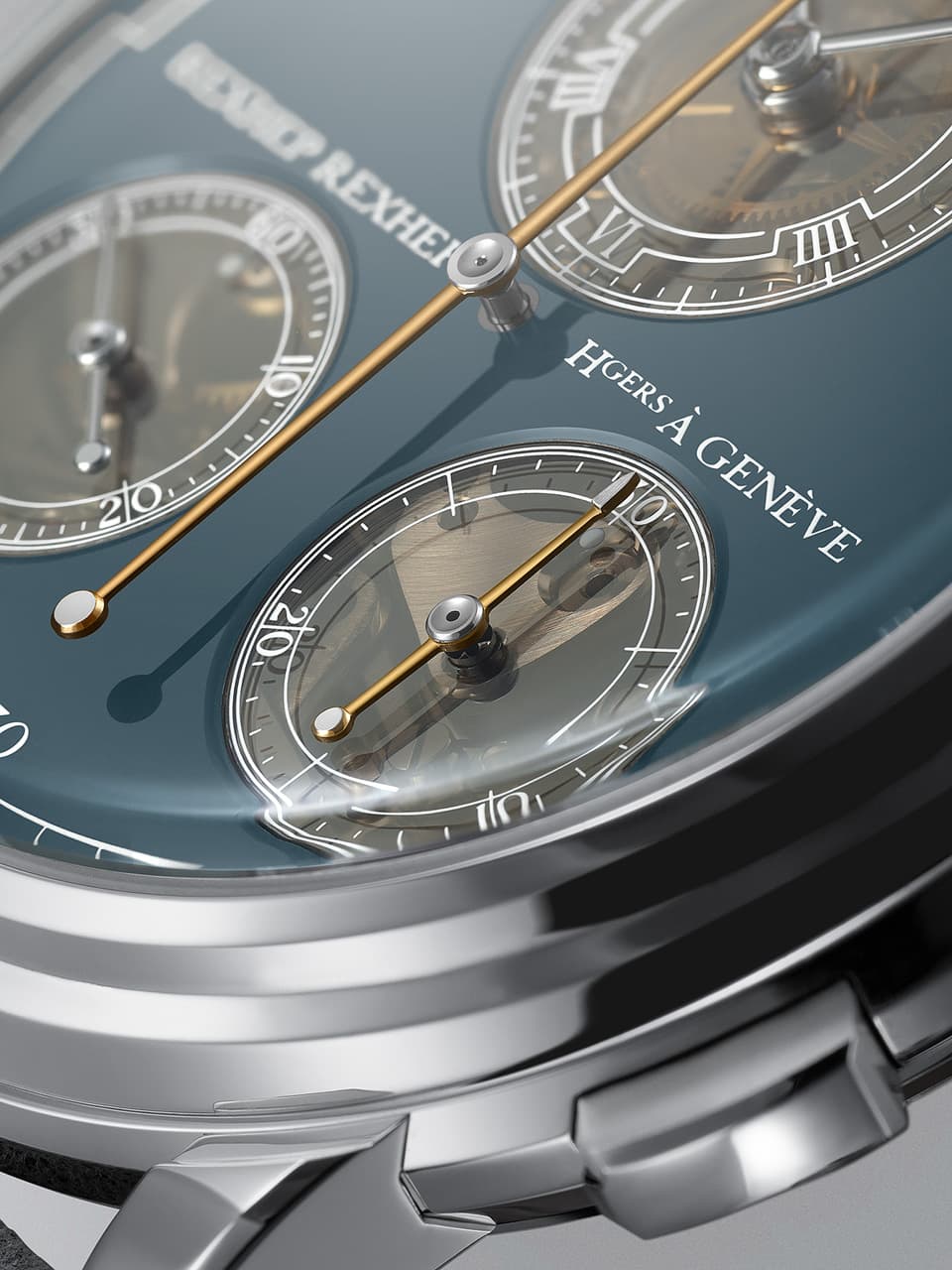
The Establishment Built Flybacks for Decades. Rexhepi Just Made Them Look Slow.
The RRCHF isn't a level-up. It's a reckoning.
From the other desks.

The Car You Bought Isn't Yours Anymore
Automakers keep pushing subscriptions you hate, and that's not a mistake — it's a strategy.

The Best Wearable Is the One You Forget You're Wearing
Esquire just made the restraint argument for tech-on-your-face. It's more radical than it sounds.

Signal Was Never the Weak Link
A federal case just showed that the most private app in the world can't protect you from your own phone.