BMW and Mercedes Just Handed a Chinese Brand a Third of the Table
When two German institutions split their charging infrastructure with a Huawei-backed EV brand, that's not partnership — that's a reckoning.

Photo · Electrek
A writer at Electrek noticed something quietly seismic this week: AITO, the EV brand running on Huawei's platform and built by SERES Group, has joined IONCHI — the premium charging joint venture previously held fifty-fifty between BMW and Mercedes-Benz in China — as an equal 33.3% shareholder. The math is simple. The meaning is not.
Think about what that restructuring required. BMW and Mercedes-Benz, two brands that have spent decades building the architecture of what "premium" means in the Chinese market, agreed to dilute their own partnership and hand a domestic Chinese EV brand an equal slice of the infrastructure they built together. Not a minority stake. Not an observer seat. Equal.
This Is What Concession Looks Like at Speed
There's a version of this story that gets told as cooperation, as smart localization, as mature global business. And technically, none of that is wrong. But strip the press release language and what you're left with is two legacy German automakers acknowledging that one of China's fastest-growing names in the space belongs at the same table — not as a junior partner, not as a customer of the network, but as an owner of it.
The charging network is infrastructure. Infrastructure is leverage. Whoever shapes where the plugs go, how the experience feels, what the standard becomes — that's not a product decision, it's a platform decision. IONCHI now belongs, in equal thirds, to a brand that didn't exist in this form until recently. That's not a footnote.
What makes this worth sitting with is the specific terrain: premium. IONCHI isn't a mass-market charging play. It was built around the idea that certain drivers expect a different experience at a charging station — the same way they expect a different experience in the showroom, the cabin, the service bay. BMW and Mercedes built that network together because neither could justify it alone and both understood the value of the signal it sent. Now AITO carries that signal too.
The Germans Aren't Losing. They're Adapting. But Those Aren't Opposites.
It would be too easy to read this as collapse. It's more complicated. The decision to bring AITO in suggests BMW and Mercedes see more value in a shared premium standard than in holding exclusive control over one. That's a real calculation, not a surrender. Shared infrastructure means broader coverage, shared cost, and a unified experience that benefits every brand in the network.
But the calculation also reveals something about where power has shifted. A few years ago, the idea that a Chinese EV brand would be restructuring a German-German joint venture as an equal — not acquired, not licensed in, but restructuring it — would have read as speculative fiction. Now it's a business filing.
AITO's growth, Huawei's involvement in its platform, the speed at which Chinese EV brands have moved from footnotes to genuine competitors in their home market: none of that happened quietly. The Germans watched it happen. And their response, apparently, is to build with it rather than against it.
There's a kind of pragmatism in that which almost commands respect. Almost. Because pragmatism at this scale also means acknowledging that the window to shape this market on your own terms has already closed.
The charging port is the new handshake. AITO just got introduced.
Keep reading cars.

800 Horsepower, One Ton of Doubt
Lamborghini built the most powerful SUV it's ever made. It's also slower than what it replaced.

£11,990 Draws a Line Under Every Excuse You Had Left
Dacia just made the cheapest new car in Britain electric — and that's not a footnote, it's a verdict.
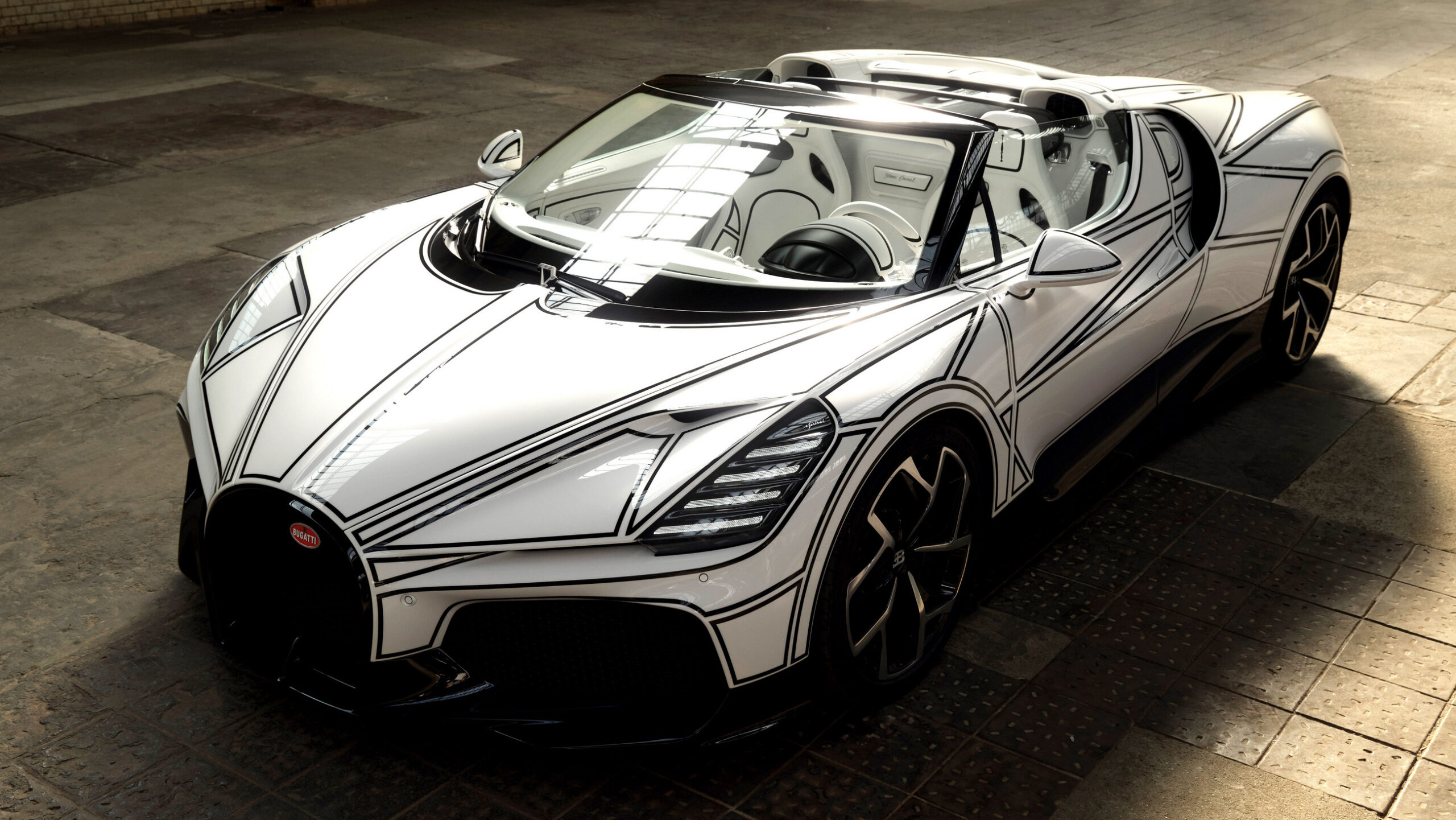
Blanc Éternel Hides Its Speed Behind a Gas Cap
Bugatti built a 261-mph roadster and made sure you'd notice the porcelain first.
From the other desks.

Gold Leaf on a Lacquer Dial, and the Weight of What That Costs
Awake's Frosted Leaf Royal Blue asks a question Vietnamese craft has never quite had to answer at this price.

ESPN Named Him. Then Unnamed Him. Nobody's Explaining the Gap.
A retraction without a reckoning is just a deleted link.

Hide My Email Has Been Showing Your Email
Apple's privacy flagship has a hole in it. They've known for over a year.