Carson Hocevar Sat on His Door and Drove. That's the Whole Race.
At Talladega, survival is the sport — and one 23-year-old figured out how to make the aftermath feel like the point.

Photo · Latest Content - Autoweek
What the Smoke Hides
Picture it from above, if you can. One hundred and fifteen laps into the Jack Link's 500, something gives — a touch, a draft gone wrong, the geometry of forty cars going the same speed in the same direction for too long. Then the chain reaction. Then the smoke. Visibility drops to near zero, according to footage covered by MotorBiscuit, and what's left when it clears is the kind of wreckage that makes you wonder, briefly, what sport you were watching.
Talladega does this. It has always done this. The difference now is that the wreck is the story — not the asterisk on the story, not the unfortunate chapter before the winner's circle. The crash is the climax. The survival is the prize. And at some level, everyone in the building knows it.
What nobody planned for was Carson Hocevar sitting on his door.
The 208th Name
Hocevar won the Jack Link's 500, becoming the 208th different winner in NASCAR Cup Series history, according to Motorsport.com. He is 23 years old and drives for Spire Motorsports — not one of the marquee operations, not the team the cameras find first when they're looking for a storyline. Autoweek called it a needed jolt for the sport, and they're not wrong, though I'd push further: it wasn't just that a new name won. It's that the new name immediately understood something about the moment that a lot of veterans haven't quite figured out.
After the checkered flag, Hocevar — who stands 6'4", which matters here — climbed out of the window, sat on his door against the B-post, and drove the car. Both directions around the track. Working the clutch and throttle from outside the cockpit, waving to fans personally as he went. Motorsport.com reported that someone in the crowd even threw something into the car, the kind of spontaneous chaos that only happens when a crowd feels genuinely delighted rather than dutiful.
It was absurd. It was also exactly right.
Speed Is Table Stakes Now
Here's the uncomfortable thing about modern superspeedway racing: the cars are, in a meaningful sense, interchangeable at speed. The draft equalizes. The pack compresses. What separates the winner from the field is often positioning, timing, and luck — being in the right lane when the wrong one disintegrates. Joey Logano said as much after Talladega, telling Autoweek that the massive multi-car wreck highlighted instability issues with NASCAR's Next Gen car at superspeedways. That's a driver saying, diplomatically, that the machine itself is part of the problem.
When a championship-caliber driver flags the equipment as a structural issue, you have to sit with that for a second. Because the fans still came. The footage still spread. The highlights still ran. Not despite the wreck — because of it. The sport has quietly made a bargain: we will give you chaos, and chaos will give us relevance. The question nobody wants to answer out loud is whether that bargain holds when the chaos stops feeling survivable.
Chris Buescher finished close enough to feel the loss — Motorsport.com noted he narrowly missed ending RFK Racing's win drought — and in any other narrative, that near-miss would be the emotional center of the piece. Instead, it's a footnote. The sport moved on before the cool-down lap was finished.
Permission to Have Fun
What Hocevar understood, either instinctively or by design, is that the victory celebration is now load-bearing. It has to carry the emotional weight that the race itself sometimes can't — because when the drama lives in the wreck, the winner needs to give the crowd somewhere to put their energy once the smoke clears. Standing on the roof is fine. A burnout is expected. Sitting on your door and personally driving laps while waving to 80,000 people is a different category of thing entirely.
Autoweek called it a victory celebration to remember and described it as Hocevar putting his own spin on NASCAR history. That framing is generous but accurate. There's a lineage of great celebrations in motorsport, and most of them are memorable because the driver stopped performing and started being — being happy, being present, being a person who just did something improbable in front of a lot of strangers.
Hocevar is 6'4". The car was not built for a 6'4" man to sit on the door sill and operate the pedals. The fact that he made it work anyway — that he'd clearly thought about this, or at least was willing to improvise his way through it at speed — says something about who he is. Not a champion yet, not a household name yet, but someone who knows that the moment after the win is also a test, and who passed it with enough room to wave.
I keep coming back to that image: a very tall man, half inside a race car, going the wrong way around Talladega, grinning. There's something in it about how you behave when the thing you've been working toward finally happens. Whether you tighten up and perform the expected version, or whether you sit on the door and drive both ways.
Most of us, when the moment comes, forget to drive both ways.
Keep reading cars.

800 Horsepower, One Ton of Doubt
Lamborghini built the most powerful SUV it's ever made. It's also slower than what it replaced.

£11,990 Draws a Line Under Every Excuse You Had Left
Dacia just made the cheapest new car in Britain electric — and that's not a footnote, it's a verdict.
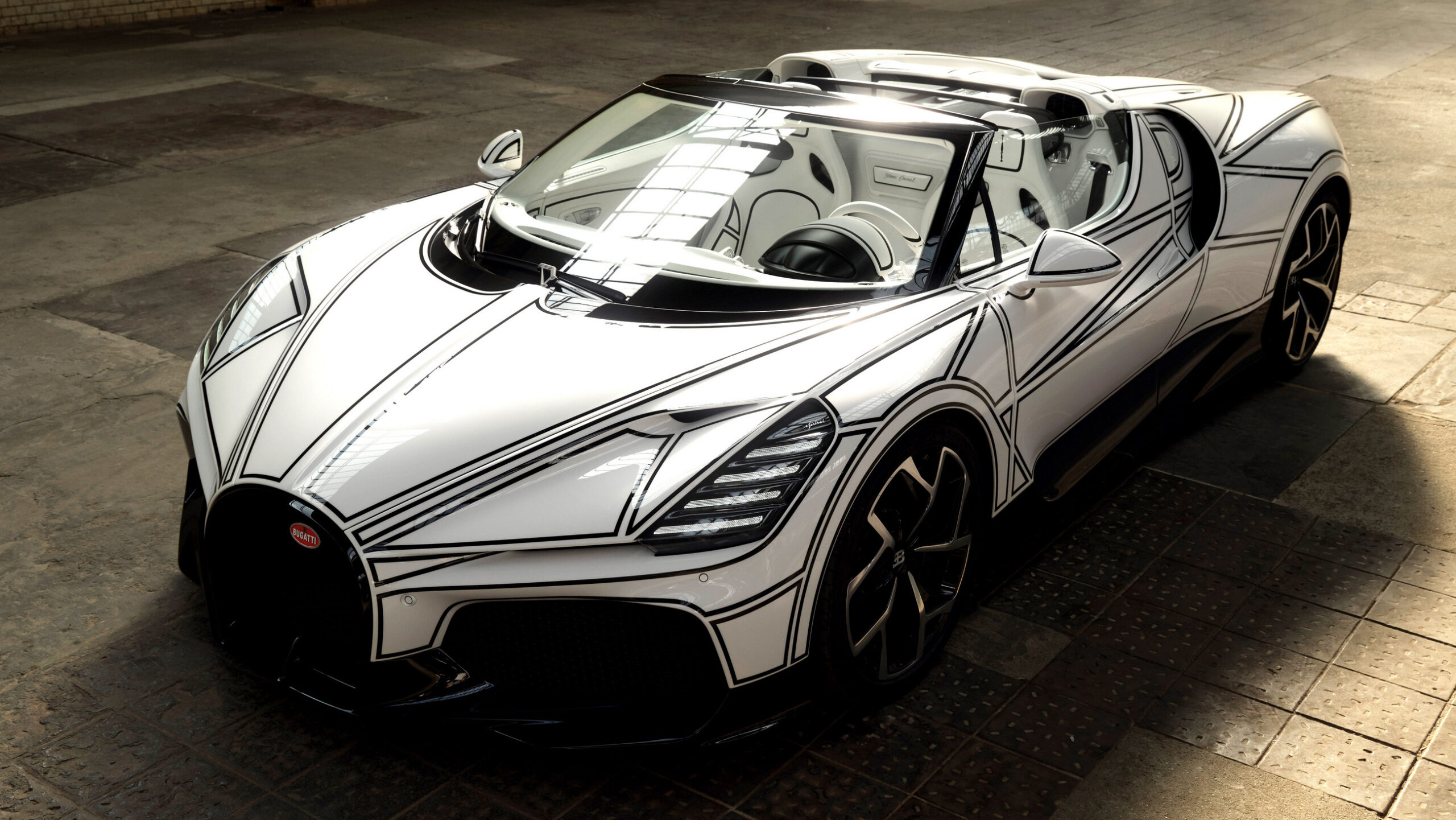
Blanc Éternel Hides Its Speed Behind a Gas Cap
Bugatti built a 261-mph roadster and made sure you'd notice the porcelain first.
From the other desks.

Gold Leaf on a Lacquer Dial, and the Weight of What That Costs
Awake's Frosted Leaf Royal Blue asks a question Vietnamese craft has never quite had to answer at this price.

ESPN Named Him. Then Unnamed Him. Nobody's Explaining the Gap.
A retraction without a reckoning is just a deleted link.

Hide My Email Has Been Showing Your Email
Apple's privacy flagship has a hole in it. They've known for over a year.