Every Draft Class Inherits the Last One's Ghosts
Shedeur Sanders fell in 2025. The league is still rearranging furniture because of it.
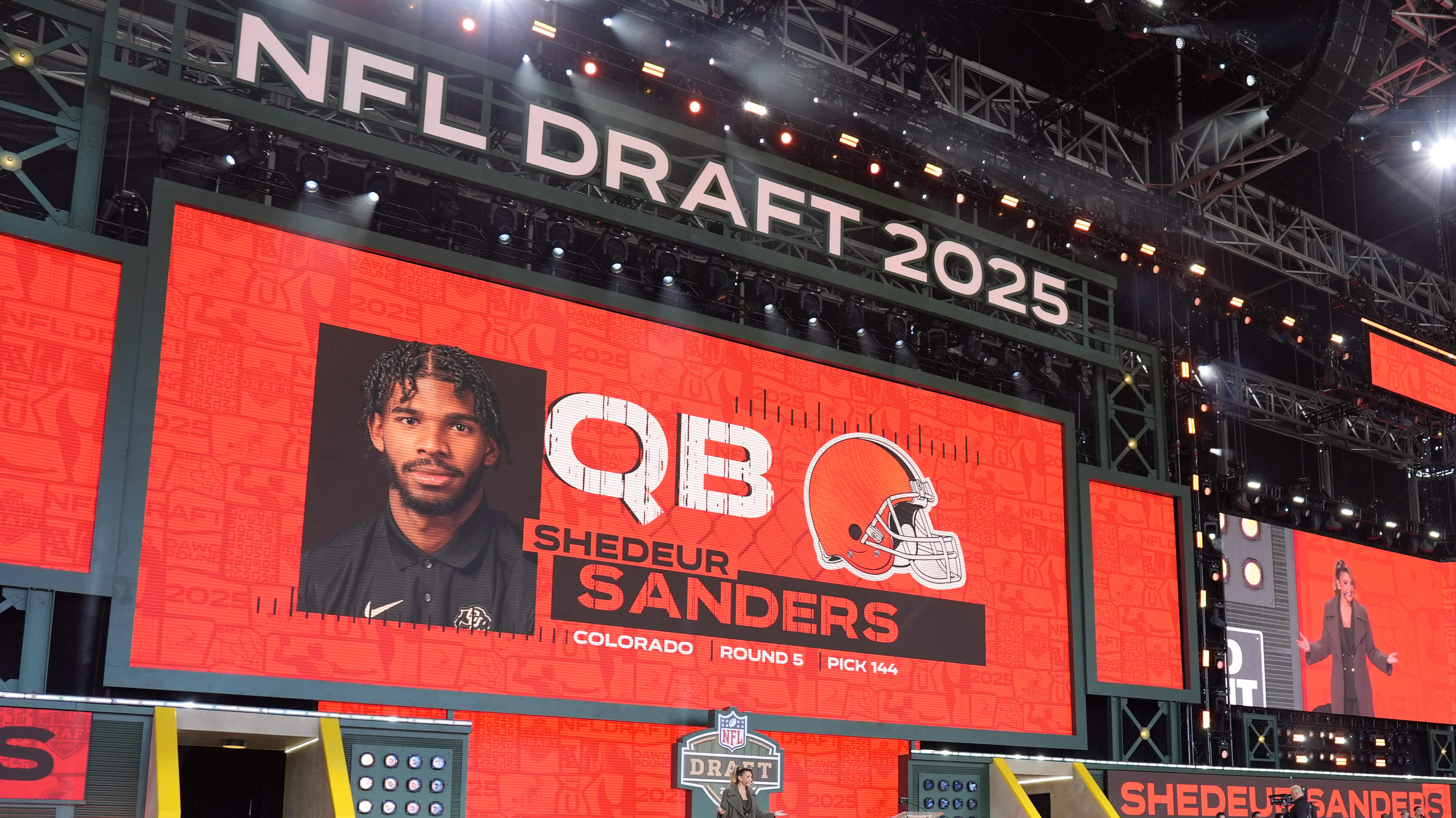
Photo · Andscape
There's a version of NFL draft coverage that presents itself as prophecy. Scouts with clipboards. Analysts with conviction. The whole apparatus humming toward certainty. And then, every few years, something breaks in a way that the apparatus can't quietly absorb — and suddenly the whole machine is running slightly different software.
Shedeur Sanders was that break.
His fall through the 2025 draft — from projected top pick to late-round afterthought — didn't just reshape one quarterback's trajectory. According to reporting from Andscape, it's still casting a shadow over this year's proceedings in Pittsburgh. The NFL, responding to the fallout, announced before the 2026 draft that it would restrict access to prospects' contact information to a single person per franchise. One rule change. Quiet. Procedural. But rules like that don't get written in a vacuum. They get written because something went wrong visibly enough that someone had to be seen doing something about it.
That's not accountability. That's optics management with a filing date.
The Industrial Complex Needs a Narrative
The Guardian put it plainly: grading a draft the moment it ends is like rating a meal right after you order. The food hasn't arrived. You don't know if the kitchen is even capable of what you asked for. And yet the NFL Draft Industrial Complex — their phrase, and the right one — demands verdicts before the ink dries on the contracts.
This is the cycle. Last year's cautionary tale becomes this year's corrective framing. The Sanders story gets cited not as a reason to slow down the evaluation machine, but as evidence that the machine needs better guardrails. A tweak here. A policy there. The underlying theater — the combines, the phone call rituals, the anonymous front-office whispers that torpedo a prospect's stock before he's taken a single NFL snap — that part continues unchanged.
The Guardian noted, almost as a throwaway, that nobody had the last pick of the 2022 draft pegged as a future Super Bowl participant. That's not an anomaly. That's the actual signal buried under all the noise: the people paid to know don't know, and the coverage paid to validate them keeps pretending otherwise.
What Changes, What Doesn't
The contact information restriction is the kind of reform that makes a league look responsive without requiring it to be honest. If the Sanders situation revealed something real about how teams weaponize the pre-draft process — the leaks, the orchestrated slights, the coordinated cooling of a prospect's market — then limiting who can dial a number is addressing the symptom while the condition goes untreated.
And yet here we are in Pittsburgh for the 2026 draft, running the same pageant with slightly adjusted stage directions. New prospects. New consensus rankings. New certainties that will age at their own pace, probably badly, definitely slowly.
The Guardian is right that it takes years to evaluate a draft class. The Eagles look sharp on paper. The Rams appear to be doing damage control. A coach is conspicuously absent from the frame somewhere. Fine. All of that may or may not matter in three years.
What matters right now is that the NFL spent the offseason writing a rule about phone numbers instead of asking why its evaluation culture produces outcomes so reliably humiliating that they require rules about phone numbers.
Shedeur Sanders is in someone's quarterback room. The people who made his draft week miserable are still employed. And the 2026 class is walking into the same building, wearing the same hopeful expressions, trusting a process that has already admitted, in its quiet procedural way, that it failed the last guy.
The draft doesn't have a memory. The prospects do.
Keep reading sports.

ESPN Named Him. Then Unnamed Him. Nobody's Explaining the Gap.
A retraction without a reckoning is just a deleted link.

Three People Died Celebrating. FIFA Hasn't Said Their Names.
Mexico City buried three people after the World Cup crowds came through. At some point, the sport has to sit with that.

Sell the Stadium, Lose the Room
NFL franchises are rolling out the welcome mat for World Cup tourists — and the desperation is showing.
From the other desks.

800 Horsepower, One Ton of Doubt
Lamborghini built the most powerful SUV it's ever made. It's also slower than what it replaced.

Gold Leaf on a Lacquer Dial, and the Weight of What That Costs
Awake's Frosted Leaf Royal Blue asks a question Vietnamese craft has never quite had to answer at this price.

Hide My Email Has Been Showing Your Email
Apple's privacy flagship has a hole in it. They've known for over a year.