The Most Credible Thing on Your Wrist Has Been to the Moon
Breitling didn't send a watch to space to sell watches. They sent it to say something about what proof looks like now.

Photo · Hodinkee
There's a version of watch marketing that involves a racetrack, a photographer with a long lens, and a driver who's never actually raced. You know the one. You've seen it so many times the image no longer registers.
Then there's this.
What Actually Happened
Astronaut Reid Wiseman and the Artemis II crew wore the Breitling Navitimer B02 Chronograph 41 Cosmonaute on their mission. Not in a campaign. Not in a press image staged to look like a mission. On the mission. Hodinkee confirmed it. Fratello noted that anyone following the Artemis II coverage wouldn't have been surprised by the official announcement — because the watch had already been seen doing the thing. The announcement was almost a formality, a press release catching up to reality.
That's a rare reversal. Usually the story gets built around the object. Here, the object was already in the story.
Revolution framed it as a race — their words, their angle — and there's something to that. The space watch category is not empty. Credibility in this specific lane is contested. But Breitling didn't just enter the race. They put hardware in orbit first and announced afterward.
What It Costs to Mean Something
Watch culture has a complicated relationship with provenance. We want the thing to have a history, a reason, a life beyond the showroom. We want it to have been somewhere. The Cosmonaute Artemis II has been somewhere most objects — most people — will never go.
And yet the interesting question isn't whether the watch is impressive. It clearly is. The interesting question is what Breitling is betting on by doing this. Because this isn't a mass-market move. A 41mm chronograph worn on a lunar mission doesn't convert casual buyers. It converts a specific kind of buyer — the one who knows the difference between a watch that's been to space and a watch that has a space-themed dial. That distinction is everything in certain rooms and meaningless in others.
Breitling is betting those rooms matter. That the most durable flex in watch culture right now isn't exclusivity by price or scarcity by allocation — it's exclusivity by context. By actual use. By the fact that when someone asks why this watch, the answer involves an astronaut and a mission name and a date that's in the historical record.
That's a different kind of confidence than a limited edition number stamped on a caseback.
The Navitimer line has long carried the weight of aviation heritage — that's well-documented, well-worn territory for Breitling. What the Cosmonaute Artemis II does is extend that lineage somewhere harder to fake. You can simulate a cockpit. You can't simulate low Earth orbit.
I keep coming back to how the coverage unfolded. Fratello's point — that the watch wasn't a surprise because it had already been spotted on the mission — is the detail that lingers. In an era where every product launch is engineered for maximum announcement impact, Breitling let the mission do the talking first. The watch earned its press release.
That's not a marketing strategy. That's restraint. And in fashion, in objects, in anything that asks you to believe in it — restraint, when it's earned, is the most convincing thing there is.
Keep reading fashion.

Gold Leaf on a Lacquer Dial, and the Weight of What That Costs
Awake's Frosted Leaf Royal Blue asks a question Vietnamese craft has never quite had to answer at this price.

Kyle Smith Has a Job Title That Didn't Exist Before. That's the Whole Tell.
When the NFL hires a fashion editor, it's not about clothes — it's about who gets to decide what matters.
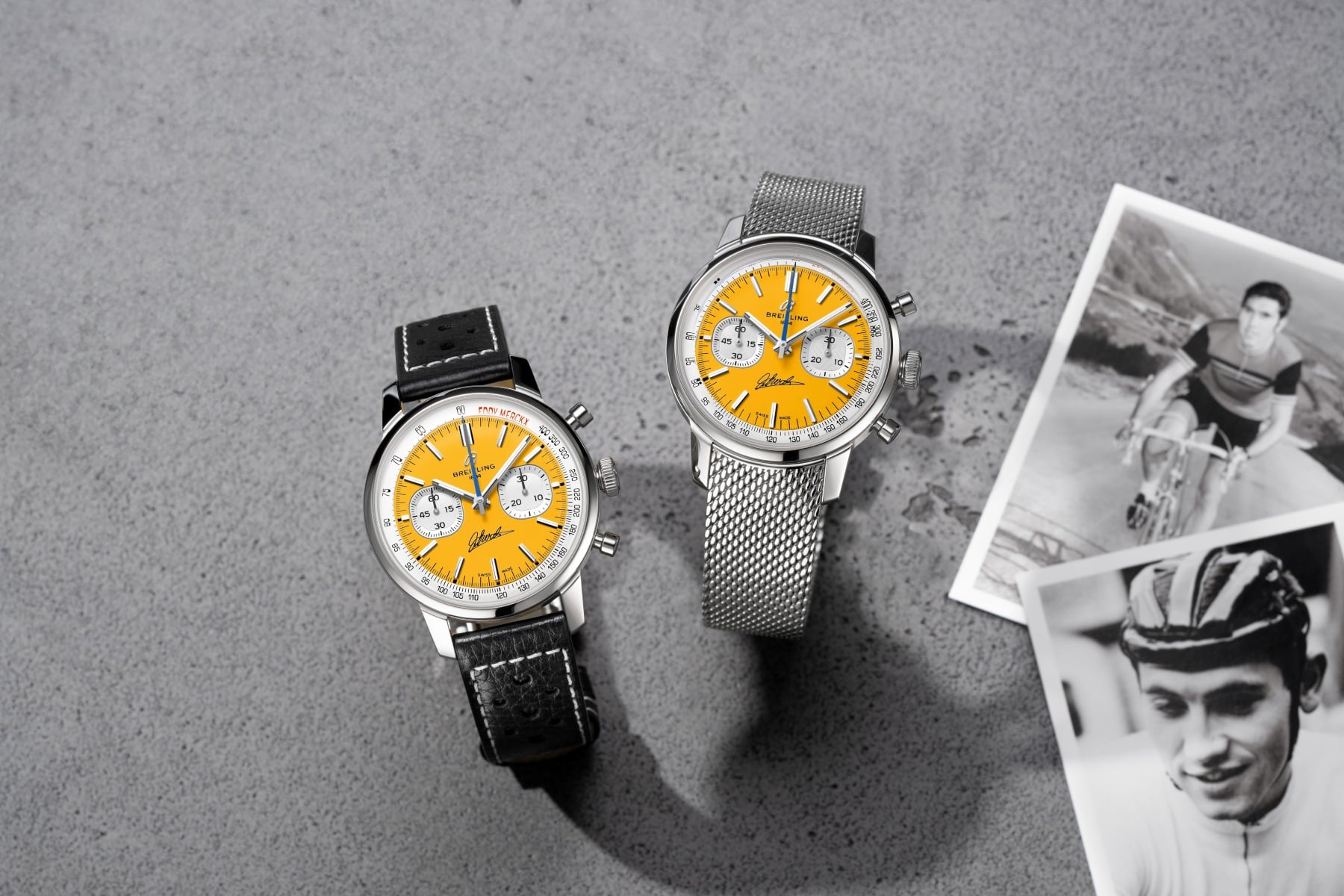
525 Victories, One Dial, and Cycling's Long Wait for a Wrist
Breitling's Eddy Merckx edition doesn't just reference a legend — it asks whether motorsport's younger sibling has finally earned its place in serious watch culture.
From the other desks.

800 Horsepower, One Ton of Doubt
Lamborghini built the most powerful SUV it's ever made. It's also slower than what it replaced.

ESPN Named Him. Then Unnamed Him. Nobody's Explaining the Gap.
A retraction without a reckoning is just a deleted link.

Hide My Email Has Been Showing Your Email
Apple's privacy flagship has a hole in it. They've known for over a year.