Ochs und Junior Added Texture. Nothing Broke.
The Anno Sandblasted is a test of whether a philosophy survives its own evolution.

Photo · Monochrome Watches
There's a particular kind of confidence that looks, from the outside, like restraint. Ochs und Junior has been trading on it since the brand was founded in 2006 — building watches around a philosophy that Monochrome traces back to Dr. Ludwig Oechslin: solve horological problems by removing components, not adding them. The Anno annual calendar is one of the clearest expressions of that thinking. So when the brand introduces a sandblasted variant — a surface treatment, a texture, something added — it raises a fair question. Does the philosophy hold?
The answer, frustratingly for anyone who likes a clean narrative, appears to be yes.
What Sandblasting Actually Does Here
Surface finishing in watchmaking is usually about status signaling. Polish catches light in a way that reads as expensive from across the room. It's a choice made partly for the wearer, partly for everyone else. Sandblasting runs the other direction — it diffuses light, quiets the surface, makes the object less loud about itself. Which means that in this specific case, Ochs und Junior didn't add texture to make the Anno more noticeable. They added it to make it less so.
That's not a contradiction of minimalism. That's minimalism applied to finish.
Worn & Wound noted the brand is now hitting the two-decade mark since its 2006 founding, which is worth pausing on. Twenty years is long enough for a design philosophy to either calcify into self-parody or prove that it was actually load-bearing from the start. The sandblasted Anno suggests the latter. When your entire identity is reduction, the only interesting move left is asking what reduction looks like in different materials, different surfaces, different light.
The Annual Calendar Underneath
None of this surface conversation matters if the mechanism doesn't hold up its end. The Anno's annual calendar complication — the foundational reason the watch exists — remains what it was: a practical solution to a real problem, executed with the fewest possible moving parts. Monochrome describes the Oechslin approach as stripping mechanisms to their absolute essentials, and the annual calendar is a demonstration of that thinking at its most direct. You adjust it once a year, at the end of February. The rest of the time, it simply knows.
The sandblasted case doesn't change any of that. It just changes what you're looking at while it does its work.
I keep coming back to a specific tension in how both sources frame this watch: they're enthusiastic, but carefully so. Nobody is calling this a reinvention. The framing is closer to refinement — a familiar idea wearing a different surface. Which is either a limitation or exactly the right level of ambition for a brand that has always argued against unnecessary complexity.
The brands that age well are usually the ones that know the difference between evolving and chasing. Sandblasting the Anno isn't chasing anything. It's a single, considered step sideways — same ground, different angle of light. Whether that excites you probably says more about what you want from a watch than what the watch is actually doing wrong.
Keep reading fashion.

Simone Rocha Gave Men Permission to Be Dressed With Feeling
Her first menswear runway didn't argue for anything. It just showed you what was possible.

Hublot Chose Hard Colors on Purpose
Pastel ceramic isn't soft. Making it is the opposite of soft.
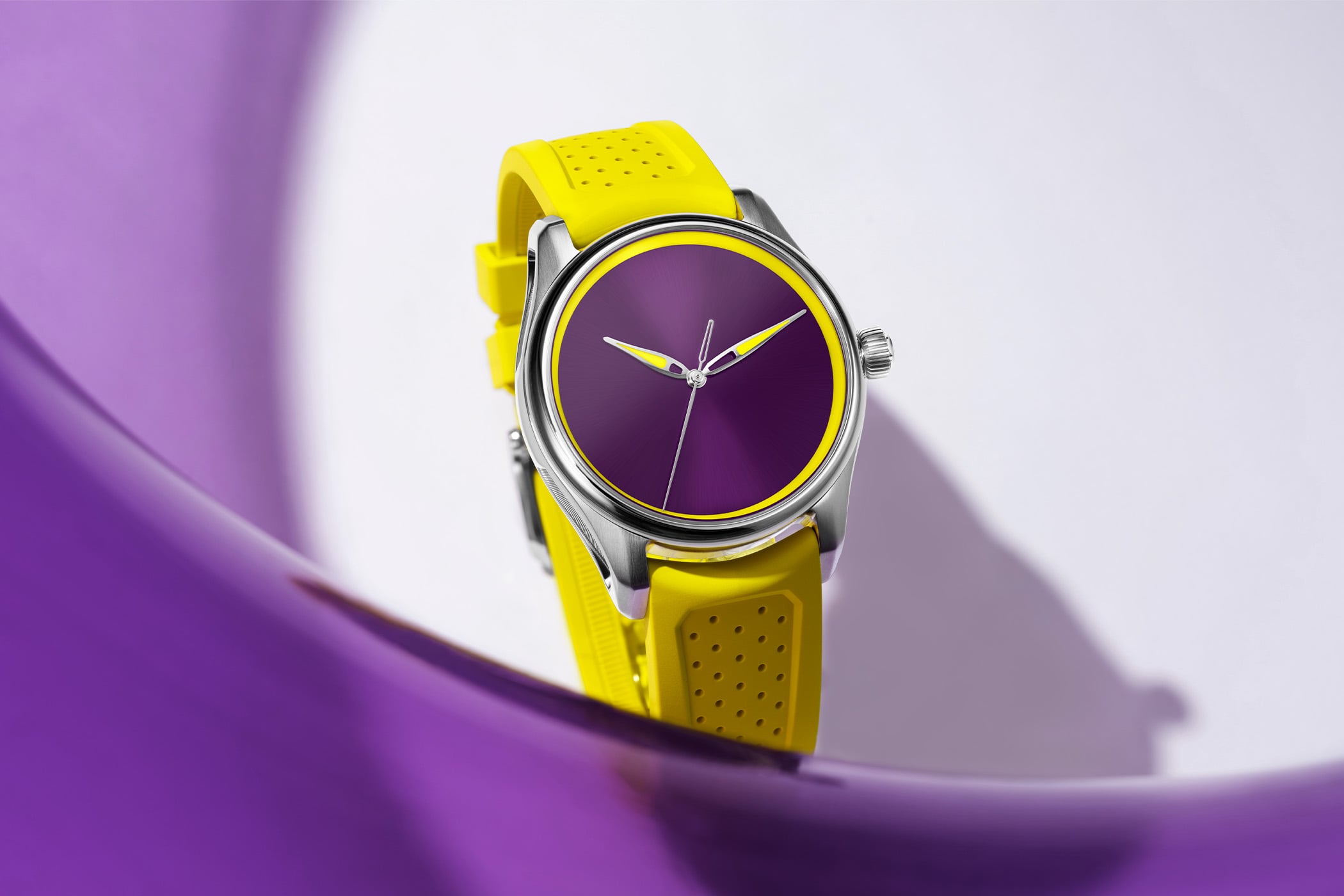
Sun Berry Is a Provocation Dressed as a Watch
H. Moser built its reputation on saying less. The Pioneer Centre Seconds Sun Berry says something else entirely.
From the other desks.

Nineteen Years Old, and the Car Is Already Lying to Him
Kimi Antonelli is rewriting what a rookie season looks like — but Mercedes keeps reminding everyone that the machine has its own agenda.

Fifty-Three Years of Wanting. Now What?
A city defined by its hunger just got fed — and nobody knows quite what to do with that.

Philips Hue Finally Remembered the Wall
Smart lighting spent years selling you new bulbs. The switch was always the problem.