The Admission Hidden Inside the Monaco Evergraph
TAG Heuer didn't just build a new chronograph mechanism — they built one that starts with the problem every other chronograph ignores.

Photo · DEPLOYANT
There's a particular kind of confidence that looks like humility. The kind that says: the thing we've all been doing has a flaw, and here's what we did about it.
That's the quiet argument underneath the TAG Heuer Monaco Evergraph, revealed at Watches & Wonders 2026. It's a chronograph. It lives in the Monaco collection, which carries its own weight of history and iconography. But the reason it matters — the reason it's worth sitting with — isn't the shape of the case or the color of the dial. It's what's happening inside, and what that implies about everything that came before it.
The Mechanism Is the Message
According to Deployant, the movement at the heart of the Evergraph was developed entirely by TAG Heuer LAB and is built around flexible components — a mechanism that represents a genuine departure from how traditional chronograph architecture works. That's not a small thing to say plainly. Flexible components in a mechanical movement aren't a styling choice. They're an engineering position. They suggest that TAG Heuer looked at the conventional approach, identified where it creates problems, and chose to solve those problems rather than work around them.
Traditional chronographs, for all their romance, carry a known set of mechanical compromises. The act of starting, stopping, and resetting a chronograph involves contact, friction, and a sequence of events that watchmakers have been managing — not eliminating — for generations. What TAG Heuer appears to be saying with the Evergraph is that flexible components can change that equation. Not refine it. Change it.
That's the admission hidden in the name. An evergraph. Something always ready. Something without the hesitation baked into the conventional approach.
What It Means to Make a Real Argument
Revolution Watch spoke directly with Carole Forestier-Kasapi and Nicholas Biebuyck about the Evergraph — and the fact that TAG Heuer put those two names in front of the conversation says something deliberate. This isn't being positioned as a design exercise. It's being positioned as a technical statement, and the brand wants you to understand it that way.
Scottish Watches came at it from a different angle — the F1 energy, the Monaco lineage, the cultural electricity of the name — and that framing isn't wrong. The Monaco has always lived at the intersection of motorsport and watchmaking, and the Evergraph doesn't abandon that. But what's interesting is that the technical story and the heritage story aren't in competition here. They're actually reinforcing each other. Chronographs were born to measure performance. A chronograph that performs better at being a chronograph is the most Monaco thing TAG Heuer could have made.
The watch industry has a complicated relationship with genuine innovation. There's a lot of variation dressed up as invention — new dials, new materials, new colorways presented with the vocabulary of breakthroughs. The Evergraph doesn't feel like that. The flexible component architecture is a specific mechanical claim, developed in-house, applied to one of the most scrutinized watch designs in existence. That's a bet, not a campaign.
I keep coming back to what it means to admit that conventional chronographs have limits. Most brands don't. Most brands iterate on the mechanism that exists and call it progress. TAG Heuer, at least with this release, chose to name the problem first — and then build something that treats the problem as solvable rather than permanent.
That kind of honesty, when it's backed by actual engineering, is rarer than any complication.
Keep reading fashion.

Gold Leaf on a Lacquer Dial, and the Weight of What That Costs
Awake's Frosted Leaf Royal Blue asks a question Vietnamese craft has never quite had to answer at this price.

Kyle Smith Has a Job Title That Didn't Exist Before. That's the Whole Tell.
When the NFL hires a fashion editor, it's not about clothes — it's about who gets to decide what matters.
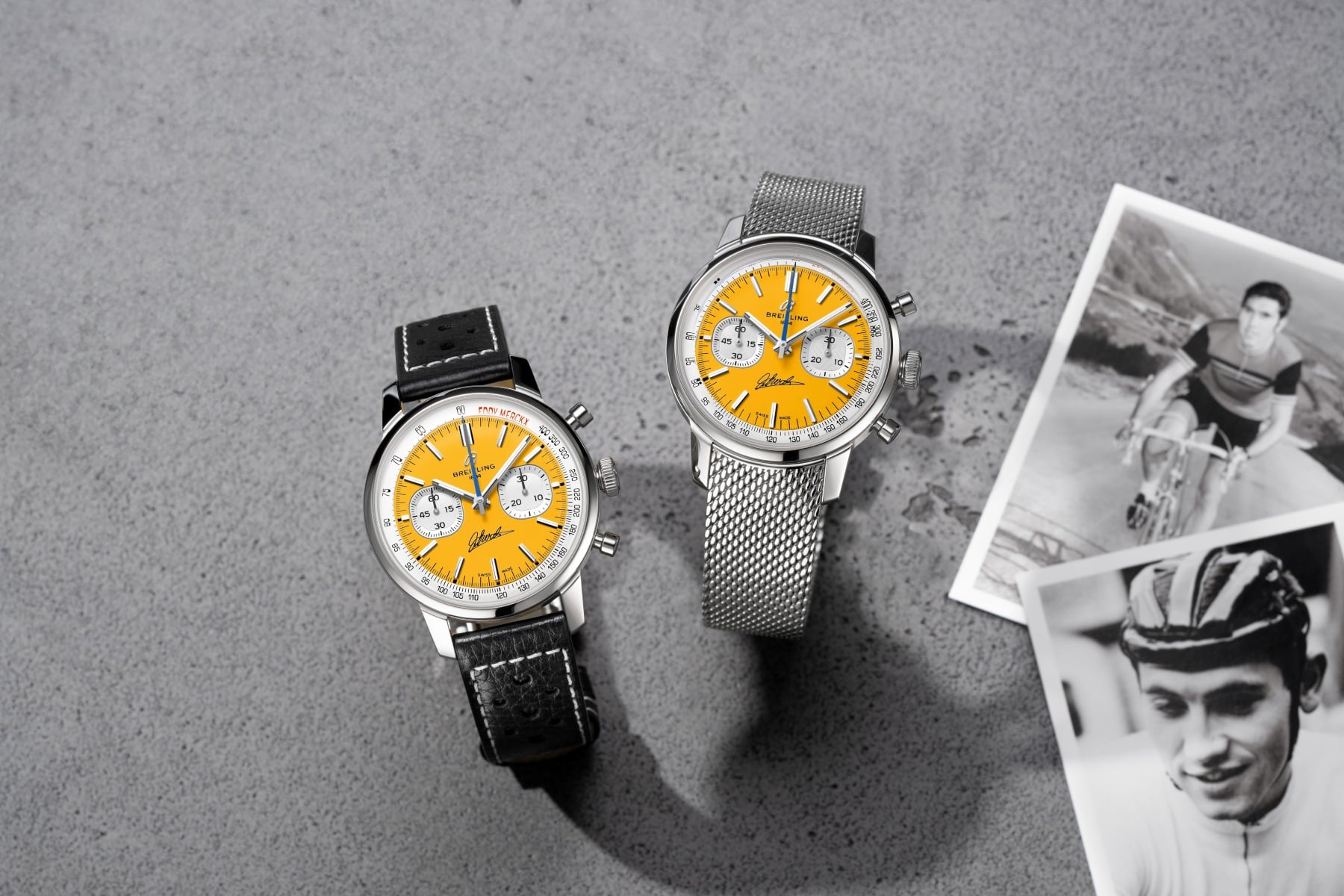
525 Victories, One Dial, and Cycling's Long Wait for a Wrist
Breitling's Eddy Merckx edition doesn't just reference a legend — it asks whether motorsport's younger sibling has finally earned its place in serious watch culture.
From the other desks.

800 Horsepower, One Ton of Doubt
Lamborghini built the most powerful SUV it's ever made. It's also slower than what it replaced.

ESPN Named Him. Then Unnamed Him. Nobody's Explaining the Gap.
A retraction without a reckoning is just a deleted link.

Hide My Email Has Been Showing Your Email
Apple's privacy flagship has a hole in it. They've known for over a year.