Time Slipped Off the Wrist, and Nobody Missed the Strap
When young collectors started reaching for pocket watches and clocks, they weren't being contrarian — they were asking what horology had always been afraid to answer.

Photo · Robb Report Style | Luxury Fashion and High-End Clothing
Something Shifted at the Fair
Picture a room full of people who care, genuinely care, about small machines. They've traveled for this. They've read about these objects for years, traded notes in forums, argued about finishing and movement architecture in the way other people argue about terroir or basketball lineups. Now they're standing in front of a table, and the thing that stops them cold isn't strapped to anyone's wrist.
That scene, in miniature, is what's been quietly accumulating across the watch world. Robb Report noted it from two angles in recent coverage: young collectors gravitating toward horological objects that live off the wrist — pocket watches, clocks — and a neighborhood watch fair where people came for the rare pieces and stayed for the belonging. The two stories seem separate. They're not.
What connects them is a question the watch industry has been circling for decades without quite asking directly: what is this actually about?
The Wrist Was Always a Convention
The wristwatch became dominant for reasons that had more to do with practicality than philosophy. It freed up your hands. It fit the pace of modern life. And for a long time, that utility was enough to organize an entire industry around — complications designed to be read at a glance, cases sized for a particular radius of human anatomy, straps and bracelets as the primary aesthetic variable.
But utility is a strange foundation for what watchmaking actually does at its best. The craft, at its highest register, is about engineering impossibly delicate mechanisms that measure something humans have always been slightly afraid of. Time. The passage of it. The fact that it doesn't stop. A watch that does this well — that makes you feel the weight of what it's tracking — doesn't necessarily need to be on your wrist to do its job. It just needs to be in your life.
Young collectors, according to Robb Report's coverage of the trend, seem to have arrived at this realization on their own. Pocket watches and clocks are pulling their attention. Not as nostalgia. Not as irony. As objects that deserve serious consideration on their own terms, unconstrained by where they're meant to sit on your body.
I find this genuinely interesting, because it suggests that a generation that grew up with the time always visible — on a phone, a microwave, a laptop corner — chose to care about horology anyway, and then chose to care about it in the least convenient possible form. That's not indifference to function. That's a deeper relationship with what function means.
Community as Authentication
The neighborhood watch fair that Robb Report covered offers a different angle on the same shift. People showed up for the grails — the rare, hard-to-find pieces that exist at the center of any serious collector's wishlist. But they stayed for each other. The community became the point of presence.
This matters more than it sounds. For a long time, watch collecting had an altitude problem. It was organized around acquisition and display, and the display was almost always the wrist. What you wore signaled where you stood. The object was inseparable from the status performance.
What a fair full of watch geeks lingering in conversation suggests is that the performance is losing its grip. When you're standing next to someone who knows exactly what you're looking at and why it matters, you don't need to perform anything. The knowledge is the currency. The shared obsession is the credential. And in that room, a pocket watch sitting on a table can command as much reverence as a sports reference on anyone's arm — maybe more, because it's not trying to be seen by anyone who doesn't already understand it.
Watchmakers, according to Robb Report's coverage, are beginning to respond. The interest from younger collectors in off-wrist horology is prompting a revisitation of pocket watches and clocks as serious creative territory, not just archival curiosity.
What Gets Made Next
This is where the trend stops being a trend and starts being a structural question. If the wrist is no longer the only legitimate canvas — if a clock on a desk or a pocket watch on a chain can carry the same weight as a complicated piece on a bracelet — then what gets designed changes. The constraints change. The proportions change. The relationship between the object and the body it's meant to accompany changes entirely.
That's an opening. For makers willing to think past the case diameter conversation and the lug width debate, there's a genuine creative frontier in objects that don't have to fit a 40mm standard, don't have to survive a swim, don't have to be legible at arm's length in a dark restaurant.
The watch industry has always been good at making things that last. What the current moment is asking is whether it's good at making things that mean something once you take them off your body and set them down somewhere you'll see them every day.
A room full of collectors who stayed to talk suggests the appetite is there. The question is whether the makers will follow them into the room.
Keep reading fashion.

Gold Leaf on a Lacquer Dial, and the Weight of What That Costs
Awake's Frosted Leaf Royal Blue asks a question Vietnamese craft has never quite had to answer at this price.

Kyle Smith Has a Job Title That Didn't Exist Before. That's the Whole Tell.
When the NFL hires a fashion editor, it's not about clothes — it's about who gets to decide what matters.
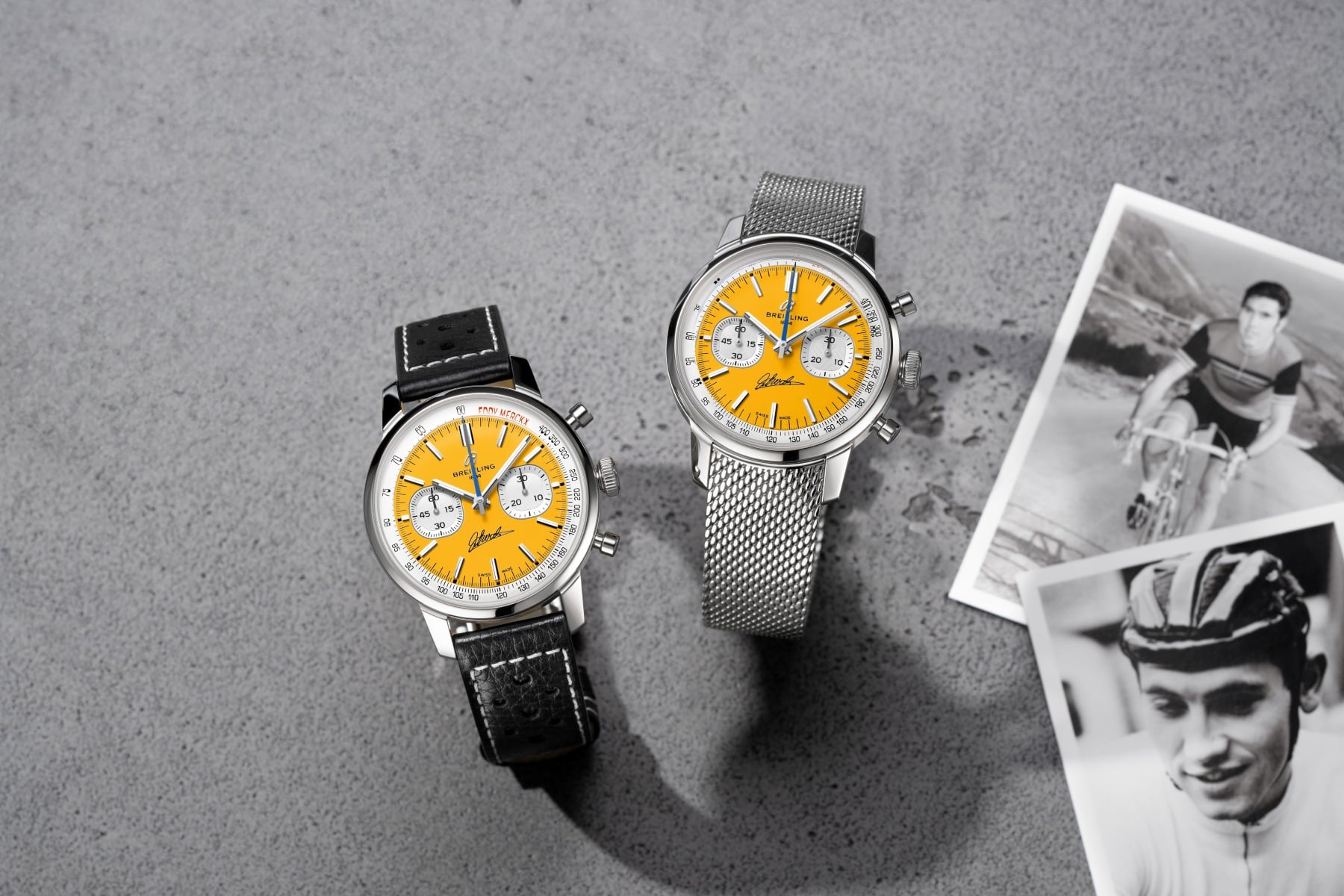
525 Victories, One Dial, and Cycling's Long Wait for a Wrist
Breitling's Eddy Merckx edition doesn't just reference a legend — it asks whether motorsport's younger sibling has finally earned its place in serious watch culture.
From the other desks.

800 Horsepower, One Ton of Doubt
Lamborghini built the most powerful SUV it's ever made. It's also slower than what it replaced.

ESPN Named Him. Then Unnamed Him. Nobody's Explaining the Gap.
A retraction without a reckoning is just a deleted link.

Hide My Email Has Been Showing Your Email
Apple's privacy flagship has a hole in it. They've known for over a year.