1,100 Miles in One Day, and She's Not Doing It for the History Books
Katherine Legge is attempting The Double — and the story the coverage keeps burying is the only one worth telling.
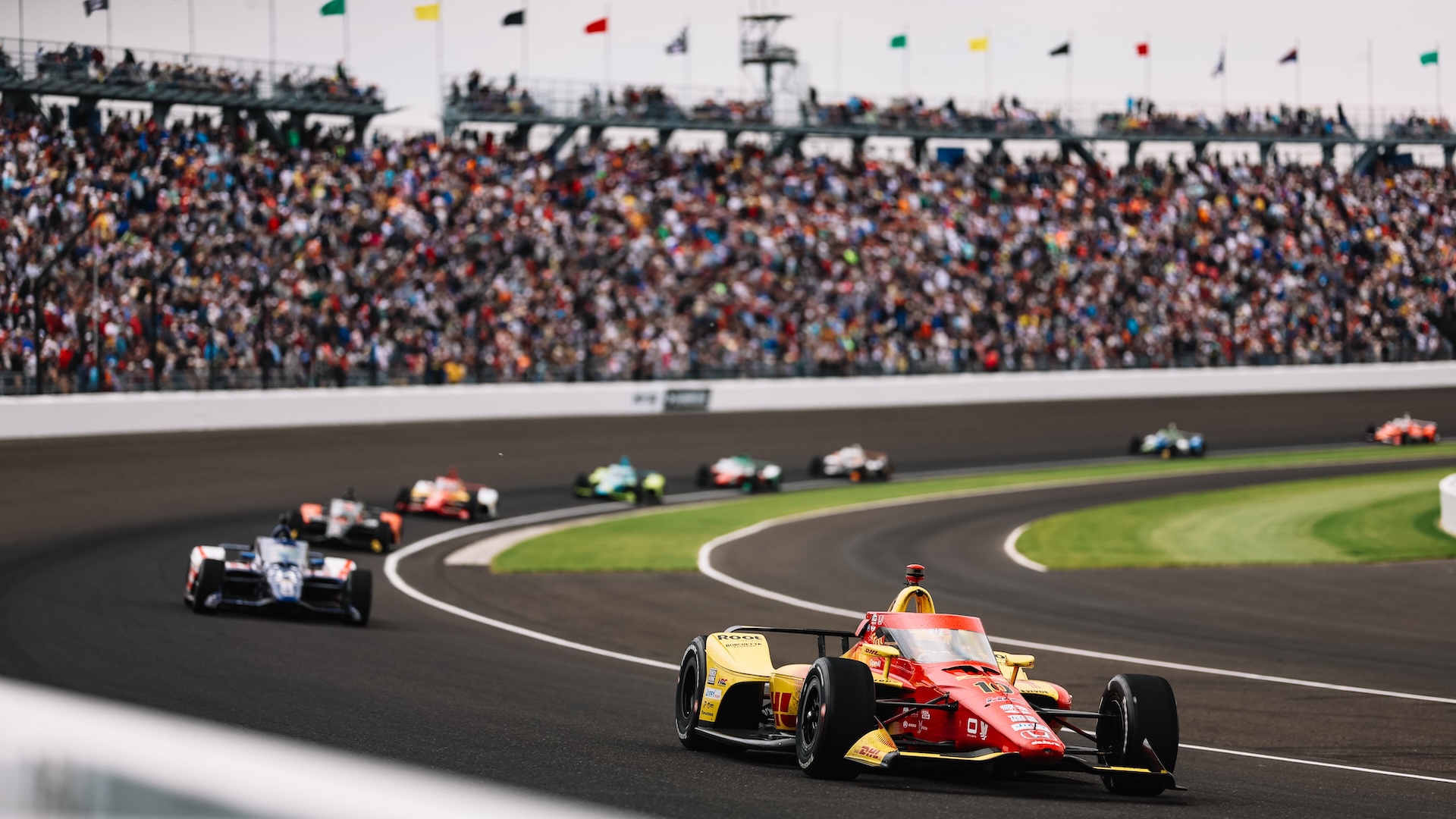
Photo · The Drive
There's a version of this story that writes itself. First woman to attempt The Double. First this, historic that, milestone after milestone stacked like cones in a pit lane. Every outlet covering Katherine Legge's run at the Indy 500 and Coca-Cola 600 on the same day has the same instinct: lead with the gender, frame it as progress, let the achievement carry the weight.
Legge herself has a different instinct. According to Motorsport.com, she's focused on results — not the history books. That's not false modesty. That's a driver telling you exactly who she is.
What The Double Actually Asks
Five drivers have attempted this before her, across eleven occasions. Only one has completed it. Let that denominator sit for a second.
The logistics alone are staggering. The day begins in Indianapolis and ends — if everything holds — in Charlotte, with over 500 miles of road separating the two tracks. The racing itself covers 1,100 miles across two completely different machines, two completely different disciplines, two completely different demands on a body that has to stay sharp across an entire day of competition. One Motorsport.com piece described it plainly: drivers are doing this in wildly different race cars, at tracks multiple states apart. The physical and mental toll isn't a footnote. It is the story.
And yet coverage keeps reaching past it to find the milestone framing — the one Legge has already said she doesn't want.
The Sold-Out Room She's Walking Into
Here's the other thing the sources are telling you, maybe without meaning to: the Indy 500 just sold out for the second consecutive year. The Drive reported it straight — all seats gone for the 110th running, with the local TV blackout lifted as a result. That detail matters. When a race sells out two years running, it means the room is full, the audience is present, and whatever happens on that track will be witnessed. There is no asterisk for timing. No soft launch. Legge is attempting this in front of a packed house.
That's not intimidation. That's the right conditions for something real.
The milestone conversation is almost unavoidable at this point — she's the sixth driver ever to attempt The Double, and the first woman to do so. No one's pretending that doesn't mean something. But Legge's framing, the one she's apparently been consistent about, is that the milestone is only interesting if the result is there to back it up. A historic attempt that finishes last is a footnote. A historic attempt that finishes — that competes — is a different kind of statement entirely.
She's not chasing the record of being first. She's chasing the record of being one of the few who finished.
The distinction matters more than it's being given credit for. Motorsport has a complicated relationship with firsts — they get celebrated, then contextualized, then sometimes quietly diminished when the next first arrives. What doesn't get diminished is completing something only one person in history has managed across eleven tries. That number doesn't move. That number is permanent.
So when Legge says she's focused on results and not milestones, she's not deflecting the significance of what she's doing. She's telling you that she understands exactly what makes it significant — and it isn't the gender line. It's the finish line.
One day. Two cars. Eleven hundred miles. The rest is just noise she's already tuned out.
Keep reading cars.

800 Horsepower, One Ton of Doubt
Lamborghini built the most powerful SUV it's ever made. It's also slower than what it replaced.

£11,990 Draws a Line Under Every Excuse You Had Left
Dacia just made the cheapest new car in Britain electric — and that's not a footnote, it's a verdict.

Blanc Éternel Hides Its Speed Behind a Gas Cap
Bugatti built a 261-mph roadster and made sure you'd notice the porcelain first.
From the other desks.

Gold Leaf on a Lacquer Dial, and the Weight of What That Costs
Awake's Frosted Leaf Royal Blue asks a question Vietnamese craft has never quite had to answer at this price.

ESPN Named Him. Then Unnamed Him. Nobody's Explaining the Gap.
A retraction without a reckoning is just a deleted link.

Hide My Email Has Been Showing Your Email
Apple's privacy flagship has a hole in it. They've known for over a year.