Meta Built a Vault. After Years of Living in Your Walls.
Incognito AI chat isn't a privacy innovation — it's a receipt.
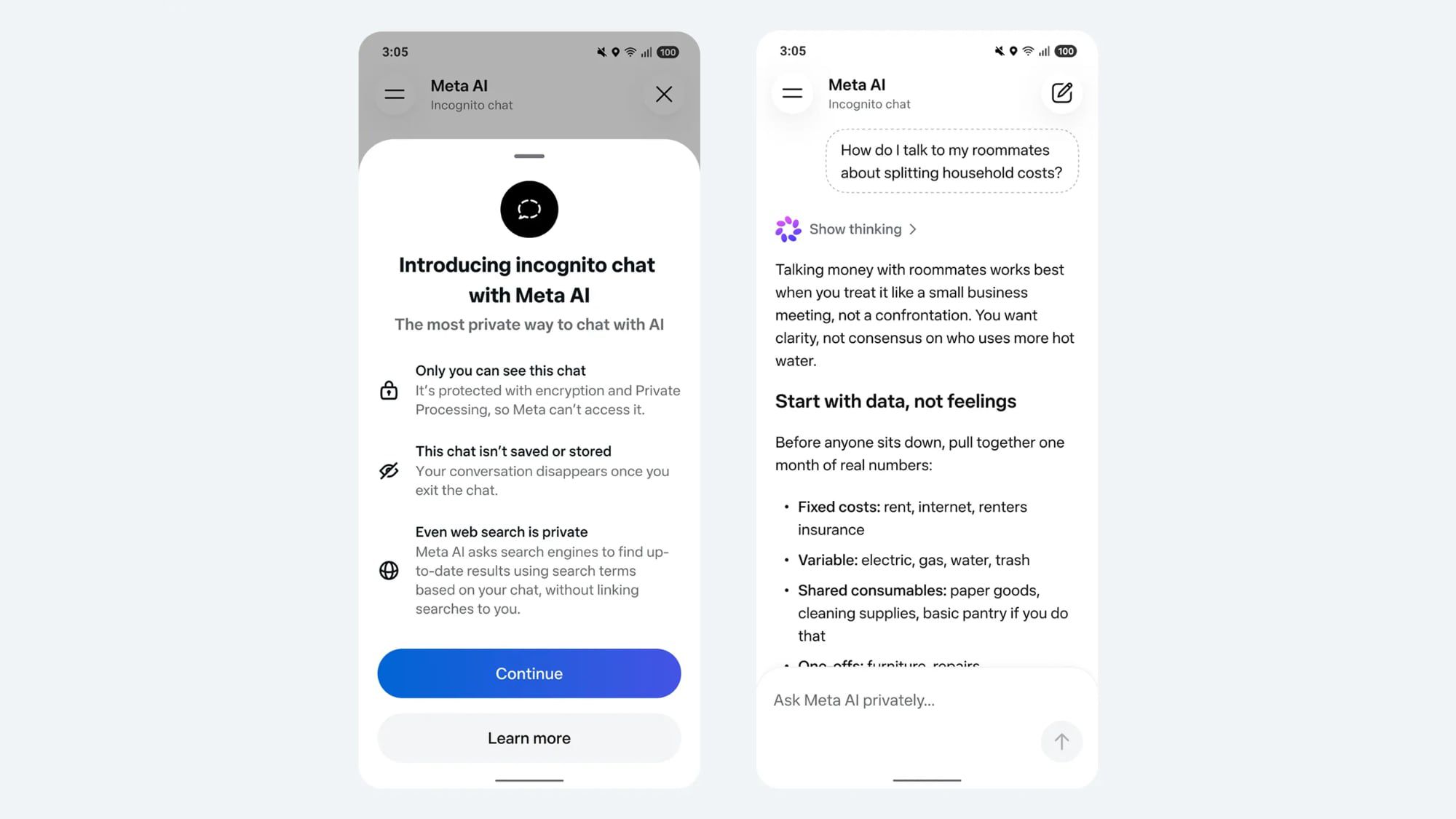
There's a version of this announcement that sounds genuinely impressive. Mark Zuckerberg says Meta AI's new incognito chat mode runs inference inside a Trusted Execution Environment — meaning the computation itself happens in a space Meta can't access. Conversations vanish when you close them. Web searches aren't linked to you. Nothing is stored on servers. Not even Meta can read it, Zuckerberg says. He compared it to end-to-end encryption.
Take that at face value and it's a real technical commitment. Trusted Execution Environments aren't marketing language. They're architecture.
But here's the thing about architecture: it tells you what the building was designed for before the renovation.
The Feature That Shouldn't Have Been Optional
Zuckerberg is calling this the first major AI product with no server-side conversation logs. That claim deserves two reads. The first read is a competitive shot at OpenAI, which is currently facing lawsuits over stored chat logs — a detail MacRumors noted in the same breath as the Meta announcement. The second read is a quiet admission that every other major AI product, including Meta's own, has been logging your conversations by default. That's not a revelation exactly. But having the CEO frame your new privacy feature as historically unprecedented does clarify what the history was.
The feature is available in the Meta AI app and on WhatsApp. You turn it on when you want to have what Zuckerberg called a "completely private way to interact with AI." Which implies, without quite saying it, that the non-incognito way was something else entirely.
What the Timing Tells You
Meta didn't invent the concept of private AI conversations because it suddenly cared about your inner life. It built this now, in this climate, while a competitor is being sued over the very data practices Meta is now distancing itself from. That's not cynicism — that's reading a press release with both eyes open.
There's also something worth sitting with in the framing. Zuckerberg said that to get the most from "personal superintelligence" — his phrase, not a modest one — you need to be able to share things you wouldn't want stored. That's a real insight about how people actually use AI assistants. The most useful conversations are often the most sensitive ones. The question of whether you trust the system enough to have them honestly is the whole ballgame.
Meta's answer is: here's a mode for that. Which is fine. It might even be good.
But privacy shouldn't be a mode. It should be the default, and opting into logging should be the feature that requires a tap.
The fact that it works the other way around — that you have to find incognito, activate it, remember it exists — tells you everything about what the product was optimized for before this week. The vault is real. It's just that Meta built it after spending years very comfortably without one.
Keep reading tech.

Hide My Email Has Been Showing Your Email
Apple's privacy flagship has a hole in it. They've known for over a year.

Sony Killed the Disc. Sony Is Also Killing the Store.
Two announcements, one company, and a quiet admission that "ownership" was always their word to define.

Apple Went to the Highest Court It Could Find. That Tells You Everything.
When a contempt ruling sends you to the Supreme Court, you're not defending a policy anymore — you're defending a worldview.
From the other desks.

800 Horsepower, One Ton of Doubt
Lamborghini built the most powerful SUV it's ever made. It's also slower than what it replaced.

Gold Leaf on a Lacquer Dial, and the Weight of What That Costs
Awake's Frosted Leaf Royal Blue asks a question Vietnamese craft has never quite had to answer at this price.

ESPN Named Him. Then Unnamed Him. Nobody's Explaining the Gap.
A retraction without a reckoning is just a deleted link.