Swept Out of Los Angeles, Pulled Back Toward Home
The Oklahoma City Thunder didn't just end the Lakers' season — they ended the argument LeBron James had been making about himself for years.
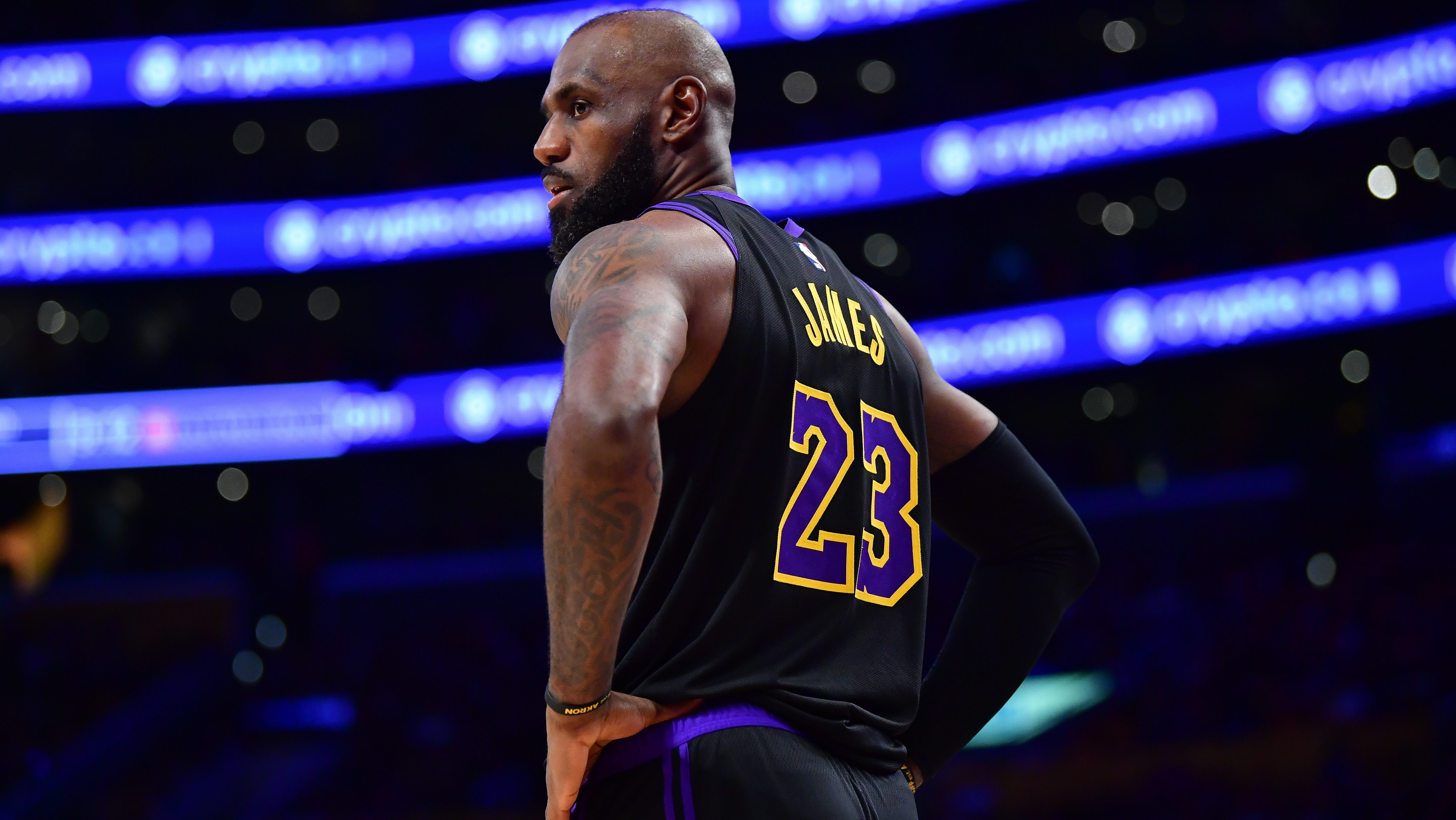
Photo · Andscape
What a Sweep Actually Says
There's a specific silence that settles over an arena when a season ends not with a fight but with a foregone conclusion. No buzzer-beater heartbreak, no overtime collapse to replay forever. Just a clock winding to zero, a handshake line, and the slow realization that what you witnessed wasn't a loss — it was a verdict.
That's what happened at Crypto.com Arena when the Oklahoma City Thunder swept the Los Angeles Lakers out of the playoffs. The defending champions didn't break LeBron James. They simply clarified something that the season had been quietly building toward all year. Writers at Andscape described the atmosphere as thick with solemnity — not shock, not outrage, but understanding. The kind of clarity that arrives when something you've been half-knowing finally becomes impossible to look away from.
LeBron is still LeBron. That's almost the problem.
The Roster Was the Confession
Here's what a sweep does that a close series doesn't: it removes the variables. You can't blame a bad shooting night, a foul call, a single rotation error. A sweep is structural. It tells you something about the foundation.
And the foundation in Los Angeles has been cracking for a while now. Not because LeBron failed — by all accounts he showed up — but because individual greatness, even historic greatness, cannot paper over a roster that isn't built to compete with a team that good, that young, that deep. The Thunder aren't just talented. They are a machine. And you don't beat a machine by having one exceptional human in your lineup.
This is the confession nobody wants to make out loud: the era in which a singular player could will a team through the modern playoffs has effectively closed. Not just for LeBron — for everyone. The game has shifted. Depth, youth, system cohesion — these aren't supporting characters anymore. They're the story. When Andscape wrote that it was the end of something, they were right, and the something is bigger than one man's career arc.
What ended in that arena was a particular idea of basketball heroism. The lone titan. The one who carries. The player whose presence alone makes a team a contender. That idea is gone now, and its departure has been coming for long enough that the surprise isn't that it ended — it's that we kept believing in it this long.
Cleveland Was Always the Gravity
Meanwhile, Deadspin reported that a return to Cleveland is gaining momentum — that for people paying attention, the idea of LeBron going back to Ohio feels more real now than it has in years.
I keep turning that over. Because if true, it reframes the entire Los Angeles chapter as something other than an ending. It becomes a middle act. The Hollywood years as detour, not destination. And Cleveland — the place where he delivered a championship that the city had never seen, the place where the relationship between a player and a fanbase reached something close to mythology — pulling him back like gravity.
There's something deeply human in that. The way certain places claim you regardless of where you go. The way home becomes not where you are but where the unfinished business lives.
LeBron's career may not be over. That's important to hold onto. But the version of his career built around making Los Angeles work — built around the belief that his presence alone could transform that franchise into something championship-worthy — that version is done. The sweep made it official.
What Comes After the Argument
The careers we remember most clearly aren't the ones that ended cleanly. They're the ones that kept asking questions until the very last moment. Where does this go? What does he do now? Who does he become?
LeBron James at this stage of his life is still producing those questions at a volume most players never reach even in their prime. That's its own kind of extraordinary. The uncertainty around his next move — stay in LA, return to Cleveland, something else entirely — isn't the story of a player fading out. It's the story of a player whose next decision still carries genuine weight, still shifts landscapes, still means something to cities and franchises and fans in ways that feel almost unreasonable given how long he's been at this.
But the argument he was making with his Los Angeles years — that individual will, that singular brilliance, that one-man gravitational pull — the Thunder answered it in four games.
Sometimes you need to lose the argument to figure out what you actually believe. What LeBron believes now, and where he goes to prove it, is the only question left worth asking.
Keep reading sports.

ESPN Named Him. Then Unnamed Him. Nobody's Explaining the Gap.
A retraction without a reckoning is just a deleted link.

Three People Died Celebrating. FIFA Hasn't Said Their Names.
Mexico City buried three people after the World Cup crowds came through. At some point, the sport has to sit with that.

Sell the Stadium, Lose the Room
NFL franchises are rolling out the welcome mat for World Cup tourists — and the desperation is showing.
From the other desks.

800 Horsepower, One Ton of Doubt
Lamborghini built the most powerful SUV it's ever made. It's also slower than what it replaced.

Gold Leaf on a Lacquer Dial, and the Weight of What That Costs
Awake's Frosted Leaf Royal Blue asks a question Vietnamese craft has never quite had to answer at this price.

Hide My Email Has Been Showing Your Email
Apple's privacy flagship has a hole in it. They've known for over a year.