Two Young Women, Two HBCUs, One Door Nobody Told Them Existed
The Rhoden Fellowship isn't just building careers — it's building the people who can survive them.
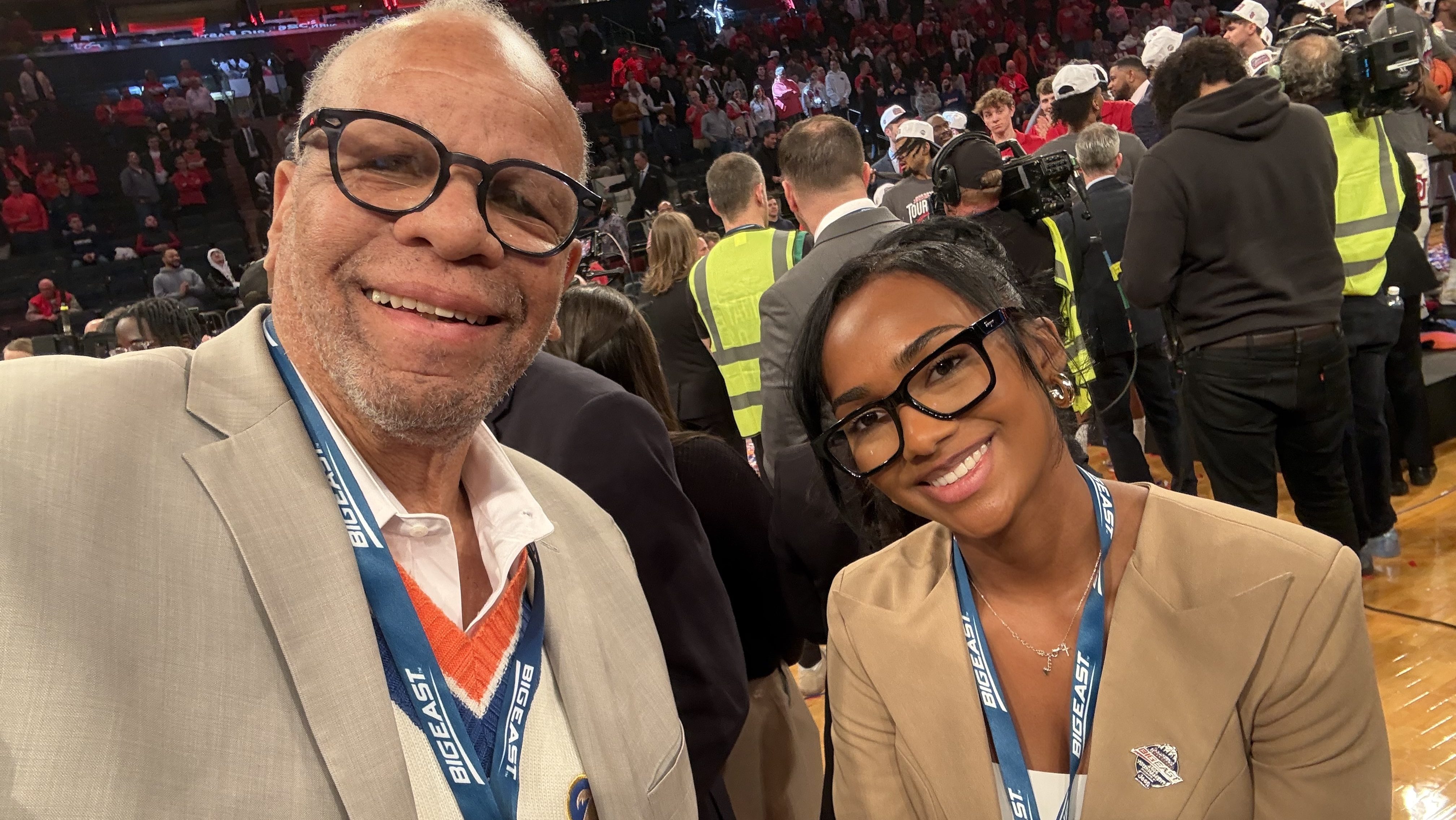
Photo · Andscape
There's a version of sports journalism that eats its young. Demanding, underpaid, historically narrow about who gets to speak with authority. Two recent accounts from Rhoden Fellows — one from Howard University, one from Norfolk State — don't pretend that's changed. What they describe, quietly and with real feeling, is something rarer: a structure that actually caught them before the fall.
Both writers came in with ambition already intact. That matters. The fellowship didn't manufacture hunger — it gave hunger somewhere to go.
What a Pipeline Actually Feels Like
The Howard student writes about arriving at college already eager, already pointed toward journalism. The Norfolk State student describes ESPN as her dream company — not a vague aspiration but a specific destination she'd already named for herself. These aren't people who needed to be told what they wanted. They needed someone to take the want seriously.
What the fellowship gave them wasn't just access. It was context. The Howard fellow describes finding a community of women who helped her understand that being fully herself — not a smoothed-over, code-switched version — was an asset, not a liability. That's not a career lesson. That's a harder, more durable thing: an identity lesson that happens to have career consequences.
The Norfolk State fellow landed at ESPN. She frames it in terms of Disney cast membership, which is how ESPN apparently describes its staff, and the detail lands with a kind of dreamy disbelief she doesn't try to hide. She compares the experience to Sleeping Beauty, still waiting to wake up. That's not naivety. That's someone who knows exactly how unlikely her path looked from the outside — and is still standing in it anyway.
The Real Subject Underneath
Both pieces are, on the surface, about professional development. Read them together and something else emerges: these are stories about belonging. About whether a room was built with you in mind, and what happens when you find one that was.
Sports journalism has spent decades producing voices that sounded like each other. Same references, same frames, same rooms. The Rhoden Fellowship — built around the idea that authentic voice is an asset worth cultivating — is running a direct counter-program to that. Not loudly. Not with a manifesto. Just by sending two women from HBCUs into major sports media and letting the results speak.
Mentorship gets talked about in the abstract constantly. Here it's concrete: a Howard student finds her footing, a Norfolk State student lands her dream job. The fellowship is the variable that changed. That's not a soft outcome. That's the whole mechanism.
The byline matters. But what happens before the byline — who believed in you, who built the room, who told you the door existed — that's what determines whether the byline ever appears at all.
Keep reading sports.

ESPN Named Him. Then Unnamed Him. Nobody's Explaining the Gap.
A retraction without a reckoning is just a deleted link.

Three People Died Celebrating. FIFA Hasn't Said Their Names.
Mexico City buried three people after the World Cup crowds came through. At some point, the sport has to sit with that.

Sell the Stadium, Lose the Room
NFL franchises are rolling out the welcome mat for World Cup tourists — and the desperation is showing.
From the other desks.

800 Horsepower, One Ton of Doubt
Lamborghini built the most powerful SUV it's ever made. It's also slower than what it replaced.

Gold Leaf on a Lacquer Dial, and the Weight of What That Costs
Awake's Frosted Leaf Royal Blue asks a question Vietnamese craft has never quite had to answer at this price.

Hide My Email Has Been Showing Your Email
Apple's privacy flagship has a hole in it. They've known for over a year.