99 Out of 100 People Already Know
Wembanyama is doing things that shouldn't be possible, and one voter still needed convincing.
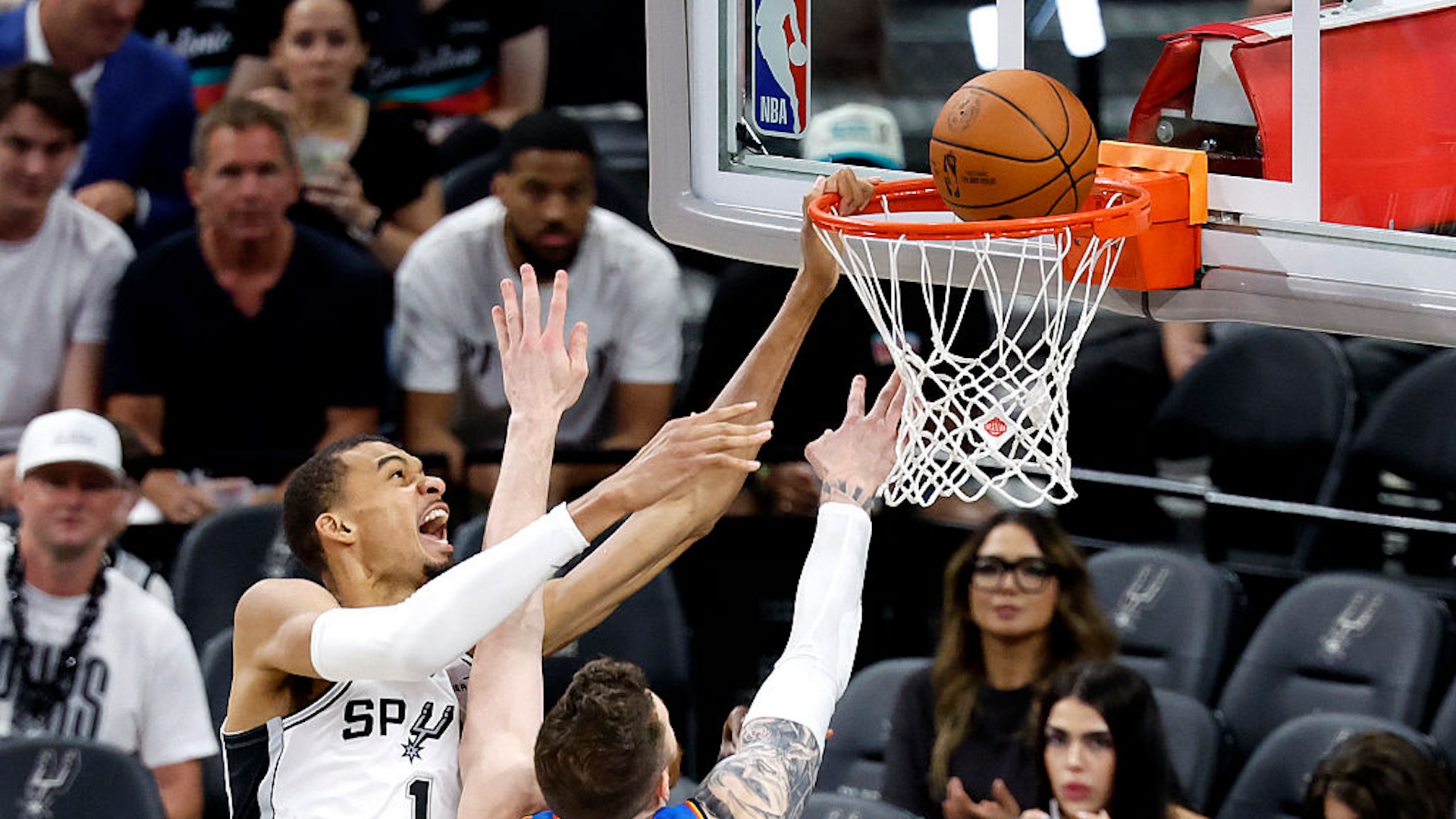
Photo · Defector
The Shot Nobody Should Have Taken
The clock is dying. The Spurs are up nine, down 2-1 in the series, and the second quarter is collapsing into its final seconds. Victor Wembanyama catches the ball somewhere near half-court — 43 feet from the basket — takes a couple dribbles, and has exactly enough time to do exactly one thing. He shoots. The buzzer sounds before the ball lands. The ball goes in.
There are shots born of desperation. There are shots born of confidence. And then there are shots that belong to a different category entirely — the kind where you realize the player who took it wasn't weighing odds. He was just solving a problem with the tools he had available, and those tools happen to be incomprehensible.
The Guardian called what Wembanyama has "sorcery." That's not a metaphor reaching for drama. That's a reporter watching Game 4 and not having a better word.
What a Dominant Series Looks Like From the Inside
The Spurs won that game 103-82. Oklahoma City, the defending champions of the entire NBA, scored their lowest total of the entire season. Wembanyama finished with 33 points, eight rebounds, and three blocks. The Defector put it plainly: the hinge point of the Western Conference Finals isn't some tactical wrinkle or coaching adjustment. It's just the 7-foot-5 person standing in the middle of the court.
That's a remarkable thing to be able to say about any player in any playoff series. Basketball is a famously collaborative sport. Teams win series. Schemes matter. Matchups compound. And yet here we are, watching analysts essentially shrug at the chess board and point to the king.
Wembanyama came into Game 4 with his team in a hole — down in the series, having already blown a 15-point lead in a previous game to lose badly. That context matters. The Spurs weren't playing with house money. They were playing from behind, against the best team in the league, with everything narrowing. And their answer was to let Wembanyama do what Wembanyama does, which turns out to be enough.
The series drew 9.2 million viewers across NBC and Peacock for Game 1, peaking at 12 million during double overtime. NBC called it a record. Gilbert Arenas questioned whether the number meant what NBC said it meant — a fair instinct toward skepticism in an era when every platform counts streams differently. But even the argument about the number confirms the number is worth arguing about. People are watching. People who haven't watched in years are watching. Something is happening.
The Permission Problem
And then there's the vote.
Victor Wembanyama made the 2026 All-NBA First Team on 99 out of 100 ballots. One voter — Justin Termine, host of NBA Today on SiriusXM NBA Radio — placed him on the second team instead. Termine was the single dissenter in the entire pool. He explained his reasoning publicly, in a video.
I'm not going to litigate the reasoning, because the reasoning isn't really the story. The story is that this happens. It always happens. Somewhere in every near-unanimous verdict is one person who needed more time, more evidence, a different frame. Sometimes they're principled. Sometimes they're contrarian. Sometimes they're right in ways the majority isn't ready to hear. And sometimes — maybe this time — they're just a little late.
What strikes me about the 99-1 split isn't the one. It's what the one reveals about the 99. Consensus this strong, this fast, around a player this young, in the playoffs, against this competition — that's not the media following a narrative. That's the media catching up to something they watched happen in real time and couldn't explain away. Wembanyama didn't accumulate credentials until voters had no choice. He made a 43-foot buzzer-beater in a must-win game, held the defending champions to their season low, and did it all while being the most physically unusual player most people have ever seen.
The one voter isn't a villain. He's just a reminder that even when something is obvious, someone has to decide it's obvious. Permission to believe in the extraordinary is its own small act of courage.
What We're Actually Watching
Generational talent is a phrase that gets spent too quickly in sports. It gets attached to rookies who haven't played a playoff game, to prospects who project well, to anyone who makes something look easier than it should. The word loses weight every time it's used prematurely.
Wembanyama is doing something different to the phrase. He's making it conservative. He's playing in the Western Conference Finals against the best team in the league, and the most accurate thing analysts can find to say is that you just have to watch the tall guy. The Guardian reaches for sorcery. The Defector says the hinge point is obvious. Ninety-nine voters out of one hundred put him first.
The half-court shot went in. The box score read 33 points. The series continues.
At some point, we stop asking whether someone is generational and start asking what it means that we get to watch them. That's where I think we are now. Not debating Wembanyama's greatness — that debate closed — but sitting with the rarer, stranger feeling of witnessing something that will matter to people who haven't been born yet.
One voter will update his ballot next year. The rest of us already have.
Keep reading sports.

ESPN Named Him. Then Unnamed Him. Nobody's Explaining the Gap.
A retraction without a reckoning is just a deleted link.

Three People Died Celebrating. FIFA Hasn't Said Their Names.
Mexico City buried three people after the World Cup crowds came through. At some point, the sport has to sit with that.

Sell the Stadium, Lose the Room
NFL franchises are rolling out the welcome mat for World Cup tourists — and the desperation is showing.
From the other desks.

800 Horsepower, One Ton of Doubt
Lamborghini built the most powerful SUV it's ever made. It's also slower than what it replaced.

Gold Leaf on a Lacquer Dial, and the Weight of What That Costs
Awake's Frosted Leaf Royal Blue asks a question Vietnamese craft has never quite had to answer at this price.

Hide My Email Has Been Showing Your Email
Apple's privacy flagship has a hole in it. They've known for over a year.