AJ Dybantsa's Father Showed Up. That Was Always the Real Draft Story.
A generational prospect. A city waiting. And the man standing just off-camera who made all of it possible.
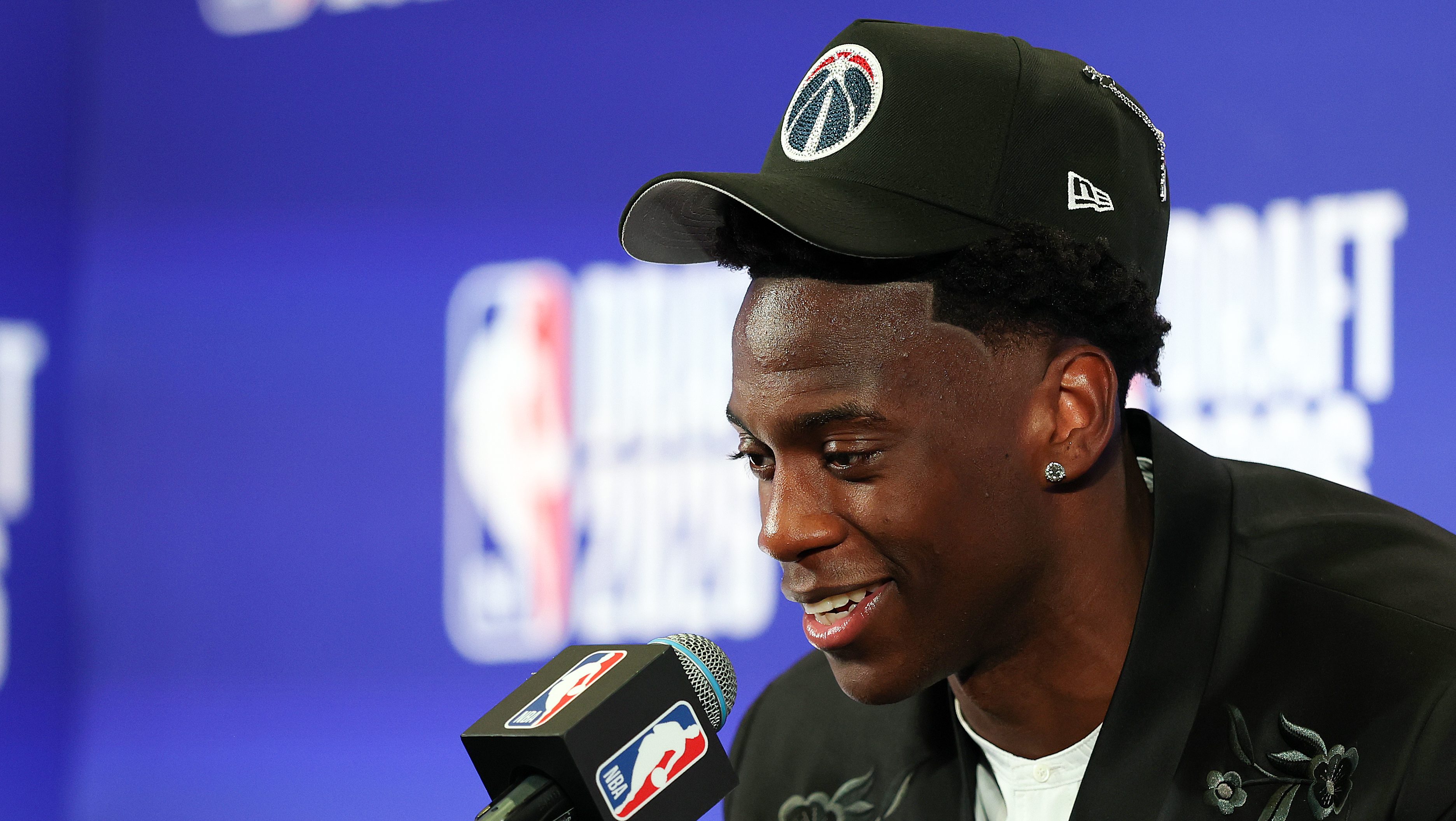
Photo · Andscape
Before the Pick
Imagine the moment: a young man walks across a stage in front of cameras, executives, and ten thousand people who have been arguing about him for months. The suits fit. The handshakes are rehearsed. Everything about the spectacle is designed to make it seem like this is where the story starts.
It doesn't.
For AJ Dybantsa, the story started much earlier, in gyms and hotel rooms and conversations that never got televised — and at the center of most of those conversations, according to reporting from Andscape, was his father. Not an agent. Not a program director. His father. The man who structured Dybantsa's life so carefully that by the time the Washington Wizards were considering him with the first overall pick in the 2026 NBA Draft, the prospect wasn't just talented. He was ready.
That's the part the draft coverage keeps circling around without fully landing on.
What Washington Is Inheriting
Andscape's piece on Dybantsa and D.C. basketball makes a case that's worth sitting with. Washington isn't just a city that follows basketball — it's a city that produced it, shaped it, handed it down. The names listed in that piece read like a who's-who of the sport's foundational figures: Naismith Hall of Famers Edwin Bancroft Henderson, Earl Lloyd, Elgin Baylor, Morgan Wootten, Adrian Dantley, Dave Bing, John Thompson Jr. — all of them connected to D.C. in meaningful ways.
That's not incidental context. That's a city with a covenant with the game.
Which means Dybantsa isn't just walking into a franchise. He's walking into a lineage. And franchises can be rebuilt in a few years, but lineages demand something more. They demand someone who understands what they're inheriting. Someone who has been raised to think about legacy, not just opportunity.
Here's where the father becomes the story.
The Infrastructure of Greatness
The Andscape piece focused on Dybantsa's family makes a point that I keep coming back to: AJ Dybantsa can focus on basketball because of his dad. That framing isn't accidental. It's the whole architecture.
In a landscape where teenage phenoms are routinely pulled in seventeen directions — NIL deals, transfer portals, social media branding, agents with competing interests — the ability to simply focus is rarer than any physical gift. Seven-foot wingspan rare. The kind of rare that coaches will tell you separates the prospects who develop from the ones who plateau at twenty-three and spend the rest of their careers wondering what happened.
Dybantsa's path through BYU, where he played as a former five-star recruit before entering the draft, happened inside a structure his father helped build. Not a corporation. A family. The kind of operation that doesn't show up on a scouting report but shapes everything on it.
We talk constantly about the athletic gifts — the size, the skill set, the age relative to his performance level. We talk about the Wizards' draft position and whether Utah might move up. What we don't talk about enough is the environment that produced those gifts. The choices made before anyone was watching. The parent who decided that their child's development mattered more than their own visibility in the process.
That's not a small thing. That's almost everything.
A City, a Pick, and What Comes Next
Washington is a basketball town that has been waiting a long time for something to believe in. The Wizards hold the first overall pick. The prospect who might fill it grew up in a household that apparently treated his future as a serious project rather than a lottery ticket.
Those two facts meeting in the same moment feels significant in a way that goes beyond sports.
We live in an era that has made it easier than ever for talented young people to be consumed by their own potential — to become products before they become people, to optimize their brand before they've figured out who they actually are. The ones who avoid that fate usually have someone in their corner who cared more about the person than the prospect. A coach who told hard truths. A teacher who didn't let them coast. A parent who stayed.
Dybantsa apparently had that. And whatever happens on draft night — whether it's Washington, Utah, or something no one saw coming — he arrives with something that can't be scouted: the foundation was laid by someone who loved him before any of this mattered.
I think about that more than I probably should. Not because it's unusual in sports, but because it's so rarely the part of the story we decide to tell. We build the mythology around the player. We should probably spend more time on whoever made the player possible.
The Wizards may be getting a franchise cornerstone. But D.C. basketball — with all that history, all those names, all that weight — might be getting something rarer: a young man who already knows what he's carrying.
Keep reading sports.

ESPN Named Him. Then Unnamed Him. Nobody's Explaining the Gap.
A retraction without a reckoning is just a deleted link.

Three People Died Celebrating. FIFA Hasn't Said Their Names.
Mexico City buried three people after the World Cup crowds came through. At some point, the sport has to sit with that.

Sell the Stadium, Lose the Room
NFL franchises are rolling out the welcome mat for World Cup tourists — and the desperation is showing.
From the other desks.

800 Horsepower, One Ton of Doubt
Lamborghini built the most powerful SUV it's ever made. It's also slower than what it replaced.

Gold Leaf on a Lacquer Dial, and the Weight of What That Costs
Awake's Frosted Leaf Royal Blue asks a question Vietnamese craft has never quite had to answer at this price.

Hide My Email Has Been Showing Your Email
Apple's privacy flagship has a hole in it. They've known for over a year.