Bruce Springsteen Got Bumped. Nobody Saw the Sixers Coming — Including the Sixers.
When a team's own arena bets against them, winning becomes something more complicated than a game.
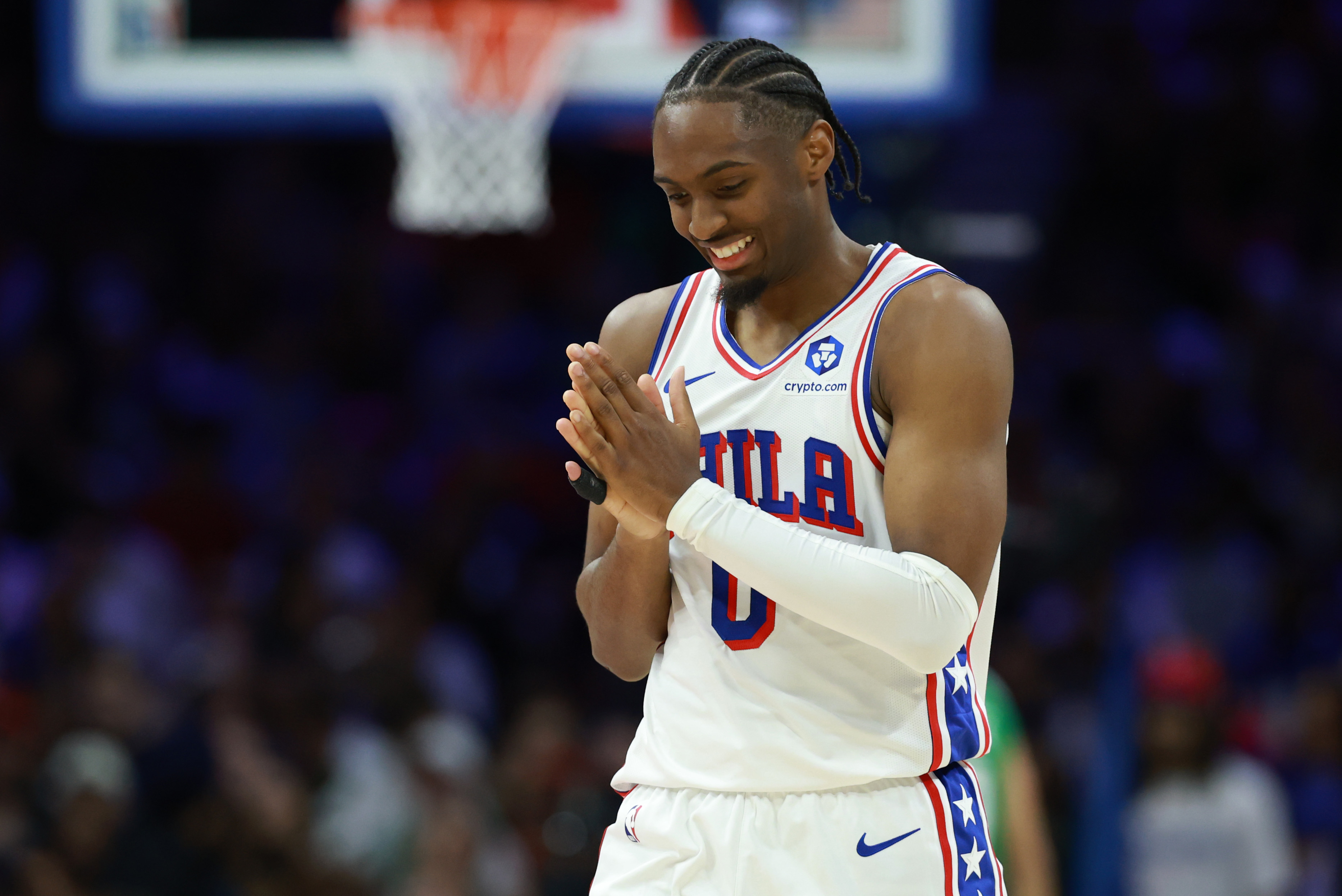
Photo · Defector
A writer at Defector noticed something that cuts deeper than a scheduling conflict.
The 76ers and Flyers, both alive in the Eastern Conference semifinals, are now fighting for floor space at their own home arena — because whoever books Xfinity Mobile Arena scheduled Bruce Springsteen for the same Friday night the Sixers need it for Game 3 against New York. The Flyers have Games 3 and 4 against Carolina on Thursday and Saturday. The math doesn't work. The concert can't move. And the detail that the Defector piece lands on, quietly and precisely, is that nobody planned for this because nobody expected both teams to still be playing.
That's the sentence that stays with you.
The Arena Bet Against Them
There's a version of this story that's just a logistics headache — a venue, two teams, one very famous musician, and a calendar that didn't account for success. But sports venues don't book a Springsteen concert over your playoff window by accident. They book it because someone did the math and decided the floor would be available. That's not cruelty. That's a probability assessment. And the probability, apparently, was that neither team would make it this far.
The 76ers finished off the Celtics in Game 7 on Saturday. That's the kind of result that rewrites a season retroactively — suddenly the whole thing looks like a different story. But before that game, someone with calendar access and booking authority looked at the Sixers' situation and saw an open date. They weren't wrong to look. They were wrong about what they saw.
The Flyers are in it too, which makes the double-booking feel almost comic in its precision. Two teams, same building, same problem, same root cause: the people who run the arena didn't believe the teams would be here.
What the Schedule Actually Says
The Defector piece opens with the familiar sports platitude — nobody believed in us — and then demonstrates, with a single booking conflict, that the nobody in question included ownership, management, and whoever handles arena scheduling. That's a different kind of nobody. That's institutional doubt made visible.
Teams say that line after upsets, after adversity, after proving skeptics wrong. It's ritual. But usually the arena is at least nominally on your side. When your own floor is double-booked because the people who run it didn't see you coming, the phrase stops being motivational and becomes something closer to documentary.
The Sixers get to play in their building. The math, apparently, gets worked out — the games happen. But the fact of the conflict doesn't disappear just because it gets resolved. Someone made a call. The call said: they won't need this space.
Sports venues used to be neutral containers. The home crowd made them meaningful; the team made them sacred or forgettable depending on the season. But arenas are businesses now, and businesses make predictions. When a venue schedules over your playoff window, it's not booking a concert. It's publishing a forecast.
The Sixers and Flyers are currently making that forecast look embarrassing. That's the better story — not the conflict, but what fixing it required: a Game 7 win, a playoff run nobody planned for, and two teams that had to earn their own floor back.
Winning is supposed to feel like enough. Sometimes you also have to win the argument with your own building.
Keep reading sports.

ESPN Named Him. Then Unnamed Him. Nobody's Explaining the Gap.
A retraction without a reckoning is just a deleted link.

Three People Died Celebrating. FIFA Hasn't Said Their Names.
Mexico City buried three people after the World Cup crowds came through. At some point, the sport has to sit with that.

Sell the Stadium, Lose the Room
NFL franchises are rolling out the welcome mat for World Cup tourists — and the desperation is showing.
From the other desks.

800 Horsepower, One Ton of Doubt
Lamborghini built the most powerful SUV it's ever made. It's also slower than what it replaced.

Gold Leaf on a Lacquer Dial, and the Weight of What That Costs
Awake's Frosted Leaf Royal Blue asks a question Vietnamese craft has never quite had to answer at this price.

Hide My Email Has Been Showing Your Email
Apple's privacy flagship has a hole in it. They've known for over a year.