CBC Carried Hockey for 74 Years. Rogers Carries It Now.
When a country's most beloved Saturday night ritual moves behind a paywall, the question isn't who owns the broadcast — it's who still owns the memory.
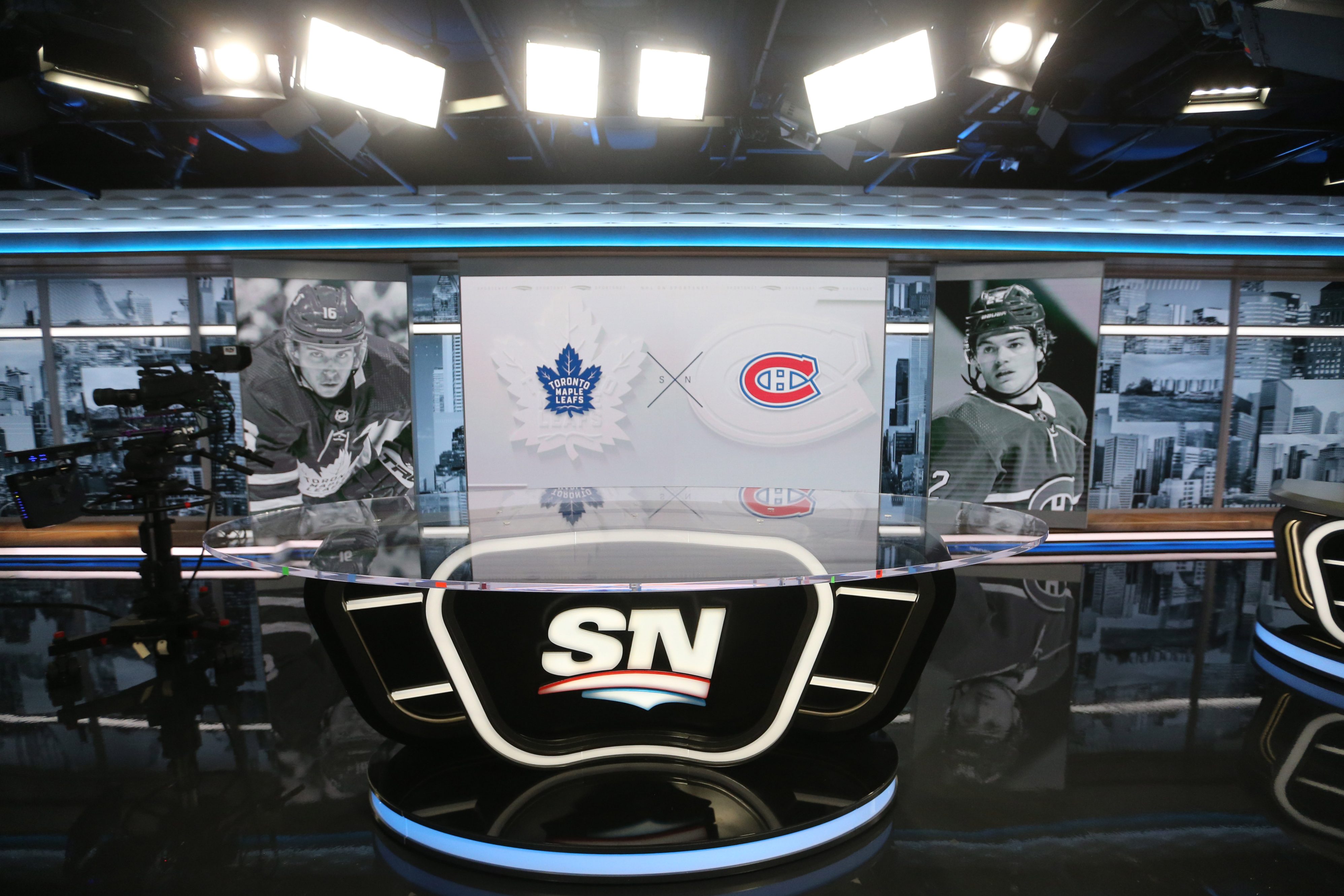
Photo · Defector
The Antenna on the Roof
Somewhere in Canada right now, there is a house with an antenna on the roof. Maybe it's an older home, maybe a rental, maybe a place where the monthly bills are already doing too much work. And for decades, that antenna was enough. You didn't need a cable package, didn't need a login, didn't need a streaming tier. You needed Saturday night and a television set, and Hockey Night in Canada would come to you.
That era is over.
Starting next season, NHL hockey on Saturday nights will live exclusively on Sportsnet, the Rogers Media-owned cable and streaming network, according to reporting from Awful Announcing and The Athletic. CBC — the public broadcaster that has carried Hockey Night in Canada since 1952 — will no longer air NHL games after this season, the end of a 12-year sublicensing agreement between the two organizations. A joint statement from Sportsnet and CBC confirmed it.
Seventy-four years. Think about what that number contains.
What a Number Like That Actually Means
The Defector framed it well, if bluntly: Hockey Night in Canada on CBC was something like Monday Night Football crossed with Jeopardy!, times two. That's not hyperbole dressed up as analysis — that's an attempt to translate the untranslatable for anyone who didn't grow up inside it. It was appointment television before anyone used that phrase. It was the thing families built Saturday around, not the other way around.
The show began on CBC radio before it ever touched a television screen. When it made the jump to TV in 1952, it didn't abandon the country — it followed it, found it in living rooms, stayed. For generations of Canadian hockey fans, the Saturday broadcast wasn't a product. It was a given. Like weather. Like the week ending.
And now the games are behind a paywall. Cable subscription or streaming service, take your pick. The antenna on the roof is useless.
I keep thinking about what it means when the thing that was always just there becomes something you have to pay to access. Not because paying for things is inherently wrong — it isn't — but because public broadcasting exists precisely for the moments when access shouldn't depend on your income. That was the deal. That was what CBC was for.
The Slow Erosion Nobody Declared
What makes this story complicated, and worth sitting with, is that nobody made a villain's speech. There was no dramatic announcement of intent to privatize the national pastime. What happened instead was quieter and, in some ways, more telling: a 12-year arrangement simply ended, and the exclusive rightsholder didn't renew on terms that kept public access intact.
That's how institutions actually erode. Not with a declaration, but with an expiration date.
Rogers Communications holds the exclusive Canadian broadcast rights to the NHL. They own Sportsnet. The math is straightforward from a business perspective, and nobody should pretend otherwise — sports rights are expensive, and whoever pays for them gets to decide where they live. The CBC-Rogers partnership lasted over a decade. That's not nothing. But the partnership is done now, and what's left on the public side is nothing.
The Defector noted it plainly: no more games you can pick up with an antenna, no more free streaming within Canada's borders. If you want Saturday night hockey next season, you're paying for the privilege.
For fans with cable, the change is logistical. A different channel, maybe a different remote button. For fans without — younger ones, lower-income ones, anyone who made peace with basic access as their version of the ritual — the change is a door closing.
What Moves Behind the Paywall
There's a version of this story that's purely about media rights and business cycles, and that version is fine. Rights deals expire. Networks consolidate. Streaming eats everything eventually. We've seen this pattern in every sport, every country, for twenty years now.
But Hockey Night in Canada was never just a broadcast. It was a specific kind of shared experience — one that required nothing from you except showing up. The accessibility was the point of it being on public television. The CBC didn't carry those games by accident. It carried them because hockey was understood, at some institutional level, to belong to everyone.
When the crown jewel moves to cable, what's really being tested is whether cultural ownership survives the paywall. Whether a country can maintain a collective identity around something that now requires a subscription to witness.
I don't have a clean answer for that. I'm not sure anyone does. But I know that the house with the antenna on the roof is going to feel the absence. And I know that the things we assume will always be there — the rituals, the broadcasts, the Saturday nights that organize themselves around something larger than any one family — are precisely the things worth paying attention to before they're gone.
The antenna still works. The signal just moved somewhere it can't reach.
Keep reading sports.

ESPN Named Him. Then Unnamed Him. Nobody's Explaining the Gap.
A retraction without a reckoning is just a deleted link.

Three People Died Celebrating. FIFA Hasn't Said Their Names.
Mexico City buried three people after the World Cup crowds came through. At some point, the sport has to sit with that.

Sell the Stadium, Lose the Room
NFL franchises are rolling out the welcome mat for World Cup tourists — and the desperation is showing.
From the other desks.

800 Horsepower, One Ton of Doubt
Lamborghini built the most powerful SUV it's ever made. It's also slower than what it replaced.

Gold Leaf on a Lacquer Dial, and the Weight of What That Costs
Awake's Frosted Leaf Royal Blue asks a question Vietnamese craft has never quite had to answer at this price.

Hide My Email Has Been Showing Your Email
Apple's privacy flagship has a hole in it. They've known for over a year.