Counterfeit Boccia Balls and the Price of Belonging
When the gear costs more than the athlete can pay, the rules stop being about fairness.
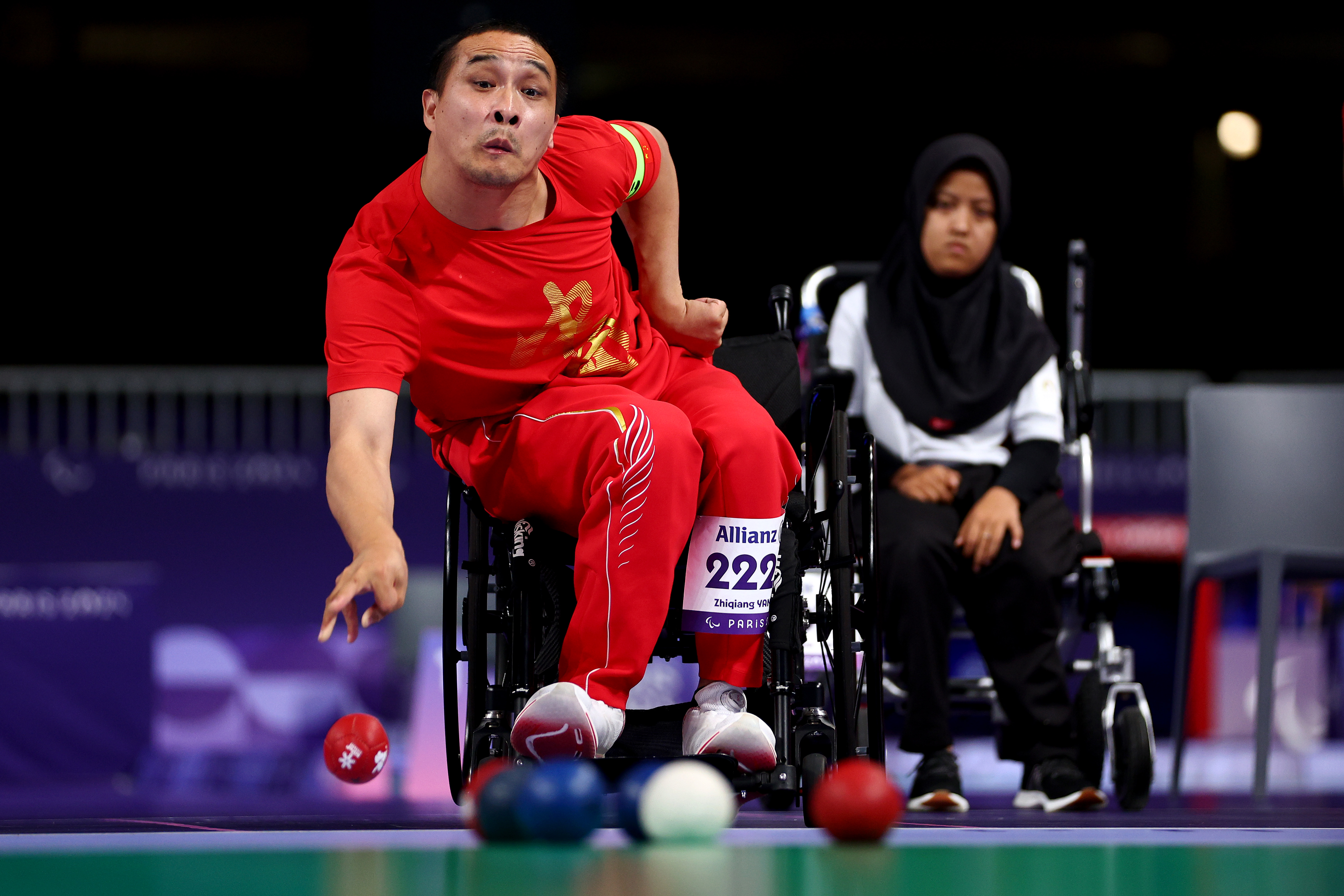
Photo · Defector
The Smallest Scandal
Imagine you have trained for years. Your sport asks almost nothing of the world — a court, some balls, a jack. The equipment is specialized, yes, but the game itself is ancient in its logic: throw your ball closer than your opponent throws theirs. That's it. That's the whole thing.
Now imagine someone is selling knockoffs of the one piece of gear you actually need, and the governing body finds out because the counterfeits are good enough that people are buying them.
That last part is the part I keep coming back to. Not the fraud — fraud is everywhere. The part that says something is the demand. People wanted an alternative badly enough that a market appeared for one.
A writer at Defector recently covered a notice from World Boccia, the sport's governing body, announcing that counterfeit balls had begun circulating. The culprit, according to the piece, was an account called Boccia Ball — which, the author notes, was still active at the time of writing. Boccia, for context, has been a Paralympic discipline since 1984. It's played by disabled athletes with a range of access needs, sometimes including a ramp operated by a sports assistant. The balls themselves have specific standards — different weights, different sizes, different interior materials are all permissible, but within boundaries. Rules about equipment in competitive sport exist for the same reason rules about anything exist: to make the contest legible, to make the outcome mean something.
But here's the tension that the Defector piece surfaces without quite saying aloud: what happens when the legitimate version of the equipment is priced in a way that makes the rules themselves a gatekeeping mechanism?
What the Market Is Telling You
Counterfeits don't emerge in a vacuum. They emerge where there's a gap between what people need and what they can get through official channels. In sneakers, the gap is desire and exclusivity — someone wants the shoe, the shoe is hard to get, a fake fills the space. In boccia, the gap is something more uncomfortable. The sport is played predominantly by athletes with significant physical disabilities. The access needs are real. The equipment is specialized. And specialized equipment, in almost every context, costs more than general-purpose gear.
When a governing body announces that counterfeit equipment is circulating, the instinct is to read it as a story about cheating — someone gaming the rules, someone gaining an unfair edge. But boccia balls aren't performance-enhancing in the way a doped bicycle wheel might be. The standards exist to create a level surface, not to prevent superhumans from getting faster. Which means the person buying a counterfeit ball is probably not trying to cheat. They're probably trying to compete.
That reframe changes the whole story. This isn't a scandal about bad actors. It's a signal about access. And in Paralympic sport, access is never just a logistical question — it's a moral one.
Integrity Has a Price Tag
There's a particular irony baked into the phrase competitive integrity when it gets applied to Paralympic athletics. The entire architecture of Paralympic sport is built around the idea that competition should be meaningful regardless of body, regardless of ability, regardless of what the mainstream sporting world decided was worth watching. The classification systems, the equipment rules, the carefully constructed brackets — all of it exists to say: this is real. This counts. These athletes are competing, not performing.
And then the equipment that enables that competition becomes inaccessible on price, and suddenly the integrity the rules are supposed to protect is being undermined not by cheaters but by economics.
I'm not saying the rules are wrong. Standards in equipment are legitimate — an unregulated ball market would create its own chaos, its own inequities. But a rule without enforcement is just words, and enforcement without access is just exclusion wearing a clipboard.
World Boccia flagging the counterfeit account is the right procedural move. What's harder, and what the Defector piece gestures toward without fully landing on, is the question of what comes next. Does the governing body look at the fact that a market for counterfeits exists and ask why? Does it treat this as a supply-chain problem to be solved with cease-and-desist letters, or as a signal that the cost of participation has drifted somewhere it shouldn't be?
What the Balls Are Standing In For
Every sport has its version of this argument. Cycling has it with equipment costs. Youth soccer has it with club fees. Tennis had it for decades before anyone said the word Compton out loud. The pattern is always the same: the sport builds a meritocracy, and then builds a financial barrier in front of the meritocracy, and then acts surprised when the meritocracy doesn't reflect the world.
In boccia, the stakes feel sharper because the athletes are already navigating systems — medical, social, economic — that were not designed with them in mind. They came to this sport, many of them, because it was one of the places that said yes. The idea that the equipment costs alone could start saying no, quietly, through market pressure, is the kind of thing that should bother people who care about what Paralympic sport is actually for.
Someone built an account called Boccia Ball and sold balls that didn't meet the standard. World Boccia caught it and said something. That's the news.
But underneath it, there's a question about who gets to compete that doesn't have an easy answer — and doesn't go away just because the account gets taken down.
Keep reading sports.

ESPN Named Him. Then Unnamed Him. Nobody's Explaining the Gap.
A retraction without a reckoning is just a deleted link.

Three People Died Celebrating. FIFA Hasn't Said Their Names.
Mexico City buried three people after the World Cup crowds came through. At some point, the sport has to sit with that.

Sell the Stadium, Lose the Room
NFL franchises are rolling out the welcome mat for World Cup tourists — and the desperation is showing.
From the other desks.

800 Horsepower, One Ton of Doubt
Lamborghini built the most powerful SUV it's ever made. It's also slower than what it replaced.

Gold Leaf on a Lacquer Dial, and the Weight of What That Costs
Awake's Frosted Leaf Royal Blue asks a question Vietnamese craft has never quite had to answer at this price.

Hide My Email Has Been Showing Your Email
Apple's privacy flagship has a hole in it. They've known for over a year.