Dystany Spurlock Didn't Ask NASCAR for a Moment. She Asked for a Lap Time.
A writer at Andscape staked out the milestone. What's more interesting is how little Spurlock seems to need it.
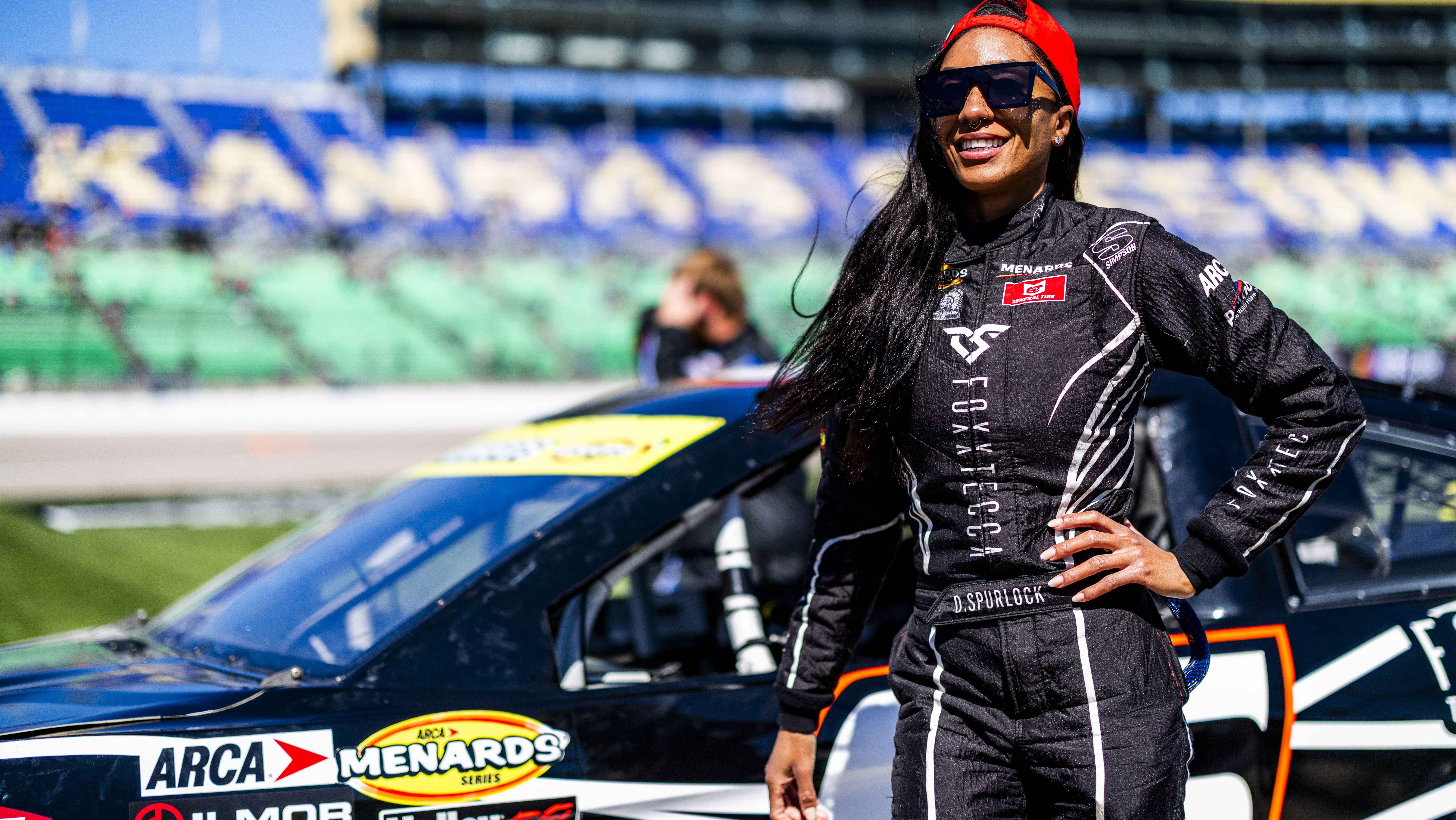
Photo · Andscape
The Milestone Nobody Handed Her
Here's the tension inside the Andscape piece on Dystany Spurlock: it is, on its surface, a history-in-the-making story. The framing is familiar — barrier, pioneer, debut, significance. What makes it worth paying attention to is the subject herself, who appears to be operating on an entirely different frequency than the narrative surrounding her.
Spurlock came to stock cars from professional motorcycle drag racing. That's not a lateral move. That's a different sport with different physics, different instincts, different everything. When she made her ARCA Menards Series East debut behind the wheel of the No. 66 Foxxtecca Chevrolet, she wasn't arriving as someone who'd been groomed for this lane. She'd built her own.
Phil Horton, described in the piece as a longtime motorsports performance coach, says he can recall the exact moment he recognized Spurlock as exceptional. That word — exceptional — is doing a lot of work in this story, and it's worth sitting with. Because exceptional is not the same as promising. It's not the same as impressive-for-a-newcomer. It's a word coaches use when they've stopped making comparisons.
What the Sport Needed Her to Be
NASCAR has spent years trying to reshape its diversity story. It has programs, partnerships, initiatives. It has language. What it has struggled to produce is a figure who makes the milestone feel secondary to the talent — someone where the history gets quieter the more you watch them drive.
That's what Spurlock threatens to be. And threatens is the right word, because it would be inconvenient for the sport's PR architecture if the diversity story started telling itself through pure performance. It would mean the infrastructure around it was never really the point. It would mean the sport just needed to find the right person and get out of the way.
A writer at Andscape has done the work of documenting this moment, and the piece is careful and earnest. But the more interesting subtext isn't the milestone itself — it's the confession embedded in it. That a driver had to come from outside the traditional pipeline, from a different discipline entirely, to arrive at a place where someone like Horton starts using words like exceptional. The system didn't produce Spurlock. She showed up and made the system relevant to her story, not the other way around.
That's a different kind of entry. And in a sport that has long confused access with opportunity, it matters which direction the door opens.
Spurlock's debut happened. The record, if it comes, will come because she was fast enough to make it happen. The sport can celebrate it. But it should be honest about what it's actually celebrating — not the program that made room, but the driver who didn't wait to be invited.
Keep reading sports.

ESPN Named Him. Then Unnamed Him. Nobody's Explaining the Gap.
A retraction without a reckoning is just a deleted link.

Three People Died Celebrating. FIFA Hasn't Said Their Names.
Mexico City buried three people after the World Cup crowds came through. At some point, the sport has to sit with that.

Sell the Stadium, Lose the Room
NFL franchises are rolling out the welcome mat for World Cup tourists — and the desperation is showing.
From the other desks.

800 Horsepower, One Ton of Doubt
Lamborghini built the most powerful SUV it's ever made. It's also slower than what it replaced.

Gold Leaf on a Lacquer Dial, and the Weight of What That Costs
Awake's Frosted Leaf Royal Blue asks a question Vietnamese craft has never quite had to answer at this price.

Hide My Email Has Been Showing Your Email
Apple's privacy flagship has a hole in it. They've known for over a year.