Fifty-Three Years Is Not a Drought. It's a Generation.
When the Knicks finally made the Finals, New York didn't just show up to watch — it showed up to be seen, to grieve, to remember who they were before the waiting started.
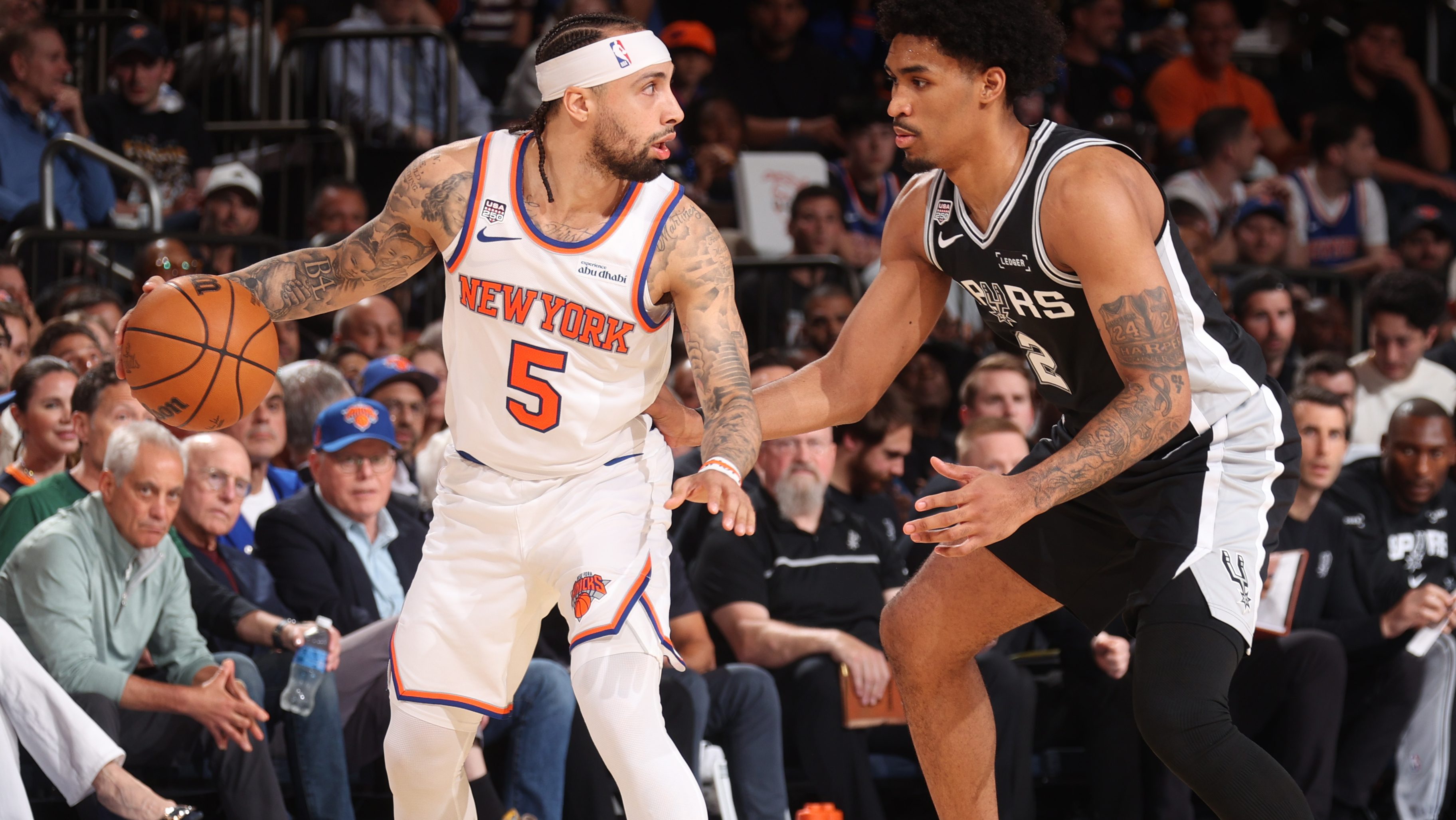
Photo · Andscape
The Bed You Had to Go to
Chuck D was thirteen years old when the Knicks won their last championship. He had to go to bed before it was over. The clinching game was on the West Coast, it was a school night, and that was that. You didn't argue with those rules. So he missed it — the moment, the confirmation, the thing you'd tell your kids about. Writing in The Guardian, the Public Enemy frontman described exactly what it felt like to carry that near-miss for five decades, to grow from a seventh-grader with a bedtime into a man still waiting for what he almost saw. Fifty-three years. Not a slump. Not a rough patch. A lifetime.
That's the number that haunts this Finals more than any stat on a box score. Fifty-three years of New York sports fandom doing what it always does — converting hope into something harder, more guarded, more superstitious. But something shifted this June. The drought didn't just end the way droughts end, quietly, with rain. It ended loudly, publicly, with all of New York's ghosts in the building at once.
Alumni Row
Walt "Clyde" Frazier called it a family reunion. That's the phrase Andscape reported him using to describe what was happening courtside at every home game — the gathering of former Knicks players along what's become known as Alumni Row. Not a marketing activation. Not a nostalgia package from the league office. A genuine convergence of people who wore that uniform and never fully took it off.
Spike Lee was there too, photographed and quoted and interviewed in his Brooklyn studio for Andscape, talking about what he described as a long and sometimes tortured love affair with this team. The word "tortured" does real work here. Lee has been one of the most visible sports fans in America for decades, courtside through the good years and the embarrassing ones, never pretending it was easy. But he believed, Andscape reported, that 2026 was the year the drought ended. Not hoped. Believed.
There's a difference between watching a team and being witnessed by one. What was happening in the Garden this June felt like the latter. The players in suits sitting courtside weren't just fans. They were evidence — proof that the franchise had been something worth loving before, and might be something worth loving again. When a city has waited long enough, the past stops being backstory. It becomes the point of the whole thing.
The Most New York Guy in the Building
And then there's Jose Alvarado.
Andscape reported that Alvarado, a native New Yorker, spoke about what a championship would mean just a month after first pulling on a Knicks jersey. There's no diplomatic way to say this: that combination of circumstances — homegrown, new to the team, standing at the edge of something his city has been starving for — is almost too perfect. It strains credulity the way New York stories sometimes do, like the city manufactures its own mythology on purpose.
But I keep coming back to what it means to grow up somewhere, leave it, and come back carrying its flag in the biggest moment it's had in your lifetime. You're not just playing for a franchise. You're playing for every version of the city that raised you — the one that existed before you were born, the one you navigated as a kid, the one that's still there underneath whatever it's become. That weight isn't motivational-poster stuff. It's real and it's heavy and it either breaks you or it doesn't.
The Motorcade Nobody Asked For
Somewhere in the middle of all this, The Guardian reported, Donald Trump arrived at Madison Square Garden for Game 1 in a half-mile-long motorcade. Barricades in midtown. Security lines snaking outside the arena. Victor Wembanyama getting wanded by agents. The most powerful person in the country inserting himself into a citywide celebration 27 years in the making — that's how The Guardian framed it — and nearly shutting it down in the process.
New York has a very specific immune response to this kind of thing. The city doesn't do deference well. It never has. And on a night when the Garden was supposed to be about reclamation — about a fanbase finally exhaling after more than half a century — the arrival of a man whose favorite sport is, as The Guardian's headline put it, status, read as exactly the kind of intrusion New York instinctively rejects. The fans, the piece reported, had other ideas.
That friction matters because it clarifies what this Finals actually was. It wasn't a backdrop for power. It was something more intimate than that — a city in the middle of an emotional accounting, adding up what it had paid and whether the return was worth it.
What You Pass Down
Chuck D couldn't watch the last one. He was thirteen. His parents made him go to sleep.
Somewhere in New York right now, there are people who watched every game of this Finals with their parents, their children, their siblings — people for whom the drought isn't a sports trivia answer but a thread running through actual family history. The grandparent who remembers Clyde. The parent who grew up hearing about him. The kid who only knows the waiting.
That's what 53 years actually means. Not a record of futility. A record of transmission — of one generation handing the hope to the next and saying, hold this, I don't know when but someday. The reunion courtside at the Garden wasn't just alumni. It was proof of concept. It was the city showing itself that the thing it had been carrying all this time was real, was shared, was worth the weight.
Some debts take a lifetime to settle. The lucky ones get to watch when they do.
Keep reading sports.

ESPN Named Him. Then Unnamed Him. Nobody's Explaining the Gap.
A retraction without a reckoning is just a deleted link.

Three People Died Celebrating. FIFA Hasn't Said Their Names.
Mexico City buried three people after the World Cup crowds came through. At some point, the sport has to sit with that.

Sell the Stadium, Lose the Room
NFL franchises are rolling out the welcome mat for World Cup tourists — and the desperation is showing.
From the other desks.

800 Horsepower, One Ton of Doubt
Lamborghini built the most powerful SUV it's ever made. It's also slower than what it replaced.

Gold Leaf on a Lacquer Dial, and the Weight of What That Costs
Awake's Frosted Leaf Royal Blue asks a question Vietnamese craft has never quite had to answer at this price.

Hide My Email Has Been Showing Your Email
Apple's privacy flagship has a hole in it. They've known for over a year.