Golden Tempo Ran Last. Horse Racing Needed It More Than Anyone.
Cherie DeVaux made history Saturday. The sport made sure that was the whole story.
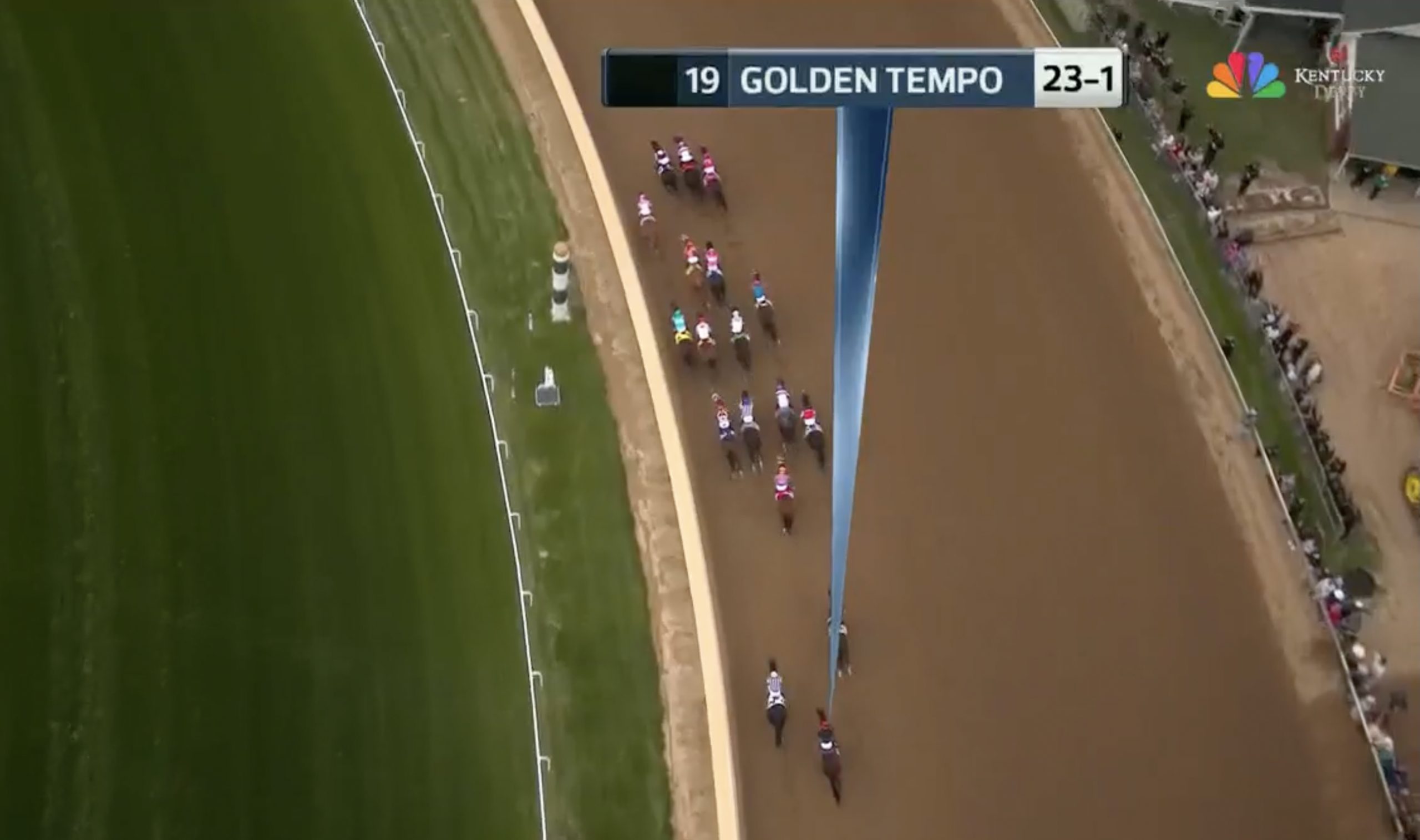
Photo · Awful Announcing
There were 23-to-1 odds on Golden Tempo. There were 70-to-1 odds on Ocelli, who finished third. FanDuel Racing's platform went down four hours before post time, leaving bettors locked out of their accounts on the one day of the year the casual fan actually shows up to play. The 152nd Kentucky Derby had every ingredient for a mess.
Instead, it handed horse racing something it desperately needed: a clean, undeniable, first-of-its-kind narrative.
Cherie DeVaux became the first woman to train a Kentucky Derby winner. That sentence is not complicated. It doesn't require context or caveats. It just sat there Saturday at Churchill Downs, waiting to be said out loud, and the sport said it as loudly as it could.
From Last to First
The race itself earned the moment. Golden Tempo, ridden by Jose Ortiz, was at the back of the pack early — not strategically tucked, not biding time, but last. Then the stretch came, and the horse came with it, charging through to win the 1¼-mile race at odds that made most of the crowd wrong. Renegade finished second, with Irad Ortiz Jr. aboard — Jose's brother — which means the Ortiz family finished one-two in the Kentucky Derby, a detail so cinematic it would get cut from a screenplay for being too convenient.
Long shot Ocelli took third at 70-to-1. On paper, the whole race reads like something a novelist would reject for lacking plausibility.
But the finish — Golden Tempo going last to first in real time, the NBC cameras catching it — gave the broadcast exactly the kind of visual it needed. One outlet noted the network's coverage of that stretch run specifically, the way it showed the full arc of the comeback. That's not an accident. Television knows what it has when it has it.
The Story Behind the Story
Here's where I keep landing, though: DeVaux's win is genuinely historic. No asterisk. No "for a woman" qualifier needed — she trained the horse that won the Kentucky Derby, full stop. That is real.
But watch how horse racing deploys it. The sport has been circling a credibility problem for years — attendance patterns, betting handle anxieties, the slow cultural drift away from a pastime that once anchored an entire season of American sports attention. The Triple Crown used to be appointment viewing by default. Now it competes for the same fragmented weekend scroll as everything else.
What DeVaux's win gives the sport is a story it can tell without having to defend anything. It's forward-facing. It's inclusive. It's the kind of headline that travels outside the racing press and lands in general sports coverage, which is exactly what happened Saturday. The Guardian covered it. The broadcast leaned into it. The framing wasn't just "here's who won" — it was "here's what this means."
None of that diminishes what DeVaux did. She trained a 23-to-1 shot that came from last place to win the most famous horse race in America. That's her accomplishment, not the sport's marketing strategy.
But horse racing and Cherie DeVaux needed very different things from Saturday, and they both got them — which is either a beautiful convergence or a sign of how thin the sport's bench of compelling narratives has become.
Meanwhile, FanDuel Racing's outage on Derby day — the one day casual money floods the platform — is the quieter, less flattering story. The sport's future is increasingly tied to betting infrastructure, and that infrastructure went down four hours before the biggest race on the calendar. Nobody's leading with that. Why would they, when the alternative is a first-time historic winner charging down the stretch at 23-to-1?
Horse racing knows which story to tell. Saturday, at least, it had one worth telling.
Keep reading sports.

ESPN Named Him. Then Unnamed Him. Nobody's Explaining the Gap.
A retraction without a reckoning is just a deleted link.

Three People Died Celebrating. FIFA Hasn't Said Their Names.
Mexico City buried three people after the World Cup crowds came through. At some point, the sport has to sit with that.

Sell the Stadium, Lose the Room
NFL franchises are rolling out the welcome mat for World Cup tourists — and the desperation is showing.
From the other desks.

800 Horsepower, One Ton of Doubt
Lamborghini built the most powerful SUV it's ever made. It's also slower than what it replaced.

Gold Leaf on a Lacquer Dial, and the Weight of What That Costs
Awake's Frosted Leaf Royal Blue asks a question Vietnamese craft has never quite had to answer at this price.

Hide My Email Has Been Showing Your Email
Apple's privacy flagship has a hole in it. They've known for over a year.