He Didn't Hear Music. He Heard Potential.
Clive Davis built pop music's architecture from the inside out — and now we have to reckon with what happens to a building when its engineer is gone.
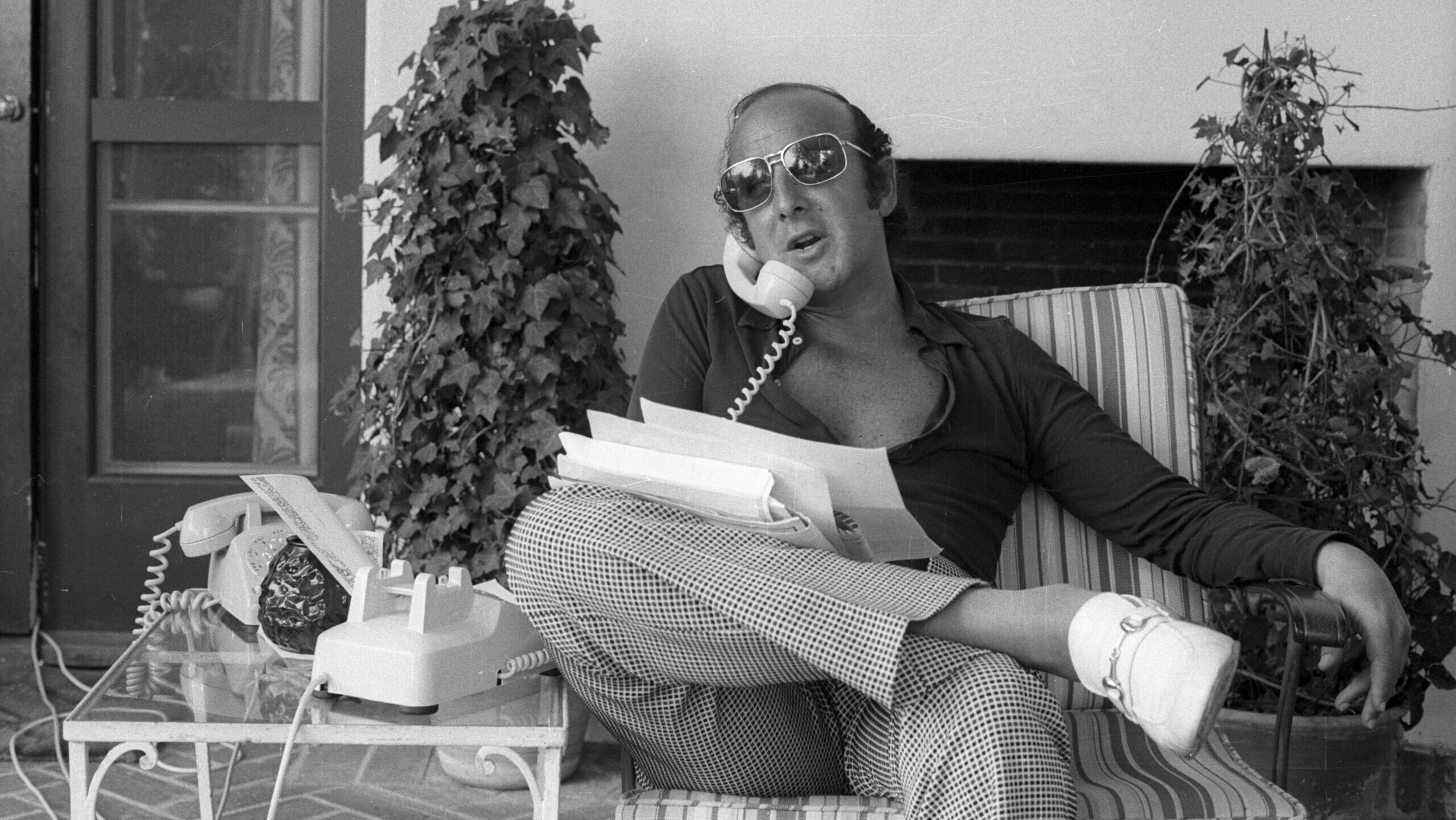
Photo · Boardroom
The Room Where It Happened
Picture 1983. A young woman walks into a room carrying a voice that doesn't yet belong to the world. On the other side of the table sits a Harvard-trained lawyer who, by every reasonable measure, should not be the most important person in that room. He didn't grow up playing instruments. He didn't come up through the ranks of musicians who understood what a chord change could do to a body. He came from contracts, from language, from argument. And yet, according to Andscape's account of that encounter, Clive Davis saw something in Whitney Houston that the rest of the industry would spend the next decade trying to catch up to.
That tension — the man who shouldn't have the ear being the one with the best ear — is where Davis's story lives. And it's the tension that neither obituary quite resolves, because maybe it can't be resolved. Maybe that's the whole inheritance he left behind.
Davis died at 94. The coverage that followed was immediate, warm, and appropriately enormous in scope. Boardroom called him a Harvard-trained lawyer who knew nothing about music and became the industry's most important set of ears. Andscape went straight to Whitney Houston as the encapsulating example — not just because of her talent, but because of the specific work Davis did in shaping her into a global pop star. That word, shaping, is the one I keep returning to. Because it implies something active, something with friction. It implies that the thing being shaped does not arrive complete.
What Shaping Actually Means
The Whitney Houston story, as Andscape tells it, didn't begin in a vacuum. Davis had already, months before Houston walked into his orbit, orchestrated the comeback of Aretha Franklin. Two Black women. Two different moments in their careers. One architect, working across both, making decisions about what the public was ready to hear and what would need to be built toward.
That kind of power is staggering when you sit with it. Davis wasn't just discovering talent — he was deciding the shape talent would take when it reached the world. He was deciding which version of an artist got amplified and which version stayed in the room. Whether that's visionary or controlling depends entirely on the outcome, and in Houston's case, the outcome was singular. But the mechanism is the same regardless of the result.
This is what the obituaries celebrate, and rightly so. But it's also what gives me pause. The executive who shapes a voice into a global phenomenon is also the executive who decides what a global phenomenon sounds like. Davis's taste was, by all available evidence, extraordinary. The track record is not in dispute. But taste is not a system. Taste is a person. And the industry Davis built his influence within was one that required you to reach a person like him — to have your potential recognized, filtered, and approved — before the world would hear you at all.
That's not a criticism of Davis specifically. It's a description of the architecture.
The Building After the Engineer
Boardroom framed Davis's death as the loss of the executive who changed pop music. Andscape framed it as the death of a music mogul. Both framings are accurate. Neither quite answers the structural question underneath them: what happens to an industry built around individual genius when that individual is gone?
We are not exactly living in the age of the powerful label head anymore. The architecture Davis operated within — where a single executive could determine the trajectory of a Whitney Houston, could engineer an Aretha Franklin comeback, could function as the essential filter between talent and audience — has been disrupted at every layer. Streaming fragmented the gatekeeping. Social media gave artists direct lines to audiences. The idea that one person in one room could decide what the world heard feels almost historical now, the way a certain kind of craftsmanship feels historical: you understand it was real, you can see the evidence of it, but you can't quite picture the conditions that made it possible.
And yet here's what I keep thinking about: Davis's power wasn't institutional in the way we usually mean the word. Institutions outlast people. What Davis had was something closer to judgment — the accumulated, tested, repeatedly vindicated ability to hear what something could become before it had become it. That's not transferable. You can't write it into a job description. You can't build a committee to replicate it.
The executives who follow him will have data. They'll have algorithms telling them what audiences engaged with, what held attention, what drove streams. Davis had none of that. He had a room, a voice, and an instinct trained on decades of being right.
What We're Actually Mourning
I don't think the coverage of Davis's death is really about Davis. Or not only about him. I think it's about the thing he represented — the idea that a single human being, paying close enough attention, could hear something the rest of the world couldn't yet hear and decide to make it louder. That's a romantic idea. It's also a dangerous one, because it concentrates enormous cultural power in a single set of preferences.
But the alternative — taste by committee, discovery by algorithm, shaping by data — hasn't exactly produced its own Whitney Houston.
Davis was 94. He had, by any measure, a full life and an industry that bears his fingerprints everywhere you press. The question his death actually raises isn't whether he mattered. Of course he mattered. The question is whether what he did is still possible, or whether the conditions that made him Clive Davis have dissolved so thoroughly that we're now mourning not just a man but a whole mode of making culture.
Somewhere right now, there's a voice in a room that the world hasn't heard yet. The question is who's listening.
Keep reading sports.

ESPN Named Him. Then Unnamed Him. Nobody's Explaining the Gap.
A retraction without a reckoning is just a deleted link.

Three People Died Celebrating. FIFA Hasn't Said Their Names.
Mexico City buried three people after the World Cup crowds came through. At some point, the sport has to sit with that.

Sell the Stadium, Lose the Room
NFL franchises are rolling out the welcome mat for World Cup tourists — and the desperation is showing.
From the other desks.

800 Horsepower, One Ton of Doubt
Lamborghini built the most powerful SUV it's ever made. It's also slower than what it replaced.

Gold Leaf on a Lacquer Dial, and the Weight of What That Costs
Awake's Frosted Leaf Royal Blue asks a question Vietnamese craft has never quite had to answer at this price.

Hide My Email Has Been Showing Your Email
Apple's privacy flagship has a hole in it. They've known for over a year.