Jalen Brunson Said James Dolan's Name Out Loud. The City Went Quiet.
New York finally has its Finals team — and now it has to decide what story it wants to tell about how they got here.
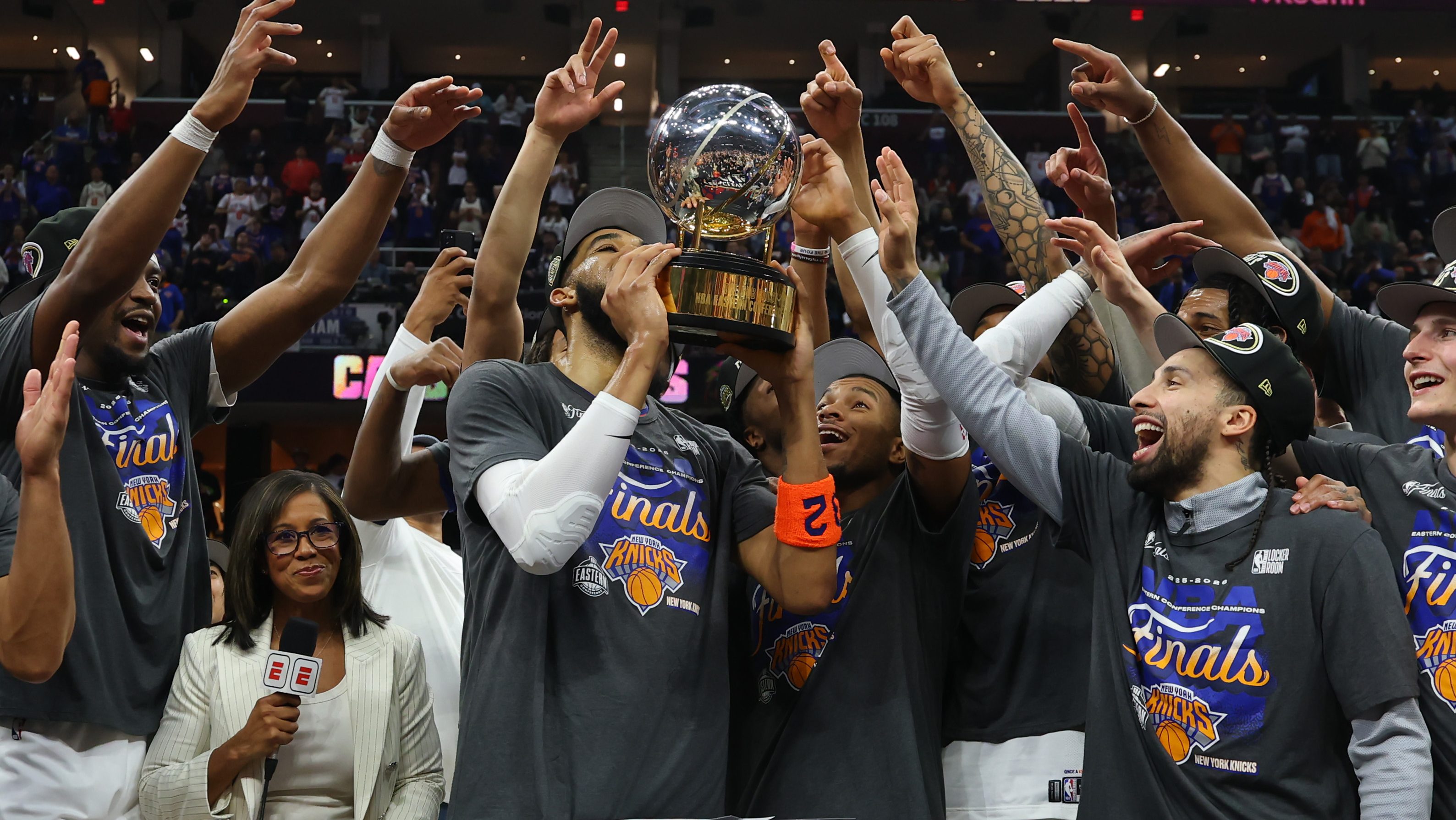
Photo · Andscape
The Mountain
Walt Frazier won it here. He knows what it cost and what it felt like when the city held its breath and then finally, collectively, exhaled. When Andscape caught up with the Knicks legend shortly before Game 4 of the Eastern Conference Finals in Cleveland, he was being asked something that must have seemed almost too large to answer: how would it feel to watch this team do what his team did in 1973?
Fifty-three years is a long time to carry a question. Long enough that the iPhone didn't exist the last time New York even made the Finals. Long enough that Facebook wasn't a thing in 1999. Long enough that an entire generation of Knicks fans has grown up treating hope as a liability, a thing you manage carefully so it can't hurt you too badly when it gets taken away.
And then the Knicks went on an 11-game playoff winning streak. And then they won the Eastern Conference Finals on Cleveland's floor. And then Jalen Brunson stood in front of cameras and microphones and said something that stopped the celebration cold before it could really start.
He talked about a winning culture that "starts with Mr. Dolan."
The Guardian heard that and called it the most surprising moment of the entire run — more surprising than the 22½-point average margin of victory, more surprising than New York somehow not tearing itself apart in the streets. A player, voluntarily, crediting James Dolan.
The Man Nobody Wants to Toast
Here is the tension that every piece of coverage is circling without quite landing on directly: New York has a Finals team. The work is real. The wins are real. The hunger is real. And the owner is James Dolan, a figure who has spent years accumulating a particular kind of infamy among the fan base that waited through all of this.
The Guardian doesn't hedge on this. The framing is explicit — fans won't be thanking the man writing the checks, whatever happens next. The title could be coming to Madison Square Garden for the first time since 1973, and the architect of the organization is someone the city has spent decades treating as the primary obstacle to exactly this outcome.
This is what makes the moment strange and worth sitting with. Sports victories usually resolve their narratives cleanly. The guy who believed, the guy who built it, the guy who sacrificed — they get their moment. The story writes itself. But the Knicks' story has a complicating figure at the center who the coverage can't quite figure out how to place. Credit him and it feels wrong. Erase him and it's dishonest. Brunson chose a third option — he named him, graciously, and left everyone else to figure out what to do with that.
The Other Side of the Draw
Meanwhile, on the other side of the bracket, Andscape's Ball Up Top crew was doing the math that every Knicks fan was doing privately: Oklahoma City or San Antonio? The Thunder had just taken their series in five games, though not without some injury concerns entering the later rounds. The Spurs brought inexperience and Victor Wembanyama, who had responded in Game 5 in a way that reminded everyone paying attention that he is not a storyline — he is an actual problem.
The debate itself is revealing. There's a version of this Finals conversation that would have been unthinkable to have in any serious way for most of the last quarter-century. Knicks fans weren't doing Finals opponent scouting. They were watching other teams' parades. Now they're running scenarios, weighing matchups, thinking about rest advantages and injury reports on the other side.
That's what a real contender does to a fan base. It makes them strategic. It makes them dangerous in the way that hope, when it becomes legitimate, is dangerous.
What This City Actually Earned
I keep coming back to the Brunson moment because it's the one that will outlast the series, win or lose. Not because of what it says about Dolan — that conversation is older than this team — but because of what it says about Brunson, and about what kind of player can actually carry New York.
This city has had its share of talent. It has not always had players willing to absorb what New York asks of you: the weight of the history, the volume of the expectation, the ugliness of the ownership discourse, and still show up and say something gracious in a press conference when everyone is waiting for you to say something that confirms their cynicism.
Brunson didn't play into the narrative. He complicated it, deliberately or not. And a team that wins the way these Knicks have been winning — by margins that look less like close calls and more like dominance — doesn't get built by accident, regardless of what you think about who signs the checks.
Frazier waited 53 years to be asked if he'd be moved by watching someone else do what he did. He's been waiting in that arena, in that broadcast booth, through all of it. The mountain is still there. These Knicks are still climbing.
Whatever happens in the Finals, the city's going to have to decide something it's been avoiding for a long time: whether you can love a team and refuse to love what built it, and whether those two things can exist in the same celebration without tearing each other apart.
Keep reading sports.

ESPN Named Him. Then Unnamed Him. Nobody's Explaining the Gap.
A retraction without a reckoning is just a deleted link.

Three People Died Celebrating. FIFA Hasn't Said Their Names.
Mexico City buried three people after the World Cup crowds came through. At some point, the sport has to sit with that.

Sell the Stadium, Lose the Room
NFL franchises are rolling out the welcome mat for World Cup tourists — and the desperation is showing.
From the other desks.

800 Horsepower, One Ton of Doubt
Lamborghini built the most powerful SUV it's ever made. It's also slower than what it replaced.

Gold Leaf on a Lacquer Dial, and the Weight of What That Costs
Awake's Frosted Leaf Royal Blue asks a question Vietnamese craft has never quite had to answer at this price.

Hide My Email Has Been Showing Your Email
Apple's privacy flagship has a hole in it. They've known for over a year.